
MODEL T AND MODEL 3: THE PARALLELS OF HENRY FORD AND ELON MUSK – PART TWO

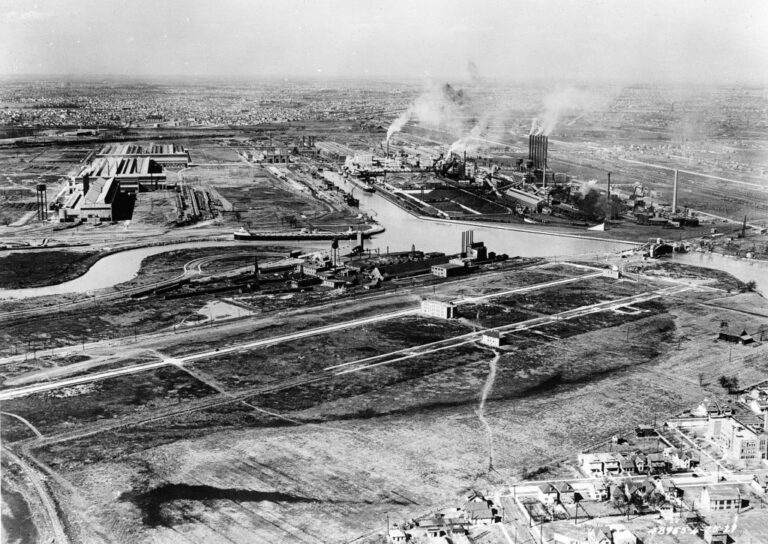
River Rouge under construction - Ford and Tesla parallels
River Rouge complex under construction in 1918

Control of 59% of Ford Motor Company stock allowed Henry Ford to introduce the Model T in 1909.   He added the assembly line in 1913.  In 1915, he began acquiring land for the ultimate in industrial vertical integration: the River Rouge complex.  In pursuing these plans, Henry Ford would discover that even 59% of the Ford Motor Company shares would not give him total control.  To achieve that, he would need to own all of them.  The Ford and Tesla parallels and those of their respective founders show history repeating itself.

In 1915, Ford began acquiring 2,000 acres of land along the Rouge River in Detroit.  During World War I, the river was dredged and widened enough to allow Great Lakes freighter ships to dock at the site.   Henry Ford now planned a massive industrial complex on the site.

He had already begun the process of eliminating reliance on outside suppliers.  The Ford Motor Company owned iron mines and limestone quarries in Michigan, Minnesota, and Wisconsin.  Ore from those mines was transported on Great Lakes ships owned by Ford Motor Company.  When the complex was completed, River Rouge blast furnaces would turn the ore into iron.  At the River Rouge foundry, which would be the largest in the world, molten iron would be poured for engine blocks, cylinder heads, and exhaust manifolds.  River Rouge electric and open-hearth furnaces would produce steel from the iron that would be processed at River Rouge rolling mills, and then be used at the River Rouge factory to  manufacture Ford automobiles and trucks.

Ford recognized that eliminating outside suppliers reduces costs of production – which increases profit.  The River Rouge complex was another step, albeit a giant one, in Henry Ford’s vision of selling enormous volumes of automobiles at low prices.  Though Henry Ford often spoke as though he were almost philanthropically motivated to continually lower the price of the Model T, it was actually simple business logic.  Just as his decision to pay workers $5.00 a day was designed to cut employee turnover and increase plant efficiency, lowering the price of the Model T was a strategy to continually increase sales, undercut competition, and make massive profits.

By now, Henry Ford was a very rich man.  So were his remaining investors.  The Dodge Brothers received dividends on their 10% of the outstanding Ford Motor Company shares totaling $35,000,000.00 in the 13 years following the company’s founding.  But the Dodge brothers were no longer allies of the Ford Motor Company.  They had become competitors.

John and Horace Dodge had assembled Fords under contract with the Ford Motor Company.  But these were one-year contracts, subject to annual renewal.  With Henry Ford owning a majority of the stock, there was risk the contracts would be given to others – and the growth of the automobile industry in Detroit meant that there were many other suppliers available.  Even when the contracts were renewed, profit margins were decreasing.  So, in 1913, the Dodge brothers ended the contract with Ford Motor Company to produce their own automobile.

1917 Dodge Model 30 - more Ford and Musk parallels
1917 Dodge Model 30 on display at Wisconsin Automobile Museum

Introduced late in 1914, the Dodge model 30/35 was twice the price of a Model T.  It also offered more features, including an electric starter and three speed transmission (in contrast to the Model T’s crank and two-speed planetary transmission).   More than 10 Model T’s were sold in 1915 for every Dodge sold – but Dodge sales were stong enough to rank it third in total automobile sales for the year.

This meant the Ford Motor Company was paying dividends to a competitor.  The Dodge brothers still owned 10% of the Ford Motor Company .  In 1915, dividend distributions to Ford Motor Company shareholders had been 66% of profits.  In the five years preceding, dividends had been between 40% and 50% of profits.

That was about to end.  Henry Ford decided the money would be better spent on building the River Rouge complex.  He walked into the Dodges’ offices in 1916 and informed the brothers that the Ford Motor Company dividend would total 1,200,000 in 1916 – a dividend of $120,000.00 for the two brothers – and the rest would be reinvested to build the River Rouge complex.

The Dodge brothers sued.

Their lawsuit wasn’t really about the money.  Their goal was blocking construction of the River Rouge complex.  The Dodges – though taking the position in court that building the River Rouge complex was wasting corporate assets – fully understood the complex could put other automobile manufacturers, including the Dodge Brothers Motor Company, at a competitive disadvantage they could not overcome.  They asked for an injunction blocking construction of the River Rouge complex and ordering Ford Motor Company to issue a $20,000.000.00 dividend to its shareholders.

In the end, the Dodges won almost nothing.  They delayed construction of the River Rouge complex for almost two years before the Michigan Supreme Court ruled against them.  Though the Court did require Ford Motor Company to pay the special dividend, the amount the Dodges received was only 10% of the total dividend (and they had to pay 70% of that in federal income taxes).  The court even ordered them to pay two-thirds of the court costs.

In the meantime, Henry Ford’s emphasis in his trial testimony on producing automobiles at the lowest possible price so more people could afford one had, as he undoubtedly intended, enhanced his public image.  Newspaper editorials praised him as a businessman who cared about the needs of ordinary people.  He emerged the hero.

River Rouge plant ccompleted
River Rouge plant completed

The River Rouge complex was completed in 1928.  It employed 100,000 workers and was the largest industrial production facility in the world.  Though Ford Motor Company sold the steel production facilities in 1989, the River Rouge assembly plant still produces Ford vehicles.  A new F-150 rolls off the end of the line at the Rouge every 53 seconds.  The River Rouge complex was designated a National Historic Landmark District in 1978.

Even though beset by problems of execution, Elon Musk’s emphasis on vertical integration is conceptually no different than the vision Henry Ford achieved building the River Rouge complex.  Musk want to build more Gigafactories and produce every component of Tesla, Inc. products.   He is following in Henry Ford’s footsteps and for the same reasons.

Having won in court, Henry Ford set about getting rid of the Dodges and the remaining minority shareholders.  He did it by capitalizing on his celebrity status and his public identification with the Ford Motor Company.

Henry Ford first resigned his position as President of the Ford Motor Company and installed his son, Edsel, in that position.  Henry Ford then decamped to California, ostensibly on vacation.  While in California, he announced he would form a new company.  This new company would build a new car, more modern than the Model T at half the price.   Newspapers portrayed this new company as a done deal, with the new automobile a concept that would become reality in only the short time it would take to gear up production.

Model T sales dipped as the public awaited the newer, better car.

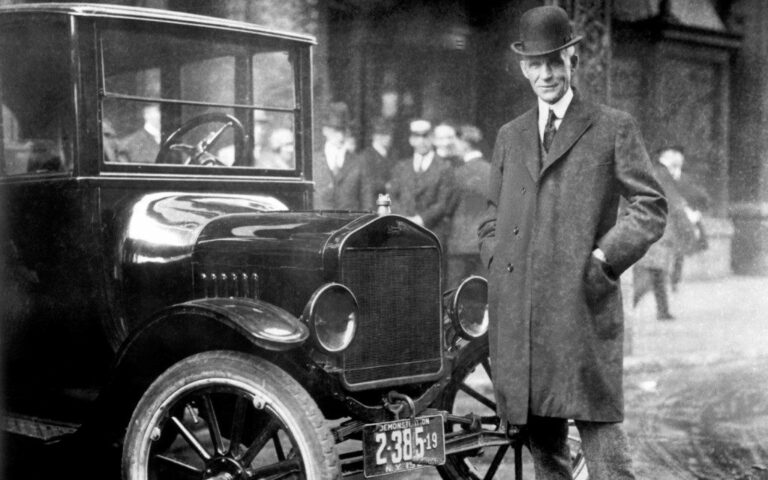
Henry Ford in 1919
Henry Ford in 1919

Ford Motor Company was committed to selling automobiles in large volume at low prices, with the comparatively small profit margin per vehicle more than justified by the massive profits generated  by selling enormous numbers of them.  If that volume were not maintained, profits would dry up quickly as economies of scale became liabilities of excess capacity and overhead.

The Ford Motor Company did not need Henry Ford as a competitor.

The Dodges and other minority shareholders couldn’t sue.  Shareholders, unlike corporate officers or members of a board of directors, have no duty of loyalty to the company in which they hold stock.   With Henry Ford no longer an officer of the Ford Motor Company, he was free to develop a competitor – exactly what John and Horace Dodge had done while receiving dividends as Ford Motor Company stockholders.

Faced with this prospect, it began to make sense for minority shareholders, including the Dodges, to sell their stock.

But there were no buyers.  There was no market for stock in a company controlled by

Henry Ford and against which Henry Ford planned to compete with a better product.

Eventually, a few adventurous purchasers willing to take that risk appeared and the minority shareholders sold.  The real purchaser was Henry Ford acting through agents.  Only Couzens, who had resigned as an officer of the company in 1915 and was now the Mayor of Detroit, saw through the scheme.  He refused to sell at any price until the real purchaser revealed himself and then demanded a better price than offered the others.  He got it.  (The irony is that Couzens had long wanted to sell his Ford stock.  He considered it a political liability and potential conflict of interest.  Couzens would later serve as a United States Senator from Michigan.  He died in 1936.  Henry Ford was the lead pallbearer at the funeral.)

Henry Ford now owned 100% of the shares of the Ford Motor Company.  That stock would give him absolute control over the company until his death.

The times are different now.  The laws are different.  The market is different, both the stock market and the automobile market.

But one thing is the same.   Like Henry Ford before him, Elon Musk has largely erased the distinction between himself and his company.  The Ford and Tesla parallels are obvious.

Consider what would happen if Elon Musk were to leave Tesla, Inc. to concentrate exclusively on other enterprises.  Without Musk’s vision, the company would lose its magic.  Tesla, Inc. shares would drop in value.  The immediate sell-off would be only the beginning as the press began looking for a deeper motive – speculating that Musk was really leaving because the company was failing.  As the stock price fell, Tesla’s ability to raise capital and borrow funds to refinance debt would dry up.  Suppliers would become nervous about carrying Tesla, Inc. receivables.

In this environment, sales of the Model 3 would shrivel.  With Musk gone, the glamour would be gone.  The Model 3 would no longer be a statement that its owner is a socially conscious and prosperous man or woman of the future.  Tesla would be the next orphan car, one built by a company in serious jeopardy of bankruptcy.   Without the cash flow of volume Model 3 production, Tesla, Inc would be unable to survive as an independent company.

If that seems an overwrought scenario, ask yourself:

Would you invest in Tesla, Inc. without Elon Musk?

Henry Ford understood the power of celebrity and public image, power he used to implement his vision and control his company’s destiny.

Elon Musk should study Henry Ford.


To start at the beginning, please read Part One of this article.

For a detailed legal analysis of Dodge v. Ford Motor Company and its effect on modern corporate law, see M. Todd Henderson’s analysis in the Chicago Working Paper Series.

MODEL T AND MODEL 3: THE PARALLELS OF HENRY FORD AND ELON MUSK – PART ONE

PARALLELS OF HENRY FORD AND ELON MUSK - PART ONE
Henry Ford and the Model T

[vc_row][vc_column][vc_column_text]

Elon Musk has a lot in common with Henry Ford.  fact, studying Henry Ford could give Mr. Musk guidance in his quest to make Tesla successful.  In the end, Henry Ford won – and won big.  So, too, can Musk.  Parallels of Ford and Musk are revealing.

Like Henry Ford, Musk has his own public image to blur, and ultimately erase, the distinction between his company and himself.  Musk faces challenges for control of Tesla similar to those Henry Ford overcame to win absolute control of Ford Motor Company.

When Elon Musk rails against “shorts-sellers” – stock speculators selling Tesla, Inc. shares for later delivery at a fixed price expecting the stock price will drop, so they can cover deliver shares purchased later for less – he is echoing Henry Ford’s hatred of passive investors who backed his companies with their money, only to overrule his decisions.  When the federal government’s Securities and Exchange Commission sued to bar Musk from control of Tesla, Inc., the threat was reminiscent of the Dodge brothers’ lawsuit against Ford Motor Company.  Musk wants Tesla, Inc. to build multiple “Gigafactories,” like the one it constructed in Nevada so that Tesla can make all components of its products and eliminate outside suppliers.  In this, too, Musk is copying Henry Ford.   The model of vertical integration Musk is pursuing was achieved by Henry Ford a century before, on the banks of the River Rouge in Detroit.  The River Rouge industrial complex turned iron ore from Ford mines into Ford automobiles.

Henry Ford developed his antipathy to passive investors from personal experience with the real cost of outside money.  Ford needed outside investors to bankroll his start-up automobile companies.  Twice, outside investors ended up overruling his decisions, depriving him of control of the companies he created.  The third time turned out differently.  Henry Ford had learned from experience.

It all started with the Detroit Automobile Company.  This was Henry Ford’s first attempt to build a production automobile.  Though the company was founded to manufacture and sell automobiles, Henry Ford did not build automobiles.  Instead, he continued to work on the design.  His investors saw the prospect of profit dimming and demanded he start production.  When he did not, they dissolved the company.

A few of the investors in the Detroit Automobile Company still believed in Henry Ford.  They formed the Henry Ford Company, but again held control.  Henry Ford owned only 17% of the stock.    He did not change his focus on design.  The investors brought in an outside consultant to evaluate the company.  It is an open question whether Henry Ford quit or was fired, but he left the company in exchange for a small payment for his stock.  The outside expert, Henry Leland, was  hired to run the company.  With Ford no longer involved, the Board of Directors adopted Cadillac Automobile Company as its new name.  As Cadillac, under new management, the company thrived.  (And, yes, that is the Cadillac later acquired by General Motors, and Henry Leland did later found Lincoln, only for that company to fail in the depression and be bought by Ford, who then fired Leland.)

Musk, like Henry Ford in his first two automobile ventures, seems to display more talent at design than production.  Musk was the driving force behind developing the Model 3, insisting that it be designed in all respects as an electric automobile, rather than simply a conventional automobile powered by an electric motor.  Every detail was evaluated by its impact on the vehicle’s range before the battery needed recharging.  Even the brakes were designed with that goal in mind.  No detail escaped Musk’s’ attention – it was Musk who insisted the ventilation system have no visible vents.

Yet, Tesla, Inc. has not met the initially announced date for introduction of any new model.  Musk’s many predictions of production volume have been more fantasy than reality – reached, if at all, months late.  The production process for the Model 3 has been dominated by trial and error – emphasis on “error.”  At Musk’s insistence, Tesla, Inc. planned a highly automated assembly line to build the Model 3.  Instead, Tesla ended up producing the Model 3 in a tent.   Automated production of batteries at the Gigafactory was similarly beset with problems, forcing Tesla to assemble batteries by hand.   Today, production of a Tesla Model 3 requires three times as many hours of assembly labor time than Toyota requires to produce a Camry.

Ford 999 - Parallels of Ford and Musk
Ford 999

Henry Ford next built a pair of racing automobiles.  One was named “999” after the New York Central steam locomotive that had made headlines for exceeding 100 mph.  Barney Oldfield campaigned “999” throughout the United States.  In 1904, Henry Ford used the other racer to set a new land speed record.  (The “999” is now in the Henry Ford Museum in Dearborn, Michigan.  The locomotive for which it was named is on display at the Science and Industry Museum in Chicago, Illinois.)  The land speed record and Oldfield’s many victories in “999” brought Henry Ford word-wide fame.  He was now a celebrity whose name was indelibly linked in public perception to the automobile.

Though Henry Ford despised passive investors, he could not make his third try at automobile manufacturing without them.  He needed the money.  He turned to two sources of outside capital.  One was Detroit businessman Alexander Y. Malcomson.  The other was Horace and John Dodge, brothers who operated a successful Detroit machining and manufacturing company.

Malcomson and Henry Ford created a partnership to develop a new automobile.  Malcomson contributed $3000.00.  Ford contributed his skill and experience.  The result was the design for the Ford Model A.  With the design complete, the partnership was dissolved and a new corporation – the Ford Motor Company – was formed to produce the Model A.   Malcomson was now joined by other outside investors, including his clerk, James Couzens, in buying Ford Motor Company stock.  One thousand shares were divided, with Malcomson and Ford each holding 25.5%, Couzens, who became an officer of the company, holding 10% and the two lawyers who contributed the legal work required to form the corporation receiving 5% each.

10% of the stock went to the Dodge brothers.

The Dodge brothers are a story of their own.

By their trade, the Dodge brothers were machinists.  The characterization of them in recent Fiat-Chrysler television commercials as carefree thrill-seekers does them no justice.

John Dodge
John Dodge

In reality, both Dodge brothers had well-deserved reputations as hard-drinking brawlers.   But Horace Dodge’s raw engineering talent combined with John Dodge’s exceptional business acumen had created a business that offered Henry Ford the one thing he lacked

to build the Model A:  production facilities and expertise.

At the time, the Dodge brothers were already well-established in the nascent Detroit automobile industry.  They manufactured engines and transmissions for Oldsmobile – at the time the best-selling automobile brand.   The Oldsmobile contract was a sure thing.  Henry Ford, on the other hand, was a man with two failed ventures behind him.

The Dodges dropped the Oldsmobile contract to build the mechanical components of the Ford Model A.

1903 Ford Model A
1903 Ford Model A

The contribution of Horace and John Dodge to the success of the Ford Motor Company cannot be understated.  The money Malcolmson and his associates invested could not have financed production of the Model A.  It provided the cash advance against the initial parts order demanded by the Dodges.

Horace Dodge
Horace Dodge

The Dodges, however, not only turned the plans for the Model A into the necessary engineering drawings and then produced the parts, but also borrowed $75,000.00 to finance the tooling needed for production.  Even with Malcomson’s backing, that sum would have been beyond Henry Ford’s reach.  To offset the cash advance, the Dodge brothers each gave $5,000.00 promissory notes in exchange for Ford Motor Company stock.

Elon Musk now admits that Tesla, Inc. came close to going broke as it ramped up production of the Model 3.  The near-death experience at the Ford Motor Company came on the eve of Model A production, when cash-on-hand dropped to about $200.00.  Receipts from the first month’s sales solved that problem.  For Ford, the Model A was the money gusher Elon Musk claims the Model 3 will be for Tesla.  Two years after it was introduced, Model A sales totaled more than $3,000,000.00.  Dividends to Ford Motor Company shareholders totaled $200,000.00.

The shareholders had done well.

Henry Ford saw this as an opportunity to manufacture a new model at a much lower price.  He envisioned a vastly increased market for an automobile affordable to millions, not thousands.   Malcomson did not share that vision.  He saw the Model A profits as an opportunity to produce luxury automobiles.  He saw only the existing automobile market and focused on increasing profits per automobile by selling at a higher price.

These were incompatible visions of both the company and the automobile industry.  Henry Ford, who saw automobiles as a product that could be sold to people of ordinary means, was forced to design and built automobiles that were successively more expensive than the models they replaced.  Those automobiles sold well and made large profits.  But they were not the automobiles Henry Ford wanted to build.

To realize his vision, Henry Ford would force Alexander Malcomson and his associates to sell him their stock in Ford Motor Company.

With the connivance of the Dodges and even Couzens, Henry Ford formed the Ford Manufacturing Company.  He then announced that Ford Manufacturing would produce the parts for the new Model N.   The scheme siphoned Ford Motor Company profits to Ford Manufacturing Company by raising the cost paid for parts.

It might seem that Malcolmson and his associates could have stopped this.  But, Henry Ford actually held all the cards.  Implicit in the creation of Ford Manufacturing Company was the threat he would produce automobiles, not merely parts, outside the Ford Motor Company.  Faced with the potential of a Ford Motor Company without Henry Ford, Malcomson and his associates sold out to Henry Ford.

Henry Ford now owned 59% of the Ford Motor Company.

Though perhaps inadvertently, Elon Musk has tested the same tactic.

In June of 2018, Elon Musk tweeted that he was considering taking Tesla, Inc. private and had “secured” funds to do so at $420.00 per share.  Tesla, Inc.’s stock price gained 11% before trading closed for the day.  Musk’s statement also prompted an investigation by the federal government’s Securities and Exchange Commission.  Apparently, the SEC believed Musk was trying to manipulate the price of Tesla stock to the disadvantage of the short-sellers.   In September, claiming that Musk had not, in fact, “secured” financing to take Tesla, Inc. private, the SEC filed suit to bar Musk from exercising management control over the company.

Tesla, Inc. stock dropped 12% in after-hours trading immediately following announcement of the SEC lawsuit.

Within days, perhaps realizing that its own actions were causing far more harm to Tesla, Inc. shareholders than anything Elon Musk had done, the SEC accepted a face-saving settlement.  Musk and Tesla, Inc. agreed to fines that were, for them, token amounts.  Musk agreed to cede the title of Chairman of the Board of Directors to an outside director.  Musk remained Chief Executive Officer, member of the Board of Directors, and firmly in control of Tesla, Inc.

The price of Tesla, Inc. stock gained 15.9% in overnight trading immediately following announcement of the settlement.

While the SEC lawsuit was pending, banking house J. P. Morgan advised clients that Musk’s continued participation in Tesla was “crucial” to the company’s chances for success and without him Tesla would have difficulty raising capital on “amenable” terms.  Even with settlement of the suit, Tesla stock did not recover all value lost after the SEC announced its investigation.  But, the SEC had established, without doubt, that Elon Musk is as indispensable to Tesla, Inc. as Henry Ford was to the Ford Motor Company.

(To be continued in Part Two)[/vc_column_text][/vc_column][/vc_row]