
FIN TALES – A BOOK REVIEW

Fin Tales
Fin Tales

Fin Tales is chatty, engaging, and easy to read.  Written by John Smith about his experiences as General Manager of Cadillac, Smith’s story is one of rescuing the Cadillac brand from what appeared to be its certain demise, first by pushing for introduction of the Escalade against General Motors’ foolish “brand management” strategy and then by creating the “Art and Science” theme for Cadillac’s styling, model positioning, and promotion.  Rescuing Cadillac required bucking a General Motors management isolated in a culture of its own creation, oblivious to its competition and its customers, a management convinced that the company’s diminishing sales could be reversed by perpetuating its mistakes.

There are wonderful stories in the book, including how Smith ultimately obtained corporate approval for the Escalade.  The “brand management” approach dictated by corporate executives did not allow Cadillac to have a SUV – even as Lincoln was creating the market for luxury SUVs with the Navigator.  As far as General Motors corporate executives were concerned, divisions were to market only those vehicles that fit into the definition of their market dictated by corporate “brand managers.”  Customers did not define the market.  Executives defined the market.

These brand managers defined the SUV as a truck.  Trucks were for Chevrolet and, if an upscale purchaser, for GMC.

In the end, Cadillac got its SUV – and, no, I’m not going to tell you how Smith pulled that off.  The proceeds from sale of the book go to a charity Smith supports, so you should buy the book to get the details.  Suffice it to say that Smith had an ace that he wisely waited to play until the last minute, when it was too late to for the top executives to trump it.

The Escalade would save Cadillac.  Its sales and outsized profits kept Cadillac alive long enough for Smith’s longer-range all-inclusive “Art and Science” plan to be developed and implemented.

The story behind the “Art and Science” theme exposes the weaknesses of General Motors’ management even more clearly than the Escalade’s creation.  It is a story of a corporate culture that elevated decision-making to executives far removed from the divisions affected by those decisions, executives who lacked the expertise to make good decisions.

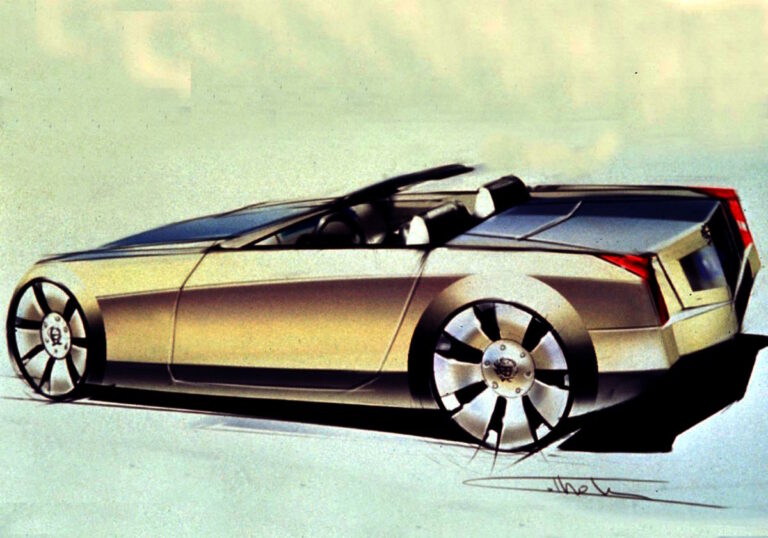
Evoq Concept car
Evoq Concept car

“Art and Science” was another area where Smith succeeded in getting Cadillac what it needed, despite the opposition of a corporate structure designed to deprive divisions of autonomy.  The central precept was a design theme that began with the Evoq concept car, was carried through into the first generation CTS, and then to subsequent generations of the CTS and to the XLR, SRX, ELR.    It was intended to make Cadillacs became instantly recognizable, with a family identity, one that stood apart from the blandness of import competition.  It was intended to convey Cadillac as a luxury brand of advanced technology, yet distinct from the bland rounded shapes of German luxury automobiles.

Success in creating this Cadillac identity at the division level would reverse the decline in Cadillac sales, as introduction of new models increased its sales and expanded its market – much to the delight of its dealers.

Yet quality – true quality designed and manufactured into the vehicle – would be denied to Cadillac.

Smith could not convince General Motors management, intent on centralized sameness, that quality mattered to a potential Cadillac customer and that competing with Lexus, Mercedes-Benz, and BMW meant producing quality equal to theirs.  Advanced features, though necessary, were not sufficient.  Quality required perfection in the basics of fit and finish.

Smith learned that Toyota ran the assembly line for Lexus at slightly more than half the speed of the assembly lines manufacturing Toyotas.  He wanted to adopt a similar approach in the assembly plants manufacturing Cadillacs.  But the General Motors Assembly Division had long before superseded Fisher Body and it now controlled how General Motors built its vehicles, including Cadillacs.  The effort went nowhere.  Cadillacs continued to be manufactured to the same standards as Chevrolets and an opportunity to restore Cadillac’s reputation to match its motto as the “Standard of the World” was squandered.  Precision in fit and finish had elevated Lexus from nowhere into the top tier of prestige brands.  Rather than heed the obvious significance of Lexus’s success, General Motors management would persist in trying to create profit from standardization and cost-cutting, rather than by creating the actual quality that leads to perceived prestige.

Despite the hurdles and obstacles, Smith succeeded in bringing Cadillac back from the brink, driving sales from 173,000 in 1996, immediately prior to his being named Cadillac general manager, to almost 250,000 in 2005, a few years after Smith left Cadillac by promotion in January of 2000 and a point by which the products planned when he was Cadillac’s general manager were now on the market.  He’s justifiably proud of what he accomplished at Cadillac.  Though ruing his losses, he clearly takes personal satisfaction in the wins.

Yet, it didn’t last.

Cadillac’s sales for 2019 – with a vastly expanded model range compared to 1996 – were only 175,000 vehicles.  Arguably, the brand remains in production only because of its sales in China.  The lessons taught in Mr. Smith’s tenure as general manager were not learned.  Cadillac suffered through twelve different executives in charge of the division in the ensuing twenty years, a reflection of the impotence of those ostensibly in charge of the division to control, or even influence, what it sells.

Fin Tales suffers only one deficit.

Throughout the book, the reader is left with the impression that there is more to the story, that Mr. Smith has taken too much care not to offend those with whom he once worked and has diplomatically glossed over details that would add impact to the story of his successes and more fully illuminate the failures.  In particular, his praise for Ron Zarrella’s belated support of the first generation CTS seems almost as though it were compensation for his criticism of the “brand management” structure Zarrella created, rather than the tardy epiphany it appears to have been.

Mr. Smith concludes with the expressed hope that the all-electric future now promised Cadillac will allow the brand to regain its prestige and place in the luxury car market.  He sees it as consistent with the brand’s proper role as a leader in new technology.

Yet, Fin Tails is a story of management dedicated to a plan, a plan that not only dictated to the divisions and the brands, but to the customers.  “Brand management” was a concept that dictated a corporate structure designed to decide what was best for the customer, whether or not it was what the customer wanted, and to create brand identity by badge, not by creating quality.  The lesson implicit in each chapter of the book is that centralizing decision making at the highest levels, ignoring the wishes and needs of customers, and focusing on cost-cutting rather than product quality, assure failure – large scale failure.  Mr. Smith has contributed to the history of Cadillac, whether Cadillac ultimately succeeds in the next decade or fails.  But he has not told the whole story, and that is a story that would be worth telling.   It would be illuminating for Mr. Smith to write more about that plan and its impact, tracing its daily deleterious effects rather than merely highlighting the occasional heroic executive who bucked the plan.

Today General Motors is operating on one concept – that the automotive future is electric – and one platform for that future – the Ultium.  The decision to produce only electric Cadillacs is not one taken because the market wants them.  It is taken because General Motors management has decreed it.  General Motors is relying on government subsidy, rather than consumer desire, to promote sale of electric vehicles and to simultaneously burden internal combustion vehicles with higher costs and lower values.  It is attempting to create a market for the products it will produce by destroying the market for those it currently produces.

Fin Tails is the story of another era in which General Motors’ management listened only to itself.

Smith, John. Fin Tales, Saving Cadillac: America’s Luxury Icon, 1st ed., AVIVA, 2022.

A DOSE OF REALITY

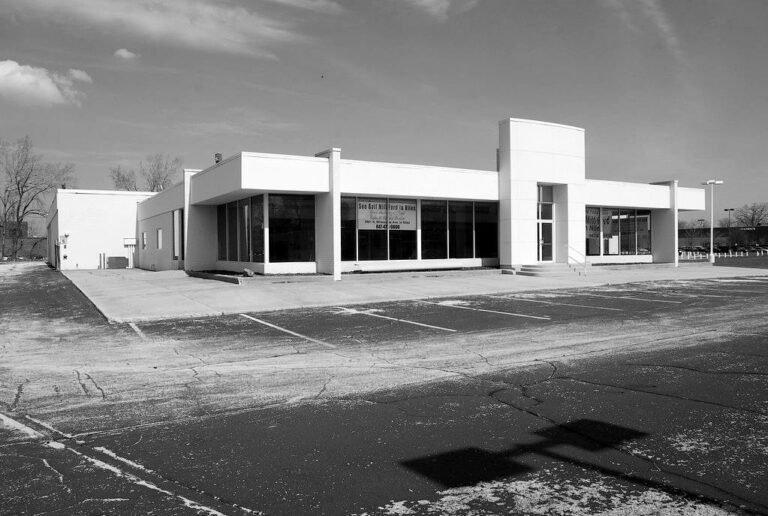
Closed Ford Dealership
Closed Ford dealership in Illinois

The herd mentality is alive and well among automobile industry executives, not excluding Mary Barra and Jim Farley.  Viewing Elon Musk and Tesla as their lodestar, automobile manufacturers seem intent on destroying the dealership model of sales.  They’re going to regret that because they’re going to do what they always do – make too many cars and trucks.

A recent article in Car and Driver magazine about the future of automobile dealers touched upon this central point but did not really give it the emphasis it deserves.

The dealership model of automobile sales was developed as the answer to two problems: the undercapitalization of manufacturers and the seasonal variation in sales.  Automobile manufacturers today may be so flush with cash that they can, for example, squander billions on driverless cars (as General Motors, Ford, and Volkswagen have done), but the second problem has not disappeared.  It is only hiding.

The last few years have been lush times for automobile manufacturers because of scarcity.  The pandemic, chip, and other supply chain issues (exacerbated, of course, by the industry’s earlier moves to “just-in-time” inventory systems that shifted parts inventory costs to suppliers but also forfeited direct control over that inventory) coupled with very low interest rates resulted in empty dealer lots, new cars routinely selling above “sticker,” and used cars that didn’t depreciate.

It won’t last.  And when it flips, the automobile manufacturers are going to need their dealers, just as the industry has needed them throughout its history.

Globally, automakers have enormous excess production capacity.  Excess production capacity is inevitable in an industry in which profit depends on the volume of sales.  No manufacturer wants to so limit itself that it cannot meet demand, thereby ceding sales to competitors that have more capacity.  Developing new models today is as necessary to being competitive as it has ever been.  Amortizing development costs over a production run will always mean that a successful product makes huge profits and an unsuccessful one creates huge losses.  It also means the incremental cost of producing one more vehicle will always encourage over production of laggard models.

Here is how that works.  Assume development costs of a new model at $15 billion, which is actually a low number for an entirely new model.  Assume also projected sales of 1.5 million vehicles over a product life of five years.  To assure that the new model makes back enough money that the manufacturer can recoup its development costs and thereby finance the next new model, each vehicle sold must generate $1,000 in revenue above the direct and indirect costs of production (i.e., materials and labor, plant overhead, advertising costs, interest expenses, health care and pension costs, salaries, etc.).

Once the manufacturer has hit that projected sales target, that $1,000 is no longer needed to recoup costs and becomes the purest of all profit.

It leverages the other way, as well.  If, for example, the new model is actually selling at a rate that’s likely to miss the target by 250,000 vehicles, then it will fail to recoup $250 million.  Faced with that crisis, the manufacturer will make the rational move:  it will drop the price.  Even if dropping the price by $500 per vehicle means recouping less, the reality is that every vehicle sold for more than the basic costs of producing it – labor and materials – means the vehicle is producing an “operating profit” (revenue above direct costs of production) and the manufacturer is reducing its overall loss on the model.  That same logic also means that a vehicle that has hit its production target can be sold for less and still generate a very large profit for the manufacturer, allowing it to progressively reduce the price and keep the vehicle in production.

Automobile Assembly Line

There is another element of automobile production that bears on profit.  Mass production requires constant production to fully achieve the economies of scale that allow predictable pricing.  Once you have an assembly line in operation, shutting it down even briefly costs millions of dollars.   (In 2009, a survey of automobile industry executives reported them as calculating the cost of shutting down an assembly line at $25,000 to $50,000 a minute.  In 2008, Chrysler triggered a spat with one of its suppliers, forcing the supplier into bankruptcy and threatening the closure of fourteen assembly plants as a consequence.  The company’s lawyers told the bankruptcy court that Chrysler could face $225 million in costs from a shutdown of those plants.)  So, you do everything possible to avoid cutting production.  You cannot match production to demand, day to day or even month to month.  You do everything possible to keep the rate of production at the level projected when determining the amortization of that model over its expected production life.

Against these background economics, it is worthwhile to appreciate the current state of the automobile industry and its lock-step march toward an electric future.  (There are many reasons to question whether the notion of an all-electric automotive future is feasible or desirable, and it is evident that automobile manufacturers are counting on governments to force adoption of electric automobiles.   All of that is fair game for comment.  But that is beyond the scope of this post, which is limited to the role of dealers in the industry’s future.)

Today, electric vehicles are less than five percent of the market for new automobiles and trucks.  Overall, new cars and trucks remain a scarce commodity – in the sense that economists use the term ‘scarcity.’  Tesla has been able to operate without dealers because the market it was creating was far larger than its ability to meet the demands of that market, one in which it had no competition.  It does not have to be a large overall market to accomplish this.  It need only be a market that is much larger than production volume.

But success with any automobile or truck means that someone will compete.  In the 1950’s, Volkswagen created a market for a small, inexpensive vehicle with low operating costs.  American Motors and Studebaker booked profits by reworking existing models as “economy cars.”  That led the major manufacturers in the 1960’s to aim new smaller cars at that market, redefining it, expanding it, and ultimately overwhelming it.

Eliminating dealers, or the functional equivalent – attempting to avoid the impact of state franchise protection laws by reducing their role to little more than delivery agents and eliminating their profitability – necessarily means that manufacturers must absorb the costs now incurred by dealers.

These are the costs of overproduction and industry overcapacity.

Volume automobile manufacturers want to sell as many vehicles as possible.  To that end, they will develop new and improved models that are intended to increase sales and market share.  Some of those new models will gain more favor with customers than others.  The manufacturers of those others will respond by cutting the price of their laggard model, as they themselves introduce other new models that they hope will be winners.   Industry economics, as illustrated above, mean that manufacturers will constantly seek to meet demand for popular models even as they simultaneously cut prices to move those that are less popular.

History, it is said, repeats.  The period following World War Two through the 1950’s can tell us something about what the automobile industry is experiencing currently.

Following World War Two, demand for new cars meant anything would sell.  Production resumed with face-lifted 1942 models as manufacturers raced to be first to the market with completely new models.  As those new models became available, starting in 1948, demand continued to exceed supply as the population entered a decade of rapidly increasing prosperity.  By 1952, that seller’s market had turned into a buyer’s market.  Ford and General Motors began a price war in which other manufacturers were collateral damage.  Both of those manufacturers also poured money into development of new, more advanced models, leading to record sales and profits in 1955.  (In 1955, General Motors became the first corporation to make a profit of $1 billion in a year.)

Casa de Cadillac in California in the 1950's
Casa de Cadillac in California in the 1950’s

When the post-War seller’s market turned into a buyer’s market, it was the automotive dealer that made it possible for the manufacturers to maintain production even as buyers became more selective and price sensitive.  The dealers took the inventory and the costs associated with it.   Any seasonal variations in demand were ironed out by putting seasonally excess production into dealer inventory.  (The manufacturers had even figured out how to make money on that inventory by creating their own dealer finance divisions, such as General Motors Acceptance Corporation, to finance dealership inventory – a “floor plan,” in trade terminology).  Collectively, dealerships also created the secondary market in used cars that supported the market for new cars.  By having a large inventory of new vehicles, dealers were able to capitalize with instant gratification on the urge to have a new car.  People became accustomed to budgeting a car payment as they would a mortgage or rent payment, which also made it possible for them to trade for a new car every two or three years – a concept that would eventually lead automobile dealers to invent leasing new cars.

As the experience of the post-War 1940’s and 1950’s illustrates, in the automobile industry scarcity will always lead to overproduction.  Overproduction will always lead to price-cutting.  Price-cutting, in turn, overall diminishes the value of existing vehicles as trade-ins, putting further pressure on new car prices and making introduction of new models just that much more essential to future profitability for the manufacturers.

Tesla may now be able to sell every vehicle it produces.  General Motors and Ford may be able to book orders for electric pickup trucks into 2025.  But it won’t last.  In fact, the recent news that Tesla is doubling the discount on the Model Y and Model 3 to $7,500 tells you Tesla is putting money on the hood to move the product and maintain production volume – a problem directly related to not having dealers to smooth out variations in customer demand.   See also our post Tesla Needs Dealers to Make a Profit.

Yet, some automobile manufacturers act as though it will last, and last forever.

General Motors is touting a new plan to cut costs.  Instead of holding inventory on dealer lots, they’ll use sales data to manufacture cars that anticipate customers’ selection and hold them at distribution points located within a day of the dealer.  Only there’s nothing new in that plan – it’s the same “pop coms” (for “popular combinations”) scheme the company used in the late 1990’s.  (It also it deprives the company of the interest income it would derive from floor planning that inventory.)  Ford intends to restrict dealers of its electric vehicles to a single demonstrator.  That’s not too different from the immediate post-War years, when ordering a car was the expected way to buy.  But that model rapidly disappeared as production came closer to demand and dealers were able to stock inventory.  Ford may choose to deprive its dealers of inventory.  But this is a competitive industry.  When other manufacturers see that they’ve been handed an advantage by Ford, those other manufacturers will stock dealers with electric inventory and customers will have the choice of having a new vehicle now or one later.  When that’s the choice, now typically wins.

Automobile dealers today are as essential to the financial health of automobile manufacturers as they were a century ago.  The scarcity of new automobiles and trucks of the past two years was artificial.  Some automobile manufacturers are building a new business model based on the belief that they can make scarcity permanent, dynamically balancing supply so that it is always just a little short of demand.

In the automobile business, it doesn’t work that way.

It never has.

It never will.

THE “ASSEMBLED CAR” MAKES A COMEBACK

Jordan Playboy Advertisement

One hundred years ago, many automobiles were produced from standardized components purchased from others, rather than from components manufactured in house by the automobile company.  Comprising 25% of the new car market in 1916, these were called “assembled cars.”  Production costs drove most assembled cars from the market during the 1920’s.  None survived the onset of the depression.  Today, however, the “assembled car” may be making a comeback – as an “EV.”

Shortly after leaving General Motors, Johan de Nysschen, formerly in charge of Cadillac and now Chief Operating Officer of Volkswagen of America, was interviewed by Automobile Magazine.  He was asked about the impact of the electric vehicle (EV) on established automobile manufacturers.  De Nysschen explained that “[t]he ability to differentiate is far more challenging when it comes to EVs than it is with internal combustion because the complexity of the [internal combustion] mechanical system is what creates a better mouse trap. It’s far more  .  .  .   ubiquitous with EVs. You know, you have electric motors. And an electric motor is an electric motor. A battery’s a battery.  Now, I don’t want to oversimplify.  You’ve got your [battery] chemistry. You’ve got more sophisticated motors, but still generally speaking, the differentiation is far lower.

“You could as an automaker decide to invest in mastering, in-house, all of this capability to develop your own batteries and the intellectual property to your cell chemistry. And what can happen is that the entire supplier industry—which between them probably have more investment resources than any single automaker—might come up with a better technology.  You’ve just invested in a dead end.

“Now, if you for that reason decide it might be smarter and less risky to partner,   .  .   .   if you end up outsourcing all of this technology, you eventually become just an assembler.  It’s a very complex set of circumstances that you have to manage about how much to invest, the return on the product, how much do you reuse components.  It’s entirely a new ballgame.”

Well, not really.

It is exactly the same ballgame automobile manufacturers were playing one hundred years ago.  Then, as now, there was one big advantage to producing an assembled car and one big disadvantage.  Both were tied to cost.

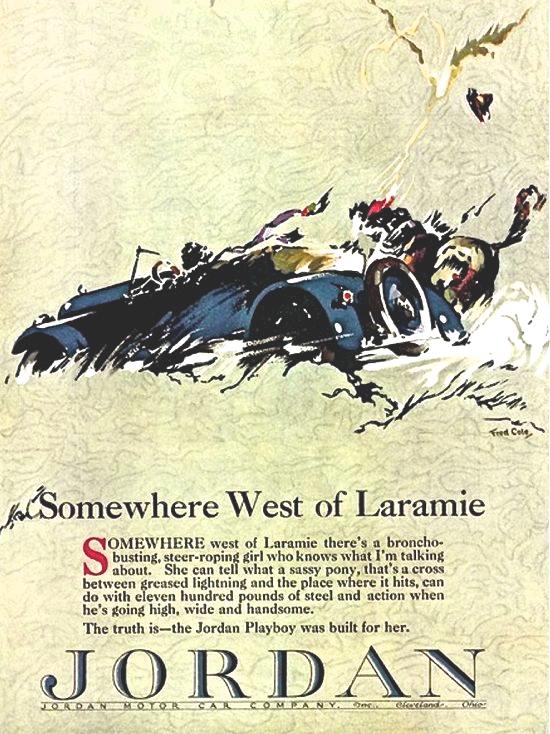
"Somewhere West of Laramie"
“Somewhere West of Laramie” original advertisement – Click on image to read in full size

The advantage of producing an automobile from outsourced standardized components is lower capital investment.  The company is spared the expense of engineering the components and tooling for their production.  Ultimately, this means it requires less capital to enter the market with a new vehicle than it would if everything were designed and manufactured in-house.  In turn, that allows available capital to be directed to areas, such as marketing, that are critical to sales and to start the flow of revenue into the company.

An illustration is the Jordan, produced from 1917 to 1931.  Today, Jordan is perhaps best known for the Jordan Playboy model and Jordan’s “Somewhere West of Laramie” advertisement – an ad commonly credited as the first designed to sell by evoking an image, rather than merely reciting an automobile’s attributes.  The Jordan, however, was the prototypical “assembled car.”  As James H. Lackey wrote in his book, The Jordan Automobile: A History, “It would have been impossible to start a company which manufactured all of its components in house with only $800,000.  Assembled automobiles were the only alternative.”  The company’s founder, Edward “Ned” Jordan, was rather blunt about it: “We never were automobile manufacturers,” Jordan wrote in his autobiography, The Inside Story of Adam and Eve.  “We were pioneers of a new technique in assembly production, custom style sales and advertising.  We had one air compressor to power the assembly line, bought only the finest component parts from the most experienced quality parts makers, designed a chassis for those parts that possessed the most ideal weight distribution yet attained. Then we ‘dolled them up’ just as every good car is dressed today.”

Jordan reached its peak production of 8,469 automobiles in 1926.  By 1928, however, Ned Jordan began liquidating his interest in the company.  A new model had flopped, eating up profits.  Perhaps most importantly, however, large automobile manufacturers were now financing dealer inventories, which Jordan could not do.  His timing was fortunate.  In 1952, Mr. Jordan told Advertising Age, “Thank the Lord we quit just in time.  Our families have since been enjoying the trust funds which the Playboy earned.”

Edward "Ned" Jordan
Edward “Ned” Jordan

The Jordan illustrates both the advantage and the disadvantage of an assembled car.  As Mr. Jordan’s reference to trust funds implies, it was an approach that could be highly profitable.  But, as the company’s ultimate demise also illustrates, it is an approach that is highly vulnerable to the underlying costs of production.

It is no accident that the “assembled car was typically a medium-priced automobile, rather than a low-priced competitor to Ford or Chevrolet.  Because components of an assembled car were purchased from third parties in lower quantities, those components cost the company producing an assembled car more than equivalent components cost a manufacturer producing those components itself, in-house and in volume.  That made the assembled car more expensive to produce, a disadvantage more easily absorbed when selling automobiles at higher price points.

In reality, the manufacturer of an assembled car did not avoid the expense of manufacturing components – it has merely shifted the time when those costs were paid.  Instead of investing up-front in design and tooling, the manufacturers of assembled cars were on a pay-as-you go plan, one that added a carrying cost to the ultimate price paid for components.

The producer of an assembled car also lost any opportunity to argue its design was superior to that of a competitor.   There was nothing unique about the components of an assembled car, no unique engineering proprietary to the brand about which the company could boast in its marketing.  Most assembled car brands advertised the specifications of their vehicles without disclosing the actual manufacturers of its components.  Without the advertising genius of a Ned Jordan to sell on image, that meant there was little difference between the specifications of an assembled car and that of its competitors.  There was, consequently, nothing unique to the brand in its marketing.

A few producers of assembled cars chose to confront this problem directly and overtly market their product as better than other brands because built of better components.   Their argument was that they combine the best components available to produce a superior automobile.

Cole advertisement for asssembled car
Cole standardized car advertisment

A 1917 advertisement for Biddle took this approach, prominently featuring its superior “Duesenburg Motor.”   Cole advertised its assembled car as the “standardized car.”  In so doing, Cole was using the word “standard” exactly as Cadillac did when it referred to itself as the “Standard of the World” or John Rockefeller did when naming his kerosene company “Standard Oil.”  “Standard” meant the perfect measure, the standard against which anything of the same type was to be measured.  Cole argued that it produced a product superior overall because each of its subsidiary components was made by a manufacturer expert in that component – the automotive equivalent of a baseball team comprised of only the best players.   Cole did buy the best – it even sourced its V-8 engines from the same General Motors subsidiary that manufactured the Cadillac V-8.  But Biddle ended its production in 1922.  Cole ceased production in 1925.  The cost of components against the price it could charge in the market drained the profit from the enterprise.

There was another problem for the producer of an “assembled car.”  Producing an automobile from off-the-shelf components manufactured by others meant the vehicle was assembled from major components that had not been designed for it.

Writing in the Horseless Age magazine in December of 1909, Mr. E. J. Bartlett described the pitfalls that awaited the novice producer of an assembled car:  “The principal parts once secured, the engineer can turn his attention to details of their construction which previously he has been, to some extent, obliged to neglect. He finds, for example, the hub caps on the front and rear axles do not match, that his front hubs come drilled for twelve spokes and his wheels with ten spokes; that the steering arm on the front axle has a one inch ball, and on the steering column lever a 1 1/2 inch ball; water piping on the engine doesn’t match the radiator, the universal joint doesn’t fit the pinion shaft on the axle, and the rear bearing of the transmission is not large enough to take the torque of the braking and driving strains. It seems that nothing is properly designed, and he blames the parts makers for their seeming inconsistency, and yet they are naturally furnishing what their experience shows is most generally required. The inherent trouble lies in the fact that the various parts were not designed to be used together.”

Diana advertisement for assembled carOne of the most vivid illustrations of failure to design a vehicle to suit its components, or vice-versa, is the Diana.  In mythology, Diana is goddess of the Moon.  The Diana automobile was an assembled car introduced in 1925 by a subsidiary of the Moon Motor Car Company.  Its engine was sourced from Continental Motors Company – a major supplier of engines for assembled cars, including Jordan.  Unfortunately, whether due to Continental’s design of the engine or Moon’s design of its cooling system, the Diana’s engines were prone to overheat.  The resulting warranty claims destroyed the Diana’s reputation in the market and production ended in 1929.  (For more on Moon Motor Company, see our post about Moon and the Ruxton.)

Nonetheless, these were pitfalls that could be avoided.  As Mr. Bartlett noted in the conclusion to his article, were a company to chose carefully among the components available and properly engineer its product, then “with sound financial backing, there is no doubt that the assembled car can be made a success.”

Today, it is conventional wisdom among all established automobile manufacturers that the electric vehicle is the future of the automobile   To some extent, this results from government policies in China and the European Union that promote production of electric vehicles.  Consequently, major automobile manufacturers are investing billions into electric battery research.   No automobile executive wants to be the one that missed the EV boat.

Even so, these same manufacturers and executives are facing new and unwelcome potential competition.  Producing an assembled car may, once again, make economic sense – and present a challenge to established automobile manufacturers that they may not be equipped to meet.

Jaguar I Pace
Jaguar I Pace uses LG Chem battery

Unlike the situation a century ago when large automobile manufacturers held a technological and cost edge in development of internal combustion engines and drivetrains that assembled car producers could not match with outsourced components, today the established automobile manufactures are faced with another established industry that is already engaged in advanced development of electric drivetrains.  It is the large battery manufacturers who have the head-start in developing the battery technology upon which the future success of the EV depends.  As reported by the Korea Times, three companies – LG Chem of Korea, Panasonic of Japan, and Contemporary Amperex Technology (CATL) of China – together hold 70% of the current EV battery market, with Samsung recently announcing advances in solid state battery technology that could provide a 500 mile range, very quick charging times, and a battery life of 500,000 miles.

There is no reason to believe these battery manufacturers intend to cede that market to anyone else, or that the current automobile manufacturers can create battery technology that is superior.   These battery manufacturers will continue to be major suppliers for EVs, and very possibly the dominant suppliers.

That creates, again, the opportunity for successfully producing and marketing an assembled car.

Today, as Mr. De Nysschen’s comments imply, new EV producers may be able to source electric motors and batteries competitive with those of established automobile manufacturers.  These new EV producers will need less capital to enter the market and still be amply financed to effectively market their product – just as Jordan did in its day.  They will have advantages that the assembled car producer of a century ago lacked.  The components they may be able to purchase may exceed the technological sophistication of automobile manufacturers keeping manufacturing in-house.  Private equity funds now create access to credit for financing inventory and consumer sales unimaginable in the 1920’s.   The new producer of an EV may also be able to create an image of exclusivity for its products, a natural avenue for promoting a smaller production volume.

The “assembled car” may be about to make a comeback.

THE WHEEL IN AUTOMOTIVE HISTORY

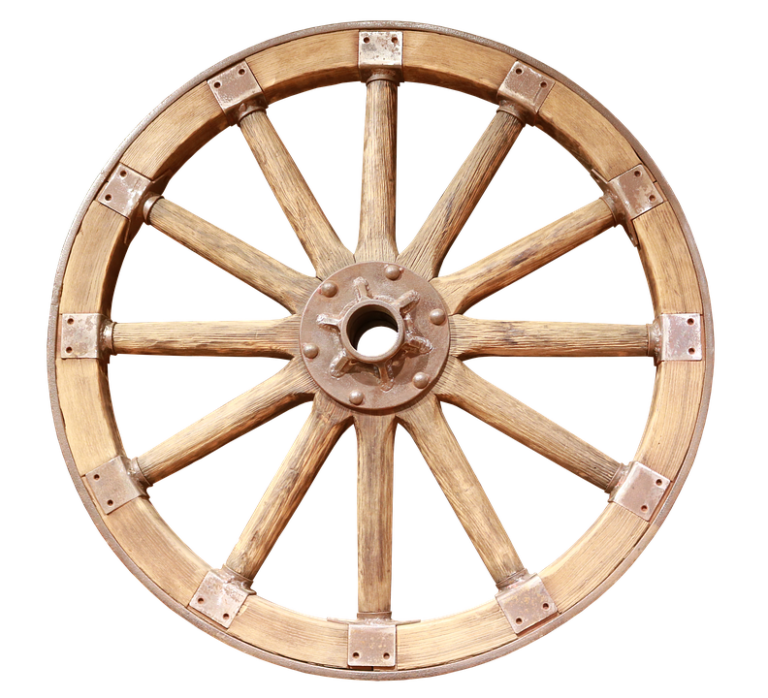
Wheel

Automobile Chronicles is about “Automotive History – Then and Now.”  But there would not be any automotive history were it not for the wheel.   Two of our readers, Emily and Melissa, who are both students and students of history, recently pointed this out and directed our attention to an article discussing the history of the wheel they had discovered in their research.

They have a point.  Automotive history tends to focus on more glamorous subjects – the artistry of the automotive form as it has evolved over the decades, the increases in power and performance as engineering overcomes limits once thought impossible to surmount.  But, none of that would go anywhere – literally – without the wheel.  Indeed, if there is any form fundamental to the automobile, it must be the perfectly circular wheel.  Not only does the automobile use the wheel to move and steer, it is wheels in the form of pulleys that harness engine power to operate accessory drives essential to operating its electrical, cooling, and emissions systems and providing climate comfort for its occupants.

So, who invented the wheel?

Potters wheel
Potters wheel

That distinction is lost to history, though scholars date the first use of the wheel – as a potter’s wheel – to Mesopotamia in 3500 B.C.   Using wheels for transportation developed much later – probably because the wheel requires an axle to be of any real use – and combining the wheel and an axle is a rather sophisticated mechanical achievement, as explained by Interesting Engineering:

“The idea of adding an axle isn’t a simple one. For the system to work, the wheel must rotate freely around the axle. This is achieved by fitting the axle directly in the center of the wheel to maximize continuity during motion. In addition, the axle and the hole alignment must be perpendicular to reduce friction. Furthermore, the axle should remain as thin as possible to reduce its surface area while still being able to support the load.”

The wheel was a uniquely human invention – not something copied form nature.  Egyptian and others may have used logs as rollers.  But logs are not wheels.  Wheels required human ingenuity to devise, and then to evolve from a tool used to produce pottery or make moving loads easier into the basis of transportation.

By the time of ancient Greece, about 2000 B.C., the wheel had spokes, an improvement attributed to the Shintashta culture that also developed the first known chariots.  About one thousand years later, the Celts added iron rims to their wheel to increase wear – the first known effort in history toward increasing tire mileage.

Belt drive
Belt drive

But what about the pulley – the smaller wheel that is the foundation of those accessory drives and timing belts of today’s engines?   That, too, dates to Mesopotamia, where pulleys were used for lifting water starting about 1500 B.C.  The device’s modern popularity, however, dates to that uniquely American problem-solver, Benjamin Franklin.

The story, according to Ebudilla.com, is that Franklin, in 1730, ordered a new printing press.  It was too large to fit the staircase leading to his third-floor premises.  Seeing the wheels on the wagon that had delivered the press gave him an idea and he rigged up a pulley system to lift the press, by-passing the stairs.  From there, the idea was copied and spread.  So, at any rate, goes the story – and it’s a good story, even if there may have been some embellishment over the years.

John Boyd Dunlap
John Boyd Dunlap

We cannot end this post, though, without mentioning the men who made the wheel what it is today:  John Boyd Dunlap, a veterinarian in Belfast, and John Fagan, the physician treating Dunlap’s son.  Dr. Fagan had prescribed cycling as a cure for headaches afflicting the child.  To cushion the bumps, they invented the pneumatic tire.  Mr. Dunlap would create the tire company bearing his name.  Dr. Fagan became Sir John Fagan when he was knighted.

On this Sunday, May 26th, many of us – certainly this author – will be glued to the television screen from early morning to late night as the annual “Greatest Day in Racing” progresses from the Grand Prix of Monaco through the Indianapolis 500 and ends with the Coca-Cola 600.  The commentators will tell us about the aero packages, the engines (or “power units” as Formula One calls its hybrid motor).  They will certainly tell us about the tires – the compounds, the wear, and the inevitable tire failures.

They probably won’t mention the wheel that made it all possible.

So thanks, Emily and Melissa.  Every now and then, it is good to be reminded that today’s accomplishments and events are grounded in their history.

In that sense, automotive history begins long before the automobile.

MODEL T AND MODEL 3: THE PARALLELS OF HENRY FORD AND ELON MUSK – PART TWO

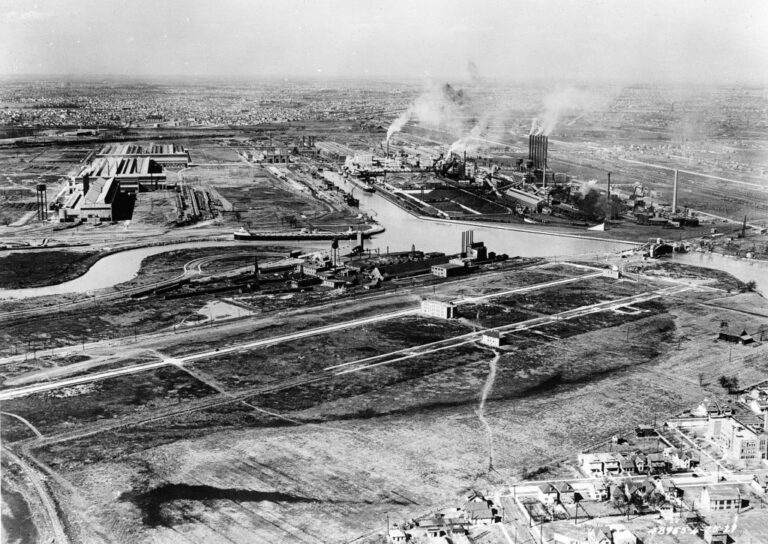
River Rouge under construction - Ford and Tesla parallels
River Rouge complex under construction in 1918

Control of 59% of Ford Motor Company stock allowed Henry Ford to introduce the Model T in 1909.   He added the assembly line in 1913.  In 1915, he began acquiring land for the ultimate in industrial vertical integration: the River Rouge complex.  In pursuing these plans, Henry Ford would discover that even 59% of the Ford Motor Company shares would not give him total control.  To achieve that, he would need to own all of them.  The Ford and Tesla parallels and those of their respective founders show history repeating itself.

In 1915, Ford began acquiring 2,000 acres of land along the Rouge River in Detroit.  During World War I, the river was dredged and widened enough to allow Great Lakes freighter ships to dock at the site.   Henry Ford now planned a massive industrial complex on the site.

He had already begun the process of eliminating reliance on outside suppliers.  The Ford Motor Company owned iron mines and limestone quarries in Michigan, Minnesota, and Wisconsin.  Ore from those mines was transported on Great Lakes ships owned by Ford Motor Company.  When the complex was completed, River Rouge blast furnaces would turn the ore into iron.  At the River Rouge foundry, which would be the largest in the world, molten iron would be poured for engine blocks, cylinder heads, and exhaust manifolds.  River Rouge electric and open-hearth furnaces would produce steel from the iron that would be processed at River Rouge rolling mills, and then be used at the River Rouge factory to  manufacture Ford automobiles and trucks.

Ford recognized that eliminating outside suppliers reduces costs of production – which increases profit.  The River Rouge complex was another step, albeit a giant one, in Henry Ford’s vision of selling enormous volumes of automobiles at low prices.  Though Henry Ford often spoke as though he were almost philanthropically motivated to continually lower the price of the Model T, it was actually simple business logic.  Just as his decision to pay workers $5.00 a day was designed to cut employee turnover and increase plant efficiency, lowering the price of the Model T was a strategy to continually increase sales, undercut competition, and make massive profits.

By now, Henry Ford was a very rich man.  So were his remaining investors.  The Dodge Brothers received dividends on their 10% of the outstanding Ford Motor Company shares totaling $35,000,000.00 in the 13 years following the company’s founding.  But the Dodge brothers were no longer allies of the Ford Motor Company.  They had become competitors.

John and Horace Dodge had assembled Fords under contract with the Ford Motor Company.  But these were one-year contracts, subject to annual renewal.  With Henry Ford owning a majority of the stock, there was risk the contracts would be given to others – and the growth of the automobile industry in Detroit meant that there were many other suppliers available.  Even when the contracts were renewed, profit margins were decreasing.  So, in 1913, the Dodge brothers ended the contract with Ford Motor Company to produce their own automobile.

1917 Dodge Model 30 - more Ford and Musk parallels
1917 Dodge Model 30 on display at Wisconsin Automobile Museum

Introduced late in 1914, the Dodge model 30/35 was twice the price of a Model T.  It also offered more features, including an electric starter and three speed transmission (in contrast to the Model T’s crank and two-speed planetary transmission).   More than 10 Model T’s were sold in 1915 for every Dodge sold – but Dodge sales were stong enough to rank it third in total automobile sales for the year.

This meant the Ford Motor Company was paying dividends to a competitor.  The Dodge brothers still owned 10% of the Ford Motor Company .  In 1915, dividend distributions to Ford Motor Company shareholders had been 66% of profits.  In the five years preceding, dividends had been between 40% and 50% of profits.

That was about to end.  Henry Ford decided the money would be better spent on building the River Rouge complex.  He walked into the Dodges’ offices in 1916 and informed the brothers that the Ford Motor Company dividend would total 1,200,000 in 1916 – a dividend of $120,000.00 for the two brothers – and the rest would be reinvested to build the River Rouge complex.

The Dodge brothers sued.

Their lawsuit wasn’t really about the money.  Their goal was blocking construction of the River Rouge complex.  The Dodges – though taking the position in court that building the River Rouge complex was wasting corporate assets – fully understood the complex could put other automobile manufacturers, including the Dodge Brothers Motor Company, at a competitive disadvantage they could not overcome.  They asked for an injunction blocking construction of the River Rouge complex and ordering Ford Motor Company to issue a $20,000.000.00 dividend to its shareholders.

In the end, the Dodges won almost nothing.  They delayed construction of the River Rouge complex for almost two years before the Michigan Supreme Court ruled against them.  Though the Court did require Ford Motor Company to pay the special dividend, the amount the Dodges received was only 10% of the total dividend (and they had to pay 70% of that in federal income taxes).  The court even ordered them to pay two-thirds of the court costs.

In the meantime, Henry Ford’s emphasis in his trial testimony on producing automobiles at the lowest possible price so more people could afford one had, as he undoubtedly intended, enhanced his public image.  Newspaper editorials praised him as a businessman who cared about the needs of ordinary people.  He emerged the hero.

River Rouge plant ccompleted
River Rouge plant completed

The River Rouge complex was completed in 1928.  It employed 100,000 workers and was the largest industrial production facility in the world.  Though Ford Motor Company sold the steel production facilities in 1989, the River Rouge assembly plant still produces Ford vehicles.  A new F-150 rolls off the end of the line at the Rouge every 53 seconds.  The River Rouge complex was designated a National Historic Landmark District in 1978.

Even though beset by problems of execution, Elon Musk’s emphasis on vertical integration is conceptually no different than the vision Henry Ford achieved building the River Rouge complex.  Musk want to build more Gigafactories and produce every component of Tesla, Inc. products.   He is following in Henry Ford’s footsteps and for the same reasons.

Having won in court, Henry Ford set about getting rid of the Dodges and the remaining minority shareholders.  He did it by capitalizing on his celebrity status and his public identification with the Ford Motor Company.

Henry Ford first resigned his position as President of the Ford Motor Company and installed his son, Edsel, in that position.  Henry Ford then decamped to California, ostensibly on vacation.  While in California, he announced he would form a new company.  This new company would build a new car, more modern than the Model T at half the price.   Newspapers portrayed this new company as a done deal, with the new automobile a concept that would become reality in only the short time it would take to gear up production.

Model T sales dipped as the public awaited the newer, better car.

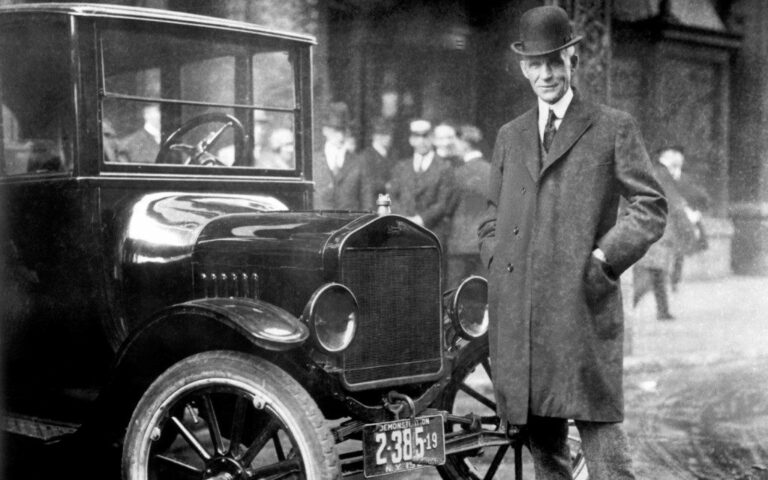
Henry Ford in 1919
Henry Ford in 1919

Ford Motor Company was committed to selling automobiles in large volume at low prices, with the comparatively small profit margin per vehicle more than justified by the massive profits generated  by selling enormous numbers of them.  If that volume were not maintained, profits would dry up quickly as economies of scale became liabilities of excess capacity and overhead.

The Ford Motor Company did not need Henry Ford as a competitor.

The Dodges and other minority shareholders couldn’t sue.  Shareholders, unlike corporate officers or members of a board of directors, have no duty of loyalty to the company in which they hold stock.   With Henry Ford no longer an officer of the Ford Motor Company, he was free to develop a competitor – exactly what John and Horace Dodge had done while receiving dividends as Ford Motor Company stockholders.

Faced with this prospect, it began to make sense for minority shareholders, including the Dodges, to sell their stock.

But there were no buyers.  There was no market for stock in a company controlled by

Henry Ford and against which Henry Ford planned to compete with a better product.

Eventually, a few adventurous purchasers willing to take that risk appeared and the minority shareholders sold.  The real purchaser was Henry Ford acting through agents.  Only Couzens, who had resigned as an officer of the company in 1915 and was now the Mayor of Detroit, saw through the scheme.  He refused to sell at any price until the real purchaser revealed himself and then demanded a better price than offered the others.  He got it.  (The irony is that Couzens had long wanted to sell his Ford stock.  He considered it a political liability and potential conflict of interest.  Couzens would later serve as a United States Senator from Michigan.  He died in 1936.  Henry Ford was the lead pallbearer at the funeral.)

Henry Ford now owned 100% of the shares of the Ford Motor Company.  That stock would give him absolute control over the company until his death.

The times are different now.  The laws are different.  The market is different, both the stock market and the automobile market.

But one thing is the same.   Like Henry Ford before him, Elon Musk has largely erased the distinction between himself and his company.  The Ford and Tesla parallels are obvious.

Consider what would happen if Elon Musk were to leave Tesla, Inc. to concentrate exclusively on other enterprises.  Without Musk’s vision, the company would lose its magic.  Tesla, Inc. shares would drop in value.  The immediate sell-off would be only the beginning as the press began looking for a deeper motive – speculating that Musk was really leaving because the company was failing.  As the stock price fell, Tesla’s ability to raise capital and borrow funds to refinance debt would dry up.  Suppliers would become nervous about carrying Tesla, Inc. receivables.

In this environment, sales of the Model 3 would shrivel.  With Musk gone, the glamour would be gone.  The Model 3 would no longer be a statement that its owner is a socially conscious and prosperous man or woman of the future.  Tesla would be the next orphan car, one built by a company in serious jeopardy of bankruptcy.   Without the cash flow of volume Model 3 production, Tesla, Inc would be unable to survive as an independent company.

If that seems an overwrought scenario, ask yourself:

Would you invest in Tesla, Inc. without Elon Musk?

Henry Ford understood the power of celebrity and public image, power he used to implement his vision and control his company’s destiny.

Elon Musk should study Henry Ford.


To start at the beginning, please read Part One of this article.

For a detailed legal analysis of Dodge v. Ford Motor Company and its effect on modern corporate law, see M. Todd Henderson’s analysis in the Chicago Working Paper Series.

MODEL T AND MODEL 3: THE PARALLELS OF HENRY FORD AND ELON MUSK – PART ONE

PARALLELS OF HENRY FORD AND ELON MUSK - PART ONE
Henry Ford and the Model T

[vc_row][vc_column][vc_column_text]

Elon Musk has a lot in common with Henry Ford.  fact, studying Henry Ford could give Mr. Musk guidance in his quest to make Tesla successful.  In the end, Henry Ford won – and won big.  So, too, can Musk.  Parallels of Ford and Musk are revealing.

Like Henry Ford, Musk has his own public image to blur, and ultimately erase, the distinction between his company and himself.  Musk faces challenges for control of Tesla similar to those Henry Ford overcame to win absolute control of Ford Motor Company.

When Elon Musk rails against “shorts-sellers” – stock speculators selling Tesla, Inc. shares for later delivery at a fixed price expecting the stock price will drop, so they can cover deliver shares purchased later for less – he is echoing Henry Ford’s hatred of passive investors who backed his companies with their money, only to overrule his decisions.  When the federal government’s Securities and Exchange Commission sued to bar Musk from control of Tesla, Inc., the threat was reminiscent of the Dodge brothers’ lawsuit against Ford Motor Company.  Musk wants Tesla, Inc. to build multiple “Gigafactories,” like the one it constructed in Nevada so that Tesla can make all components of its products and eliminate outside suppliers.  In this, too, Musk is copying Henry Ford.   The model of vertical integration Musk is pursuing was achieved by Henry Ford a century before, on the banks of the River Rouge in Detroit.  The River Rouge industrial complex turned iron ore from Ford mines into Ford automobiles.

Henry Ford developed his antipathy to passive investors from personal experience with the real cost of outside money.  Ford needed outside investors to bankroll his start-up automobile companies.  Twice, outside investors ended up overruling his decisions, depriving him of control of the companies he created.  The third time turned out differently.  Henry Ford had learned from experience.

It all started with the Detroit Automobile Company.  This was Henry Ford’s first attempt to build a production automobile.  Though the company was founded to manufacture and sell automobiles, Henry Ford did not build automobiles.  Instead, he continued to work on the design.  His investors saw the prospect of profit dimming and demanded he start production.  When he did not, they dissolved the company.

A few of the investors in the Detroit Automobile Company still believed in Henry Ford.  They formed the Henry Ford Company, but again held control.  Henry Ford owned only 17% of the stock.    He did not change his focus on design.  The investors brought in an outside consultant to evaluate the company.  It is an open question whether Henry Ford quit or was fired, but he left the company in exchange for a small payment for his stock.  The outside expert, Henry Leland, was  hired to run the company.  With Ford no longer involved, the Board of Directors adopted Cadillac Automobile Company as its new name.  As Cadillac, under new management, the company thrived.  (And, yes, that is the Cadillac later acquired by General Motors, and Henry Leland did later found Lincoln, only for that company to fail in the depression and be bought by Ford, who then fired Leland.)

Musk, like Henry Ford in his first two automobile ventures, seems to display more talent at design than production.  Musk was the driving force behind developing the Model 3, insisting that it be designed in all respects as an electric automobile, rather than simply a conventional automobile powered by an electric motor.  Every detail was evaluated by its impact on the vehicle’s range before the battery needed recharging.  Even the brakes were designed with that goal in mind.  No detail escaped Musk’s’ attention – it was Musk who insisted the ventilation system have no visible vents.

Yet, Tesla, Inc. has not met the initially announced date for introduction of any new model.  Musk’s many predictions of production volume have been more fantasy than reality – reached, if at all, months late.  The production process for the Model 3 has been dominated by trial and error – emphasis on “error.”  At Musk’s insistence, Tesla, Inc. planned a highly automated assembly line to build the Model 3.  Instead, Tesla ended up producing the Model 3 in a tent.   Automated production of batteries at the Gigafactory was similarly beset with problems, forcing Tesla to assemble batteries by hand.   Today, production of a Tesla Model 3 requires three times as many hours of assembly labor time than Toyota requires to produce a Camry.

Ford 999 - Parallels of Ford and Musk
Ford 999

Henry Ford next built a pair of racing automobiles.  One was named “999” after the New York Central steam locomotive that had made headlines for exceeding 100 mph.  Barney Oldfield campaigned “999” throughout the United States.  In 1904, Henry Ford used the other racer to set a new land speed record.  (The “999” is now in the Henry Ford Museum in Dearborn, Michigan.  The locomotive for which it was named is on display at the Science and Industry Museum in Chicago, Illinois.)  The land speed record and Oldfield’s many victories in “999” brought Henry Ford word-wide fame.  He was now a celebrity whose name was indelibly linked in public perception to the automobile.

Though Henry Ford despised passive investors, he could not make his third try at automobile manufacturing without them.  He needed the money.  He turned to two sources of outside capital.  One was Detroit businessman Alexander Y. Malcomson.  The other was Horace and John Dodge, brothers who operated a successful Detroit machining and manufacturing company.

Malcomson and Henry Ford created a partnership to develop a new automobile.  Malcomson contributed $3000.00.  Ford contributed his skill and experience.  The result was the design for the Ford Model A.  With the design complete, the partnership was dissolved and a new corporation – the Ford Motor Company – was formed to produce the Model A.   Malcomson was now joined by other outside investors, including his clerk, James Couzens, in buying Ford Motor Company stock.  One thousand shares were divided, with Malcomson and Ford each holding 25.5%, Couzens, who became an officer of the company, holding 10% and the two lawyers who contributed the legal work required to form the corporation receiving 5% each.

10% of the stock went to the Dodge brothers.

The Dodge brothers are a story of their own.

By their trade, the Dodge brothers were machinists.  The characterization of them in recent Fiat-Chrysler television commercials as carefree thrill-seekers does them no justice.

John Dodge
John Dodge

In reality, both Dodge brothers had well-deserved reputations as hard-drinking brawlers.   But Horace Dodge’s raw engineering talent combined with John Dodge’s exceptional business acumen had created a business that offered Henry Ford the one thing he lacked

to build the Model A:  production facilities and expertise.

At the time, the Dodge brothers were already well-established in the nascent Detroit automobile industry.  They manufactured engines and transmissions for Oldsmobile – at the time the best-selling automobile brand.   The Oldsmobile contract was a sure thing.  Henry Ford, on the other hand, was a man with two failed ventures behind him.

The Dodges dropped the Oldsmobile contract to build the mechanical components of the Ford Model A.

1903 Ford Model A
1903 Ford Model A

The contribution of Horace and John Dodge to the success of the Ford Motor Company cannot be understated.  The money Malcolmson and his associates invested could not have financed production of the Model A.  It provided the cash advance against the initial parts order demanded by the Dodges.

Horace Dodge
Horace Dodge

The Dodges, however, not only turned the plans for the Model A into the necessary engineering drawings and then produced the parts, but also borrowed $75,000.00 to finance the tooling needed for production.  Even with Malcomson’s backing, that sum would have been beyond Henry Ford’s reach.  To offset the cash advance, the Dodge brothers each gave $5,000.00 promissory notes in exchange for Ford Motor Company stock.

Elon Musk now admits that Tesla, Inc. came close to going broke as it ramped up production of the Model 3.  The near-death experience at the Ford Motor Company came on the eve of Model A production, when cash-on-hand dropped to about $200.00.  Receipts from the first month’s sales solved that problem.  For Ford, the Model A was the money gusher Elon Musk claims the Model 3 will be for Tesla.  Two years after it was introduced, Model A sales totaled more than $3,000,000.00.  Dividends to Ford Motor Company shareholders totaled $200,000.00.

The shareholders had done well.

Henry Ford saw this as an opportunity to manufacture a new model at a much lower price.  He envisioned a vastly increased market for an automobile affordable to millions, not thousands.   Malcomson did not share that vision.  He saw the Model A profits as an opportunity to produce luxury automobiles.  He saw only the existing automobile market and focused on increasing profits per automobile by selling at a higher price.

These were incompatible visions of both the company and the automobile industry.  Henry Ford, who saw automobiles as a product that could be sold to people of ordinary means, was forced to design and built automobiles that were successively more expensive than the models they replaced.  Those automobiles sold well and made large profits.  But they were not the automobiles Henry Ford wanted to build.

To realize his vision, Henry Ford would force Alexander Malcomson and his associates to sell him their stock in Ford Motor Company.

With the connivance of the Dodges and even Couzens, Henry Ford formed the Ford Manufacturing Company.  He then announced that Ford Manufacturing would produce the parts for the new Model N.   The scheme siphoned Ford Motor Company profits to Ford Manufacturing Company by raising the cost paid for parts.

It might seem that Malcolmson and his associates could have stopped this.  But, Henry Ford actually held all the cards.  Implicit in the creation of Ford Manufacturing Company was the threat he would produce automobiles, not merely parts, outside the Ford Motor Company.  Faced with the potential of a Ford Motor Company without Henry Ford, Malcomson and his associates sold out to Henry Ford.

Henry Ford now owned 59% of the Ford Motor Company.

Though perhaps inadvertently, Elon Musk has tested the same tactic.

In June of 2018, Elon Musk tweeted that he was considering taking Tesla, Inc. private and had “secured” funds to do so at $420.00 per share.  Tesla, Inc.’s stock price gained 11% before trading closed for the day.  Musk’s statement also prompted an investigation by the federal government’s Securities and Exchange Commission.  Apparently, the SEC believed Musk was trying to manipulate the price of Tesla stock to the disadvantage of the short-sellers.   In September, claiming that Musk had not, in fact, “secured” financing to take Tesla, Inc. private, the SEC filed suit to bar Musk from exercising management control over the company.

Tesla, Inc. stock dropped 12% in after-hours trading immediately following announcement of the SEC lawsuit.

Within days, perhaps realizing that its own actions were causing far more harm to Tesla, Inc. shareholders than anything Elon Musk had done, the SEC accepted a face-saving settlement.  Musk and Tesla, Inc. agreed to fines that were, for them, token amounts.  Musk agreed to cede the title of Chairman of the Board of Directors to an outside director.  Musk remained Chief Executive Officer, member of the Board of Directors, and firmly in control of Tesla, Inc.

The price of Tesla, Inc. stock gained 15.9% in overnight trading immediately following announcement of the settlement.

While the SEC lawsuit was pending, banking house J. P. Morgan advised clients that Musk’s continued participation in Tesla was “crucial” to the company’s chances for success and without him Tesla would have difficulty raising capital on “amenable” terms.  Even with settlement of the suit, Tesla stock did not recover all value lost after the SEC announced its investigation.  But, the SEC had established, without doubt, that Elon Musk is as indispensable to Tesla, Inc. as Henry Ford was to the Ford Motor Company.

(To be continued in Part Two)[/vc_column_text][/vc_column][/vc_row]


CAN TESLA SUCCEED?

Tesla's Denver mall store - Can Tesla Succeed?
Tesla’s Cherry Creek Mall Store – its only sales outlet in Denver

Can Tesla succeed?

History is full of automobile manufacturers that failed.   The Dodge brothers were the last to start a new automobile manufacturer in the United States that still, in some corporate form, is in the business today.  They did it in 1914.  The most recent serious attempt at starting a domestic mass production automobile company was Kaiser, in 1947.  Henry Kaiser had built the Hoover Dam and turned the tide of World War Two mass producing Liberty ships.  Building automobiles was the only challenge that overwhelmed him, in less than ten years.

Why is this?

Because it is easy in the automobile industry to make money without making a profit.  In the end, though, making a profit is all that matters.

Studebaker provides a case study that illustrates Tesla’s current problems.  Though the differences are obvious, the similarities are critical.  Studebaker illustrates how a car company makes money without making a profit – which is what Tesla is doing right now.

In the late 1950’s, Studebaker saw an opportunity.  Outdated designs had driven sales in a downward spiral from the halcyon postwar years of Lowey designs and a sellers’ market.  Korean war restrictions on steel supplies had deprived it of sales that might have generated funds to update its designs and keep pace with the competition.  Even vampiring the marrow from Packard’s financial bones after merging with it in 1954 had not resuscitated Studebaker’s balance sheet.   But in 1958, the economy was in recession.  There was a market for automobiles smaller and more economical than those produced in Detroit by General Motors, Ford, and Chrysler.

So, Studebaker introduced an “new” car that wasn’t new: the Lark.

Studebaer Lark Advertisement

The Lark was, in actuality, the least expensive model in Studebaker’s previous model line- the Champion – given a major face lift.  Studebaker shortened the wheelbase at the front, added completely different sheet metal, front and rear, and offered the Lark with existing six and V-8 engines.  The redesign left only hints of the old car in the Lark’s outward appearance.  Studebaker advertised the Lark  as classy and economical to operate, all in one easily affordable automobile.

Introduced into an economy still recovering from the 1958 recession and with only the dowdy American Motors Rambler as competition, the Lark was a home run.  Studebaker sold 153,844 vehicles in the 1959 model year, triple 1958 sales.  Instead of previous years’ losses, Studebaker reported a “profit” of $28 million for 1959.

By 1966, Studebaker was out of the automobile business.

The parallels with Tesla are striking.  Like Studebaker in 1959, Tesla is creating a market that others are perfectly positioned to fill.  Like Studebaker in 1959, Tesla is woefully undercapitalized, albeit for different reasons.  Like Studebaker in 1959, Tesla is obscuring its underlying financial weakness by claiming it is making money on current production.

How an automobile manufacturer accounts for the costs of developing a vehicle determines what is reported by it as “profit” from building that vehicle.   The real costs of producing any automobile or truck, properly viewed, include all costs of developing its design, not merely the parts, labor, and direct production overhead required to manufacture it.   Those design costs, of course, are already money spent by the time the new model is introduced.  But if that new model does not pay back those costs, there will be no money to finance development of future new models.  Eventually, as the competition catches up, sales will slide and then tumble.  With no new models to compete with the latest from its competitors, the automobile manufacturer is doomed.

That’s what killed Studebaker and that is the present danger to Tesla.

Because Studebaker started with an existing platform and drivetrain, Studebaker invested very little developing the Lark.  Spreading that minimal development cost over the anticipated production volume of the model added very little to the cost of each vehicle, over and above overhead, parts and labor.

“Amortization” is the accounting term for spreading development costs over the expected volume of production to assign each vehicle produced a share of that cost.  Amortization is designed to provide the real cost of producing the vehicle, so that true profit can be recognized.  Profit, so measured, is called “net profit,” and contrasts with “gross profit,” which measures the extent to which gross receipts from sales exceed direct production expense, and “operating profit,” which measures gross profit after also deducting fixes costs overhead costs and taxes (and adding back depreciation on plant and equipment).

Studebaker could easily show a “profit” on the Lark, but the profit was illusory.  It was really only an operating profit.  The profit existed only because there had been so little investment.  That profit was not large enough to fund developing competitive models for the future.

In 1960, General Motors, Ford, and Chrysler introduced compact cars.  Lark sales dropped to 133,984.   In 1961, General Motors introduced compacts in their mid-priced lines, as did Ford.   Lark sales dropped to 92,434.

As the market for compacts moved upscale, Studebaker had little to match the competition.  It attempted an image enhancer with the Avanti for 1963, but the advanced Avanti styling only underscored the dated and pudgy look of the Lark.  Midway through 1964, Ford introduced the sporty Mustang – at a price point competitive with pricing of compacts.  Studebaker cut back, closing its South Bend, Indiana plant and transferring all production to Canada, which meant sourcing engines from Chevrolet.  It ceased production entirely in March of 1966.  For 1966,, Studebaker produced only 8,947 Larks.

Tesla is no Studebaker.  Tesla today produces cars that are in demand and are fashion items, glamorous and with a style that identifies the Tesla owner as socially conscious and prosperous.  No other vehicle produced in volume, save only the Corvette, says more about its owner than the Tesla.

But the company is similar under the skin.  Can Tesla succeed where so many others have failed?

Tesla, by its own acknowledgement, has spent billions on the Model 3.  Those costs have left it with very little capital.  It owes billions, and that debt is coming due – fast.  Tesla financed much of its development costs by issuing “convertible” bonds: bonds that can be converted to Tesla stock if the stock price reaches a specified price.  If the stock does not reach that price, though, bondholder does not profit from converting and the bonds must be paid.

Tesla owes approximately $920 million on bonds due in March of 2019.  The conversion price is $359.87.  Tesla stock currently sells for less than $300.00 per share.  Analysts predict the price will drop to $200.00 per share within a year.  A second bond issue with $566 million outstanding is due in November of 2019.  Its conversion price is $759.36 per share.  Even if Tesla can refinance this debt, it is merely replacing debt with debt.  That does not add new capital to the enterprise.  It also continues the existing financial drain from paying interest – which Jim Collins, writing in Forbes, estimates at $600 million a year.

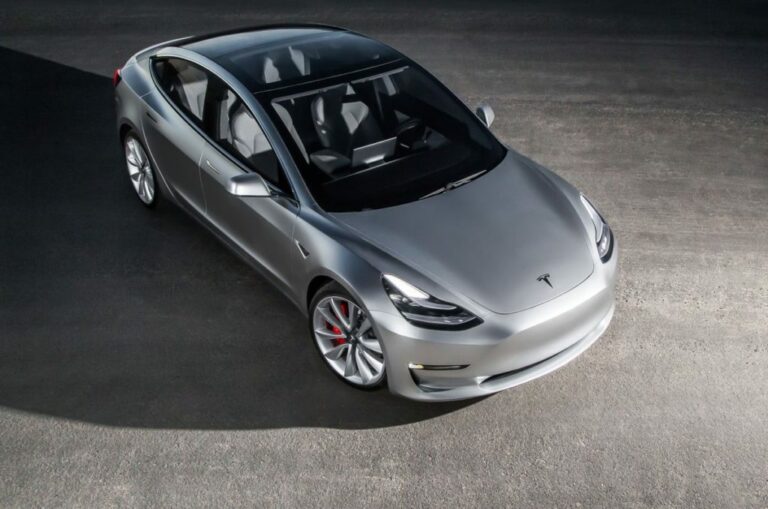
Tesla Model 3 - Can Tesla Succeed?
Tessla’s Model 3

But new capital is what Tesla needs, because the Model 3 is not making a real profit.

Tesla has claimed that it is making money on the Model 3 at 5,000 with production at 5,000 units per month.  Reality says that’s merely operating profit.   No one really knows how much the Model 3 cost to develop or how much of those development costs Tesla is attributing to each vehicle produced.  On May 5, 2016, Tesla’s chief executive officer, Elon Musk, told analysts that Tesla would produce 500,000 vehicles in 2018.  With sales of the Model S and Model X combined at 80,000 vehicles annually, meeting that prediction would require producing 420,000 of the Model 3 annually.

Tesla, of course, is nowhere near that goal.  At Model 3 production levels of 5,000 per week, Tesla would be at an annual production level for all Tesla vehicles of 340,000.  At 7,000 per week, the production total would be 444,000 vehicles, of which the Model 3 would have to contribute 364,000 vehicles.  To put that rate of production in perspective:  Toyota’s best sales year for the Camry was 2015, when 429,355 Camrys were sold.  In 2017, Camry sales were 387,081.  And Toyota has a dealer in every city of appreciable size.  Tesla has sales outlets in only 26 of the 50 states, with many of them being nothing more than a mall location, like the Denver location pictured at the beginning of this article.

The current Model 3 is priced from $49,000 to over $80,000.  Tesla no longer projects a date at which the $35.000 base price model will be in production.  UBS Securities, as reported in the Wall Street Journal on August 17th, disassembled a Model 3 to estimate what it cost to build.  UBS concluded each Model 3, at current pricing, generates $3,420 “operating profit,” but that Tesla would lose $2,300 per vehicle sold at $35,000.

So, Tesla is Studebaker.

Though the Model 3 may make money, if its production volume is below that which Tesla projected, then the costs of its development that each Model 3 must pay back rise proportionately to the sales shortfall.  Odds are that Tesla bet the farm by assuming much larger volumes for the Model 3 than it can reach, especially once the novelty wears off and the competition enters the market for electric cars.  If so, those development costs will drown any operating profit in real red ink.

But the similarity to Studebaker doesn’t end with the books.

Can Tesla succeed?  Like Studebaker’s Lark, the Model 3 faces potentially devastating competition.  The high price at which it must sell the Model 3 to earn even an operating profit make Tesla much more vulnerable to competition than it would be if the car were profitable at the promised $35,000 price.  Jaguar has the I-Pace in dealer showrooms now, at a base price of $69,500.  Audi is teasing the e-tron, due for introduction later this year.  Meantime, the $35,000 market is not being ignored.  The chief executive officer of Volkswagen has promised it will “build electric cars by the millions, not just for millionaires.”  He promises that the various brands owned by Volkswagen will be introducing a new electric vehicle almost monthly in 2019.

The threat from that competition is enhanced by government policy.  Wall Street Journal columnist Holman Jenkins, Jr., points out that existing automobile manufacturers have every incentive to build electric cars for the mass market at a loss.  In Europe and China, future government regulations may make selling gasoline powered vehicles contingent on meeting quotas for sale of electric cars.  Pricing of the more popular gasoline powered vehicles can absorb losses on electric cars.  Tesla, of course, lacks that cushion.

The bottom line?

Studebaker did not go out of business.  It merely went out of the automobile business.

As sales tumbled, Studebaker management realized it was hopeless.  Rather than pouring good money after bad producing automobiles, it started buying smaller profitable companies, turning itself into a conglomerate before the term became popular.  It bought manufacturers of generators, lawn equipment, floor polishers, and other products – even STP, the automotive elixir.  In that day, the tax law allowed offsetting past losses against current profits to avoid tax on those profits.  Studebaker made the companies it acquired even more profitable by sheltering their profits in the ‘tax loss carry forward’ accrued from a decade of losses selling automobiles.

Studebaker’s management maximized its assets to preserve the company.  Studebaker’s biggest asset happened to be its ability to shelter profits under the tax laws.

So, can Tesla succeed as a volume independent manufacturer of automobiles?

Tesla, too, has an enormously valuable asset.

That asset is the brand.

There is every reason to believe Tesla management is fully aware of that value.  It is the brand, after all, that accounts for a stock price giving Tesla a market capitalization (stock share price multiplied by shares outstanding) similar to that of General Motors.
Tesla needs money.
Expect it to find it from a company that’s already in the business of making cars.

That’s what happened to the last domestic start-up automobile manufacturer that is still selling automobiles today.

Dodge was sold to Chrysler in 1928.


For more that is the ongoing saga of Tesla and its founder, Elon Musk, check our post about Musk’s battle with the Securities and Exchange Commission and our posts examining the similarities between Elon Musk and Henry Ford.