
It was 1961. A new Cadillac, nicely equipped, stickered for $5,800.00. The average cost of a new home was $17,200.00. Stamps were 4 cents. Gasoline was 31 cents a gallon.
And Jack Nethercutt needed $150,000.00. In cash. Tomorrow.
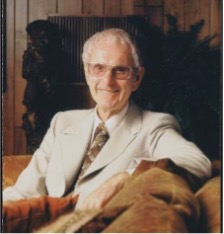
Jack “J. B.” Nethercutt had dropped out of college during the depression to help his aunt operate her small cosmetics company. By 1961, Merle Norman Cosmetics was one of the five largest cosmetics companies in the United States. That success allowed him to indulge in a hobby – restoring classic cars. It had started with in 1956 with the purchase of a 1930 DuPont town car for $500. Mr. Nethercutt estimated it would take several weeks to get the DuPont, as the first project, into shape. Eighteen months and $65,000 later, the DuPont won Best of Show at the Pebble Beach Concours d’Elegance. In 1961, his collection also addition to the DuPont, in 1961 the collection included four Duesenbergs, nine Packards, four Lincolns, and three Rolls-Royces, almost all in perfectly restored condition.
But now Jack Nethercutt needed funds fast. It would take too long to go through the process of loan approval at a bank. His most saleable asset was his collection of classic automobiles – but selling off the collection one car at a time would also take too long.
Jack Nethercutt made a phone call to William C. “Bill” Harrah in Reno, Nevada.
As the story goes, Nethercutt told Harrah there had been some internal issues at Merle Norman, he needed cash and was prepared to sell his collection. Harrah asked, “what kind of money are you talking about?” The answer was $150,000. “It has to be cash, and I have to have it tomorrow or no later than day after tomorrow.” When Harrah asked why Nethercutt had called him, the response was as pointed as it was obvious: “You’re the only guy I know of that I can hope can come up with a hundred and fifty thousand dollars in two days.”
Harrah told Nethercutt he would call back in ten minutes. He called his financial officer and asked if they could put that much together that quickly. They could. He called Nethercutt back and told him, “I can do it.” Bill Harrah was the most successful businessman in Nevada – and his business was gaming. He got his start on Los Angeles, where his father was a politically connected attorney who ran a bingo-type betting game that was arguably legal, even though gambling generally was prohibited. Bill’s father used shills – people paid to play the game and thereby entice others to play. Bill contended they were an unnecessary expense and his father challenged him to see if he could do better. Bill bought the game from his father for $500. In a year, he had increased the profit fivefold. But fending off the law in Los Angeles was frustrating and limiting, so Bill decided it was time to relocate to Reno, where gaming in all forms was legal.
Initially, he opened bingo parlors. In 1946, he went ‘all-in’ to purchase a large casino, renaming it Harrah’s Reno Club. At the time, Reno casinos operated only in summer – because it gets cold and snows in Reno. In 1948, Harrah decided he would keep Harrah’s Reno Club open all year. He chartered buses to bring customers from Northern California to his casino and booked top name entertainment. He turned Reno into Nevada’s gaming capital – at a time when Las Vegas was only beginning to establish itself as a gaming destination. Unlike some of the silent owners of Las Vegas casinos, Harrah’s casinos were operated honestly. Harrah was instrumental in creating Nevada’s Gaming Commission to fight organize crime’s control over Las Vegas casinos.
With the casinos – Harrah operated casinos in Reno, Lake Tahoe, and eventually Las Vegas – generating huge profits, Harrah began collecting automobiles – gradually, at first. His first purchase was a Maxwell that he believed was a 1907 model. That purchase led directly to Harrah’s legendary insistence on authentic restoration. With the assistance of a mechanic he knew, Harrah restored the vehicle as he assumed it should be. He then took it on a Horseless Carriage Club tour. During the tour, Harrah was approached by Bud Catlett.
As Harrah would later tell it, Catlett “looked at the Maxwell, and instead of sayin’ this is wrong, and the radiator’s wrong, and the fenders are wrong, and the upholstery’s wrong, he said, ‘Gee, that’s a nice car,’ which it was. And then he asked me about the radiator. He said, ‘Is this the right radiator?’
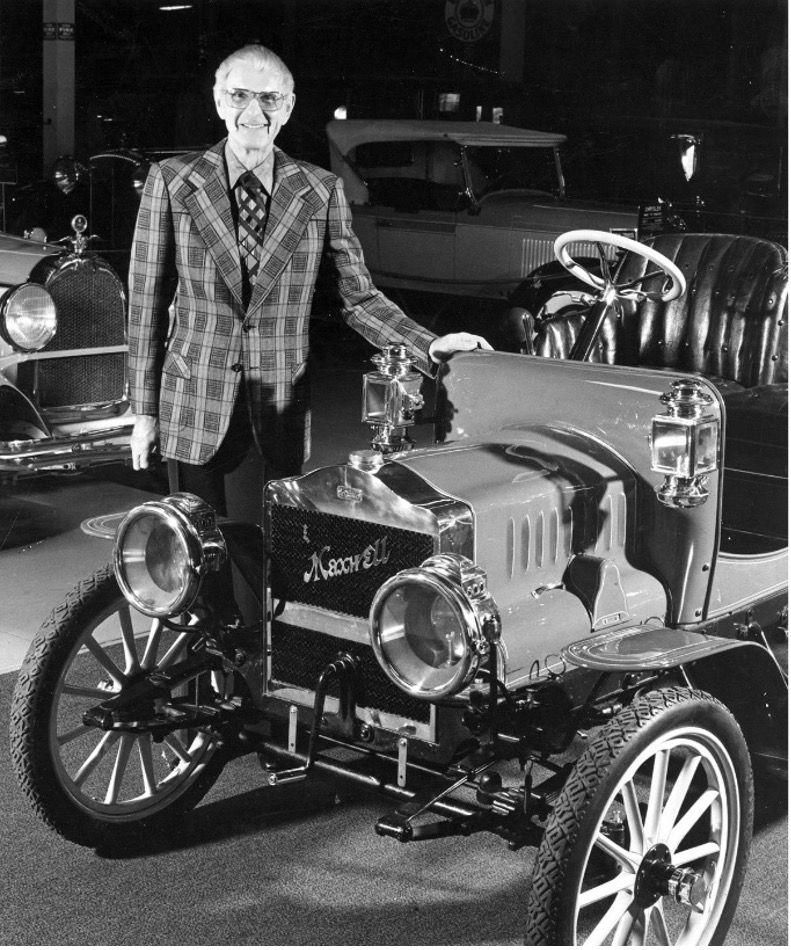
William C. Harrah and the Maxwell that started it all
“And I said, ‘Well, I don’t know.’
“And he said, ‘Well, I thought …”
“He said, ‘Is this a 1907? I think the early ones had semi-elliptic springs and yours has full elliptic.’ And he pointed out all these little things.”
It turned out the Maxwell was a 1911 model.
After the encounter, Harrah dug deeply into researching the Maxwell – and discovered Catlett had been correct about every one of his observations. From then on, authenticity of restoration would be a hallmark of the Harrah collection and exhaustive research the foundation on which those restorations were based. Catlett eventually became Harrah’s purchasing agent, in charge of acquisitions for the collection.
When Catlett joined Harrah in 1959, the collection included only 49 cars – essentially the same size as the collection Harrah purchased from Nethercutt two years later. That would change – as the collection grew, Catlett would be fielding calls from those who wanted to sell a car to Harrah at the rate of one telephone call every three minutes. Harrah’s Automobile Collection, as it was formally named when opened to the public in 1962, subscribed to all the major newspapers and worldwide to publications devoted to antique and classic cars. The employees that staffed the Collection displays, when not assisting visitors, would go through these publications and clip any advertisements for an antique or classic automobile.
Once a possible purchase was identified, the next step was inspection. This was generally delegated to a “car looker” a person living in proximity to the potential purchase and expert in the marque or, at least, automobiles of the era. If the report submitted by the car looker indicated that acquisition might be worth pursuing, Bud Catlett would add it to the list of vehicles he would visit on his next trip to the area.
As you would expect, purchasing a vehicle for the Collection could be an adventure. In one instance, Catlett had a lead on a Welch located on a ranch. When he approached, the owner told him it was not for sale. But Catlett persisted – he had noticed three wreckers sitting nearby, all made from old Pierce-Arrow automobiles. Mentioning the unique wreckers got the owner talking. Eventually, the owner said that Catlett might as well look at the Welch. After more discussion, and an inspection of the car, Catlett told the owner that he’d undoubtedly had many others wanting to buy the car but he expected that he’d never had a fair offer for it. Catlett told the owner he would make him a fair offer and quoted a price.
The owner thought it was a reasonable offer, but insisted he had to check with his brother. The brother agreed but wanted to check with his two sons. The sons pointed out that there would be taxes to pay on the sale, so Catlett added money to pay the taxes to the offer, which clinched the deal. That deal done, Catlett inquired about the Pierce-Arrow parts that were lying around, left over from the wrecker conversions. In the end, he loaded the Welch and five and a half tons of Pierce-Arrow parts on a truck and hauled them away.
Restoring automobiles to the level of authenticity Harrah demanded meant having parts – the exact parts – needed. To that end, the purchase of the Pierce-Arrow parts was not unique. Though the Collection’s parts department would search for specific parts needed for a restoration, it would also buy for inventory when it thought it was getting favorable terms on parts that might be needed in the future. The Collection also held an annual swap meet at the collection in Reno. That brought parts they might be seeking to them; it also allowed them to sell off excess inventory.
Then, as now, the Hershey swap meet was the major event of its type. Harrah’s approach to Hershey was planned and executed to the last detail. Harrah and a team of as many as ten assistants would fly in from Reno on his private jet. Meanwhile, two tractor-trailers would arrive at Hershey from Reno carrying the automobiles the Collection would be displaying at the companion Concours d’Elegance and the parts they were offering at the swap meet. Restaurants were always busy during Hershey and Harrah hated wasting time standing in line for a meal. So, he also brought a chef from one of his casinos, who prepared breakfast and lunch for the crew and its guests.
In preparation for Hershey, the Collection’s parts department prepared books for each of the team. Each book was divided by category – taillamps, hubcaps, headlamps, etc. Within each category were listed the parts wanted, with photos, drawings, and any available specifications (such as serial numbers). The team members communicated by ‘walkie talkies’ and carried cash – reportedly as much as $1000 each – for purchases.
It was at Hershey that Bill Harrah caught everyone by surprise – and delighted him, in the process.
As related by Ken Purdy in his book The Kings of the Road (Little Brown & Company, 1952), Ettore Bugatti had been seated at a dinner party next to an English woman. In their conversation, she remarked, “Of course, M. Bugatti, everyone knows you make the best racing cars and the best road cars in the world, but for a town carriage of genuine elegance, one still must go to Rolls-Royce.” M. Bugatti’s answer was the Type 41 – wheelbase of fourteen feet, two inches; 784 cubic inch straight-eight engine, smoothly accelerating in top gear from 3 mph to 125 mph. Cost: about $25,000 – for the chassis. It was known colloquially as the “Royale.”
Bugatti planned a production of 25.
He produced six.
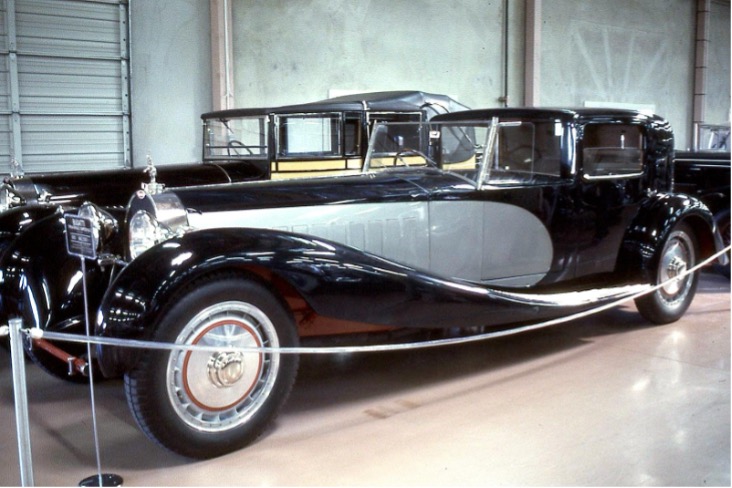
Bill Harrah had purchased one, the Coupe deVille, in August of 1963. (He paid $50,000.00 for it).
That acquisition made news in collector car circles, but it was Harrah’s response when someone at Hershey spotted him across the room and yelled “Hey Bill, how do you like your Royale?” that got everyone’s attention.
His response was, “Which one?”
What had not yet been announced was Harrah’s acquisition of a second Type 41, the Berline de Voyage, a few days before (from Jack Nethercutt for $45,000). Harrah also ultimately acquired two entire Type 41 engines for the Collection’s Parts Department.
The Coupe deVille would win Best in Show at the Pebble Beach Concours d’Elegance – the third Harrah car to be honored with that accolade.
Not every automobile acquired by Harrah was destined for a Pebble Beach winning restoration. There was a system in place under which cars were both graded for their current condition and that to which they were ultimately to be restored. For some, the immediate goal was restoration in appearance, so that the automobile could be displayed. However, there was constant effort to improve all cars in the collection to the next level – all except those considered “gold star,” which were already total authentic restorations to the highest standards. Any car Harrah entered in a competitive Concours was restored to “gold star” status.
The restoration process began with the Research Department. An assigned researcher would document and photograph the vehicle using a standardized and very detailed checklist. Then, using its massive collection of automotive literature, plans, and specifications, and reaching out to others as needed, the research department would compile a book for each automobile to be restored. That book, containing exact information about how the vehicle appeared when new, served as the guide for the “Master Craftsman” assigned to oversee the restoration. Simultaneously with preparing the book, the researcher provided the Parts Department with a list of parts needed for the restoration. In turn, the Parts Department would pull any parts already in the Collection’s inventory and begin acquiring any others needed.
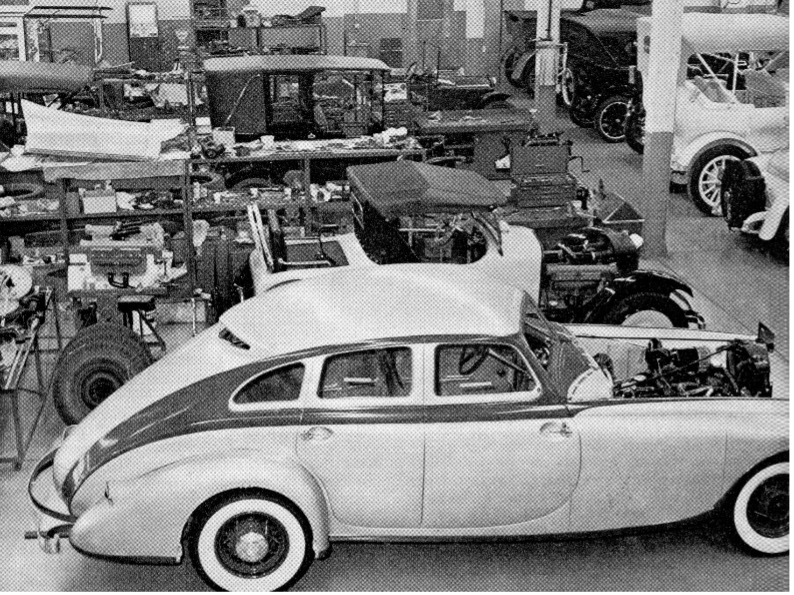
If possible, the Master Craftsman assigned would be familiar with the marque, though this was not always feasible. (Harrah sought out unique automobiles, those that were the sole survivor of the brand or even the only one produced.) The Master Craftsman oversaw the restoration, performing much of the work himself and also supervising “Unit Mechanics” working on the car. The automobile would be completely disassembled and cleaned. Components requiring specific repairs would go to specific shops within the Collection, which included a shop devoted to woodwork, another to sheet metal repair, an upholstery shop, one that restored instruments, and a paint shop, among other specialized operations. Once completed, the restoration was tested and approved by the General Manger of the shops and, ultimately, by Bill Harrah himself. At its pinnacle, the Collection employed 150 people, of whom 90 were directly involved in restoration.
Harrah was dedicated to making his cars available for the public to enjoy – it was an animating force in the development of his collection. He once remarked that if the Collection were ever to be broken up, the cars would be disbursed to numerous private collectors and become unavailable for the public to see.
Sadly, that is what happened.
William C. “Bill” Harrah died on June 30, 1978, following cardiac surgery to repair an aortal aneurism. His estate was valued at $138,000,000.00, left equally to two trusts, one for his wife and the other for his children.
When Holiday Inn acquired the Harrah’s casinos from the estate, it elected to liquidate the Collection, albeit donating some of the vehicles to the museum that operates today as the National Automotive Museum in Reno. In a series of auctions, the remaining cars were sold for approximately $100,000,000. Most went to private collectors, as Harrah had predicted and feared. The Type 41 Coupe deVille, for which Harrah paid $50,000 and which was one of the automobiles sold after his death, was ultimately purchased by Volkswagen in 1999. The price was reported as $20,000,000. The Type 41 Berline de Voyage is now owned by an unknown collector and its whereabouts are similarly unclear.
It is unlikely the Harrah Collection will ever be equaled. Today, the cost would be prohibitive for even the most wealthy. Adjusted for inflation, the $100,000,000 realized from auctioning the Harrah collection is equivalent to $2,719,000,000 today. That, of course, severely understates the present value, as it does not account for the appreciation in the value of collector automobiles in the intervening years – an increase in value perhaps not as dramatic as the prices for the Type 41’s, but – especially given the quality of the Harrah collection – certainly enough to double or triple the value.
Jack Nethercutt was one of the successful bidders at the auctions and repurchased several of the cars, including the DuPont, that he had sold to Harrah in 1961. At the time of Nethercutt’s death in 2004, his collection comprised approximately 250 automobiles. The collection was left to his wife and son, remains open for public viewing, and remains one of the finest classic car collections in the world.