
It began by describing her: “Somewhere west of Laramie, there’s a bronco-busting, steer roping girl who knows what I’m talking about . . . the lass whose face is brown with the sun when the day is done of revel and romp.”
The car was described only as an enhancement of her style: “There’s a savor of links about that car – of laughter and lilt and light – a hint of old loves – and saddle and quirt. It’s a brawny thing – yet a graceful thing for the sweep o’ the Avenue.” The year was 1923. The car was the Jordan Playboy. The words appeared in the Saturday Evening Post, in an advertisement written by Edward S. “Ned” Jordan – words that would forever change the way automobiles are sold.
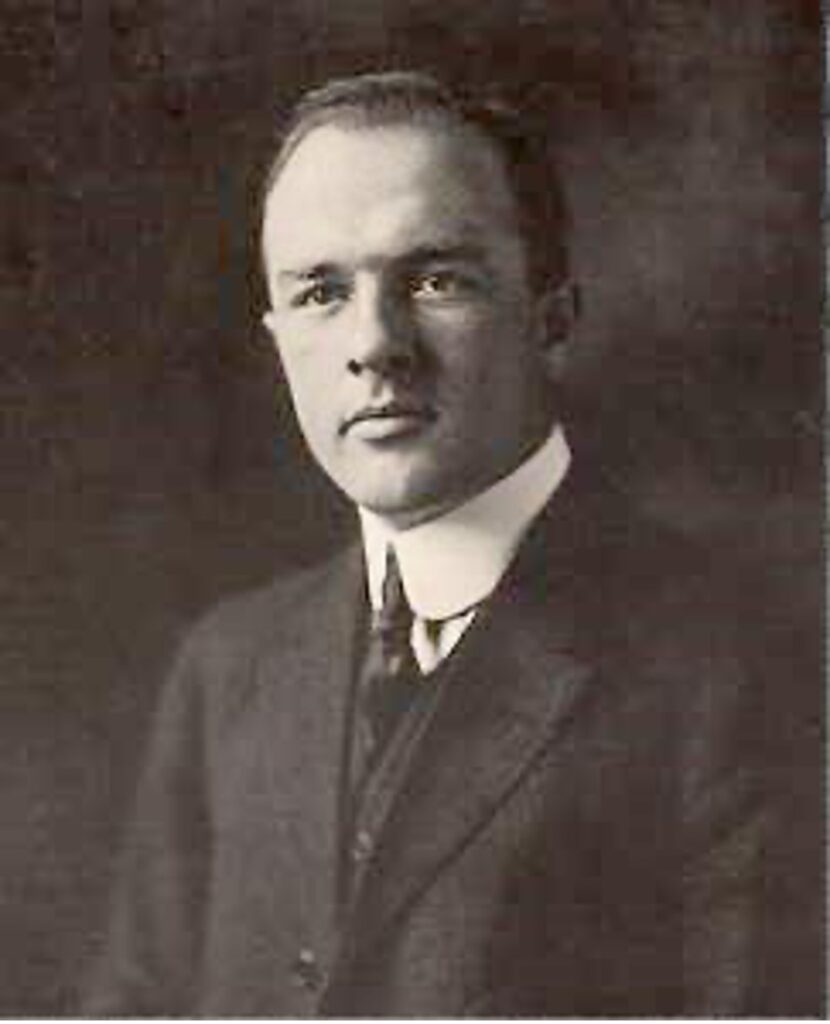
Edward S. “Ned” Jordan was a Wisconsin native, born in Merrill in 1881 and educated at the University of Wisconsin, from which he graduated in 1905. He worked his way through college, but not with the usual work/study program. He started as a part-time reporter for the Wisconsin State Journal, one of Madison’s major daily newspapers, and eventually became city editor while still in school. While President of the Junior Class, Ned Jordan had met the First Vice-President, Charlotte Hannahs. They married in 1906.
After graduation, Ned Jordan held several newspaper jobs before joining National Cash Register in Cleveland, Ohio, as a press agent. He lasted a year at NCR, fired after crossing swords with the company’s mercurial president. But he landed on his feet – in Kenosha, his wife’s hometown.
His wife’s family was prominent in Kenosha, both socially and in business. When he arrived on the train from Cleveland in 1907, Ned Jordan met Charles T. Jeffrey, who hired Jordan as advertising manager for The Jeffrey Company, founded by his father, Thomas B. Jeffery, and manufacturer of the Rambler automobile. Ned Jordan would ultimately become corporate secretary and general sales manager.
Fate, however, has a way of intervening in unexpected ways. Charles had inherited the company from his father and was travelling to Europe when, on May 2, 1915, the ship on which he’d booked passage, the Lusitania, was torpedoed by German submarine U-20. Charles’s wife had not been comfortable with his planned trip, so had purchased for him the finest life preserver available. She insisted he keep it close. He did and he survived.
But Charles Jeffrey’s escape from death changed his priorities. Producing automobiles was no longer one of them.
Ned Jordan saw this as both a sign and an opportunity. He parted amicably from Jeffrey, taking with him several of the company’s best employees. (Within six months of his departure, the Jeffrey company would be sold to Charles Nash.) He travelled to Chicago, where he called a meeting of close friends and business associates on January 25th. In a single day, he raised $200,000. Cleveland, where Ned Jordan had briefly worked as a reporter after college, was eager to attract the new Jordan Motor Car Company to that city and arranged financing for a new factory. That factory was completed on May 25, 1916 – exactly four months after the initial capital had been subscribed in Chicago.
The first Jordan, the Model 60, was introduced in 1916 as a 1917 model. The car was expensive at a price between that of Buick and Cadillac. It was an “assembled car,” produced – but not really manufactured – by Jordan. Assembled cars were built from off-the-shelf components manufactured by outside companies, not from components designed and manufactured by the automobile company itself. Sourcing bodies was common in the era, but producers of assembled cars sourced almost everything from others – engines, transmissions, springs, electrical components, hub assemblies – the list is as all-encompassing as the list of an automobile’s components. Jordan used Continental engines, Brown Lipe clutch and transmission, Timken axles, Bijur starter and lighting, Bosch ignition, Gemmer steering, Willard batteries, Marschall coil spring seats, and Stewart Warner fuel delivery. The sole element of the Jordan that was engineered by the company was a suspension system using vanadium steel half-elliptic springs, one that was soft but without sway. They were, however, still manufactured by an outside supplier, Mather.
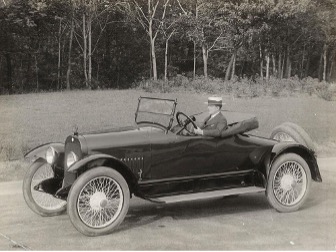
Ned Jordan would take credit for this as a revolutionary approach to producing an automobile, saying in 1945 that “[w]e were never automobile manufacturers. We were pioneers of a new technique in assembly production, custom style sales and advertising. We had one air compressor power the assembly line…bought only the finest component parts from the most experienced quality parts makers, designed a chassis for those parts that possessed the most ideal weight distribution yet attained. Then we ‘dolled them up’ just as every good car is dressed today.” Though the physical layout of the Jordon plant may have been unique, there was nothing unique about producing an assembled car. In fact, assembled cars accounted for 25% of the new car market in 1916. (For more about assembled cars, see our post The “Assembled Car” Makes a Comeback.
The advantage of the assembled car is cost – by transferring the investment expense required to engineer and produce components to others, the company producing an assembled car requires far less capital to begin producing an automobile than it would require if it were to manufacture these components itself.
The disadvantage of an assembled car is cost. It costs more to produce a car assembledfrom outside components than it costs to manufacture an equivalent car from components manufactured in-house by the company itself. In-house, the company’s total cost is the cost of production. Sourced from an outside supplier, the total cost is production cost plus supplier markup.
That is why the Jordan was positioned at the upper end of the market – a higher price makes it easier to cover these higher costs.
It worked. In fact, it worked spectacularly well. Within months of its formation, the Jordan Motor Car Company needed to expand its factory to handle demand.
To give a sense of what Ned Jordan meant by “dolled up,” here’s a list of features offered in the 1918 Jordan Model 60 Sport Limousine as standard equipment: aluminum body, with auxiliary seats folding under the front seats when not in use, fully appointed toilet case for men and women, dome lights front and rear (separately controlled by switches allowing them to be disabled during daytime), Dictograph and reading lamps (also separately controlled by switches), hat rack, silk roller curtains on all rear windows and on the divider window.
Jordan’s advertising emphasized the features and style of the car – long before General Motors hired Harley Earl to bring style to Detroit. In 1919, Jordan advertised the Silhouette: “With the substantial appearance of the finest heavy cars it possesses the beautiful slimness, lightness, lowness, and balanced character of the racing class.” Mention was also made of the chassis as “including all the finest universally approved mechanical units” – as close as Jordan would ever come to acknowledging its “assembled car” character.
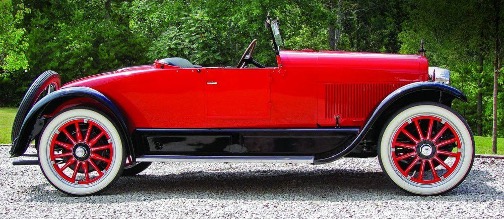
But it was the 1919 introduction of the Jordan Playboy that begins the story that made Jordan, man and automobile, an automotive legend.
On a Saturday evening in October of 1918, Ned Jordan was dancing at the Mayfield Country Club in Cleveland with Eleanor Borton, the nineteen-year old daughter of a prominent Cleveland stockbroker who was also a Jordan investor. She asked, “Mr. Jordan, why don’t you build a car for the girl who loves to swim, paddle and shoot and for the boy who loves the roar of the cut-out?” (Ms. Borton was every inch that girl – when she left Smith College she was asked if she’d had academic issues. Her retort: “Hell, no. I had fun!” Her comment, though, did downplay her academic skills – she was an A student who ultimately graduated from Brown University. She would become an executive with the Girl Scouts and mayor of Mentor, Ohio, a Cleveland suburb, dying at age 95, in 1994. One has the sense that she always had fun.)
Though Ned Jordan later said he’d called Ms. Borton’s question a “million-dollar idea,” he had long been cultivating women customers. During Jordan’s time with National Cash Register, that company’s president had preached that “a man is only half-sold until his wife is sold.” Ned Jordan saw that the role of women was no longer that of the customer’s spouse. Women were customers, just as much as men. Ned Jordan intended woman to be Jordan owners.
The Jordan Playboy arrived as a 1919 model. Jordan had followed Ms. Borton’s suggestion. He based the styling of the Playboy on an advance look he had at a custom body designed for Florenz Ziegfeld, the theatrical producer who created the Ziegfeld Follies, to give to his fiancé, Billie Burke. (Ms. Burke would later play Glinda, the Good Witch, in the movie version of The Wizard of Oz.)
And, yes, Eleanor Borton drove a Jordan Playboy while in college – a gift from Ned Jordan.
The Jordan Playboy was an instant success.
It may seem odd that an automobile named “Playboy” would be aimed at women buyers. But Hugh Heffner had yet to be born. The name derived from a popular Broadway play of the era, The Playboy of the Western World. The connotation of the term at the time was of someone who enjoys life to the fullest.
As 1923 opened, the Jordan Motor Car Company was doing well. Sales in 1922 had doubled from those of the previous year. Jordan would soon introduce a feature in the used car market – the Jordan Mark of Service, a guarantee that a used car sold by a Jordan dealer would have been rebuilt to a national standard set by Jordan – that previewed today’s “certified” used cars.
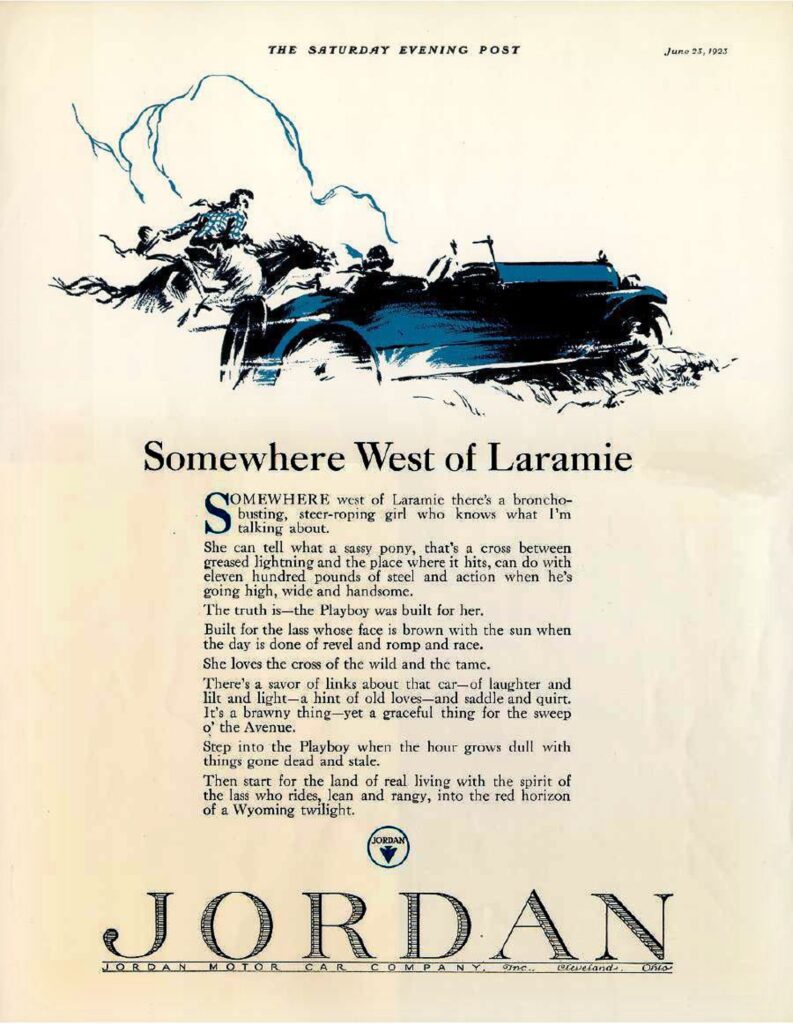
On June 23, 1923, there appeared in the Saturday Evening Post the advertisement that changed the way Jordan, and eventually others, would advertise and sell automobiles. A few months earlier, Ned Jordan had traveled to California on the Union Pacific’s Overland Limited. As the train passed through Wyoming at sunset, Ned Jordan was seated in the club car, in conversation with another traveler, a New York lawyer.
Looking out the train window, he saw a beautiful woman on horseback riding fast in the distance parallel to the tracks, as though racing the train. Beguiled by the sight, Jordan asked his companion “Where are we?”
The reply was “Somewhere west of Laramie.”
When Ned Jordan returned to Cleveland, he created a rough draft of the advertisement and enlisted Frederick Cole to create the artwork. The impact of the advertisement was everything Ned Jordan could have wished. At the time, the Saturday Evening Post was the largest circulation weekly magazine in the United States. The advertisement, in either full length or shortened versions, would also appear in other magazines and similar Jordan advertisements would continue the same theme in succeeding years.
But instant success is not the same as lasting success.
Jordan had its best sales year ever in 1926. Even so, Jordan Motor Car Company ended the year with unsold inventory that would be a drag on sales of 1927 models. The Playboy had bought the company time. It could not, however, alter the fundamental economics of the automobile industry – economics that were eroding Jordan’s profits and were only temporarily concealed by the Playboy’s success.
By 1926, the Jordan Motor Car Company was one of the few companies still producing an assembled car. Most, including Biddle and Cole, had ended production because profits had disappeared. Those remaining, such as Moon, were in dismal financial condition. The cause was simple. It cost too much to produce an assembled car. The companies in that business could not compete with companies that manufactured their own components.
There was, as well, another factor working against all smaller automobile companies: consumer financing of new cars.
By the early 1920’s, General Motors was offering financing for new car purchases through their dealers, as well as financing dealer inventories. Others automobile manufacturers were making similar arrangements. Jordans were expensive cars. Its inability to offer financing to dealers or customers put them at a competitive disadvantage. Ned Jordan needed a new idea. He had one: The Little Custom. This was a Jordan model that was smaller, more European in style, but as lushly appointed as any other Jordan.
Conventional histories of Jordan portray the Little Custom as a mistake. That approach, however, assumes any failure occurs because of error – and that’s just not true. Failures come from trying new things – just as do successes.
The Little Custom was a market failure. Though some blame it for increasing Jordan’s debt and eating up the profits of the remainder of the line, that ignores the business model on which the Jordan Motor Car Company was based – that of producing assembled cars. Jordan did not invest in building the Little Custom, so that car did not drag down the company. It just didn’t rescue it. It wasn’t another Playboy.
The age of the assembled car had ended. The Jordan had been better marketed than other assembled cars, which made it more profitable and more successful. So, it lasted in the market longer than most others. But ultimately Jordan could not compete with companies that manufactured automobiles., rather than merely assemble them.
Ned Jordan began liquidating his interest in the Jordan Motor Car Company in 1928, as dwindling profits prompted bankers holding Jordan Motor Car Company debt to exercise greater oversight of the company’s affairs. He similarly advised those who had been initial investors of his intentions, and most of them appear, as well, to have quietly sold their stock.
Writing in Advertising Age magazine in 1952, Ned Jordan pointed out that his initial stockholders realized 1900% gains on their investment and then commented that “[W]e quit just in time. Our families have since been enjoying the trust funds which the Playboy earned.” In 1931, with the banks now firmly in control of Jordan Motor Car Company, it submitted to an involuntary bankruptcy petition
Ned Jordan was inducted into the Automotive Hall of Fame in 2010, fifty-two years after his death in 1958. His obituary in the New York Times referred to the “Somewhere west of Laramie” advertisement as “sett[ing] the pattern for modern automobile advertising. In 1999, Advertising Age magazine had named it one of the 100 greatest ads of all time.
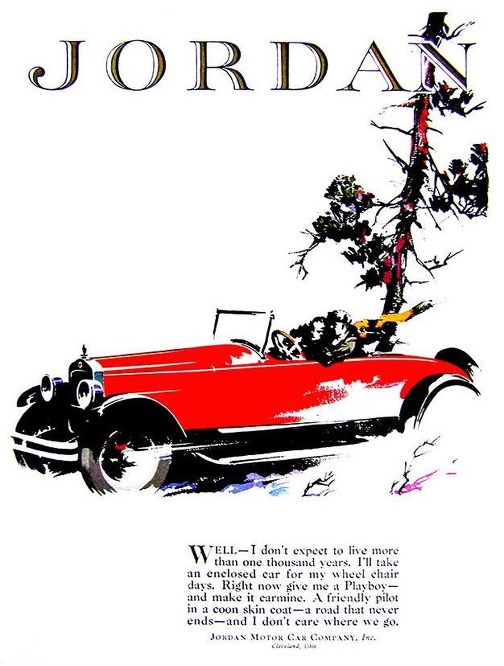
Another Jordan advertisement may have best expressed Ned Jordan’s own life: “Well – I don’t expect to live more than one thousand years. I’ll take an enclosed car for my wheel chair days. Right now give me a Playboy—and make it carmine. A friendly pilot in a coon skin coat—a road that never ends—and I don’t care where we go.”