Image by Abernathyautoparts via Wikimedia Commons / CC BY-SA 2.5
Some parts for vehicles that are older, but not that old – as well as for vehicles old enough to qualify for collector plates – are discontinued and seem to be impossible to find. Though the United States fleet average age has been increasing every year, parts availability is not keeping pace with the longer service life of vehicles. New rules may give you the “right to repair,” but if you cannot find the part you don’t have the means to repair.
The key to locating that part is using the systematic method of searching described in this post. Persistence and a little bit of luck can help, too.
One of the all-time great debates is whether to purchase “original equipment” (“OE” or “OEM”) parts or aftermarket parts. Vehicle manufacturers, their branded dealers, and many who perform their own repairs take the position that original equipment parts are best. Others consider aftermarket parts completely adequate and less expensive. It is a debate that has no absolutely correct answer. That said, it should be remembered that aftermarket manufacturers reverse engineered the parts they sell from the original equipment part, with whatever quality risk is attendant on that process.
There can also be confusion about what parts are really the same as the parts used when manufacturing the vehicle. General Motors once had an advertising slogan for their ACDelco brand that urged GM vehicle owners to “keep your GM car all GM” by buying ACDelco replacement parts. The irony is that ACDelco parts are no longer OE and have not been so for many years. GM itself is in the aftermarket parts business and ACDelco is their aftermarket brand. None are manufactured by GM or ACDelco. All ACDelco parts are purchased from aftermarket manufacturers and boxed under the ACDelco brand. GM does have an original equipment brand for consumers: GM Genuine. Other manufacturers have similar distinctions among the parts the sell. Ford has Ford Genuine parts and Motorcraft, with Motorcraft essentially an aftermarket brand. Stellantis makes it more difficult to distinguish the original equipment part from one that is, functionally, an aftermarket item because they use the MOPAR brand for both. The “MOPAR Value Line” and “Magneti-Marelli offered by MOPAR” parts are aftermarket. You’ll need to verify that the part box says only MOPAR and has the original equipment part number to be sure it’s the OE part. Manufacturers of foreign branded automobiles, such as Volkswagen, generally do not participate in the aftermarket, though the companies that manufacture OE parts for these companies may sell equivalent parts under their own brand names in the aftermarket.
Contrary to persistent myth, there is no law requiring manufacturers to stock parts for a specified number of years, though federal laws do require manufacturers to repair or replace components in a safety recall, limited to fifteen years from date of original sale, or under the vehicle’s eight-year emissions warranty.
How long a part may remain available from the vehicle manufacturer is a question with complicated answers. Parts for vehicles manufactured in great volume will remain available far longer than those for vehicles of limited production. So, too, for parts that fit multiple vehicle models, such as parts for an engine that was avalable in multiple models for many years. In contrast, parts for models that were sold in more limited number, or even popular models but with rare options, may be unobtainable from an OE manufacturer within a few years of ending its production.
New car dealers are proficient at locating a part if it is available within the manufacturer’s network. Their computer network allows them to search not only the manufacturer’s inventory but also the inventory of other dealers. Dealers for domestic manufacturers, including General Motors, Ford and Chrysler, usually also can access inventory at Vintage Parts. Little known outside of the industry and located in Beaver Dam, Wisconsin, Vintage Parts purchases obsolete manufacturer inventory. (It also handles agricultural and heavy equipment parts, such as John Deer and Caterpillar.) You can also search original equipment dealer inventories yourself at PartsVoice.com.
But what if the new original equipment part is not available from the dealer?
Your very first step should be to get the original equipment part number from the new vehicle dealer. It is not true that the part number is stated on the part. The numbers on parts serve entirely different purposes, ranging from inventory control to batch identification (important in the event of a recall). In fact, part numbers are seldom on the part itself. So, the dealer is the best source of that original equipment part number.
When you ask for that number, you should also ask if that part number is a “superseding” part number. The part installed when your vehicle was manufactured may have been replaced by the vehicle’s manufacturer with a later version of the part. In that case, the original part number is superseded to the new version’s part number. You’ll be told the new part number by the dealer. But you can also use the superseded part numbers in your search for the part you need. A superseded part will still fit like the original equipment part – and it may have been the original equipment part.
If it is a superseding part number, you should also ask whether it will require changing any other parts to fit your vehicle. Parts are superseded for a variety of reasons, many dealing with minor design improvements that are undetectable and only improve the part. But sometimes there are more drastic changes and installation of the superseding part may require replacing another part before the superseding part will fit. When that occurs, the vehicle manufacturer will ordinarily issue a “service bulletin” explaining the full installation procedure. So, it pays also to ask whenever dealing with a superseding part number if there was a service bulletin issued with it.
If the vehicle for which the part is needed is for a collector car, you may encounter the term “New Old Stock,” commonly abbreviated as “NOS.” Though the phrase at first seems self-contradictory, it refers to a part that was new when manufactured and since then has languished unsold in stock somewhere. New old stock parts are generally original equipment parts boxed as such with the original equipment part number. But the term also encompasses new aftermarket parts made long ago and never before sold – so, it is best to verify when purchasing whether the part is actually the original equipment part if you want only OE. Though it might seem that finding a NOS part for your old collector car is akin to locating the Holy Grail, there can be issues with NOS parts. Parts are not necessarily “shelf stable.” Rubber seals dry out and crack. Lubricating grease can congeal and harden. If there are perishable components in a new old stock part you may still want to buy it. But you should be prepared for the risk that it will need to be rebuilt before you can use it.
When an original equipment part is no longer available, the next place to look for a replacement is the “aftermarket.” The aftermarket is comprised of manufacturers and retailers offering replacement parts made to the specifications of original equipment parts and designed to fit and function identically to the original equipment part. Aftermarket parts are essentially copies of the original parts, duplicated or reverse engineered by the aftermarket manufacturer. They may use different materials, and the precision of manufacture will not necessarily match the original equipment part. There are, however, rare instances where an company that makes a part for the vehicle manufacturer will continue producing the part after the vehicle is out of production, selling it under their own brand name.
New aftermarket parts are sold by brand. In some cases, such as Dorman parts, the manufacturer puts its brand name on the box. Where the parts are ‘store brand’ sold by a chain part store, such as CarQuest, the part is made by an aftermarket manufacturer and sold to the chain part store to be sold at retail under the store’s brand. In many instances, the aftermarket part is made by a manufacturer that then sells the same parts at wholesale to several retail brands. Behind all these brands, there are four domestic manufacturers that dominate the aftermarket parts industry: Genuine Parts Company (which manufactures NAPA parts), Dorman Products, Standard Motor Products, and Tenneco (through its DRiV subsidiary). International aftermarket manufacturers that produce aftermarket parts widely sold in the United States include Bosch, Denso, Continental, ZF, Aisen, Mahle, and Mann+Hummel.
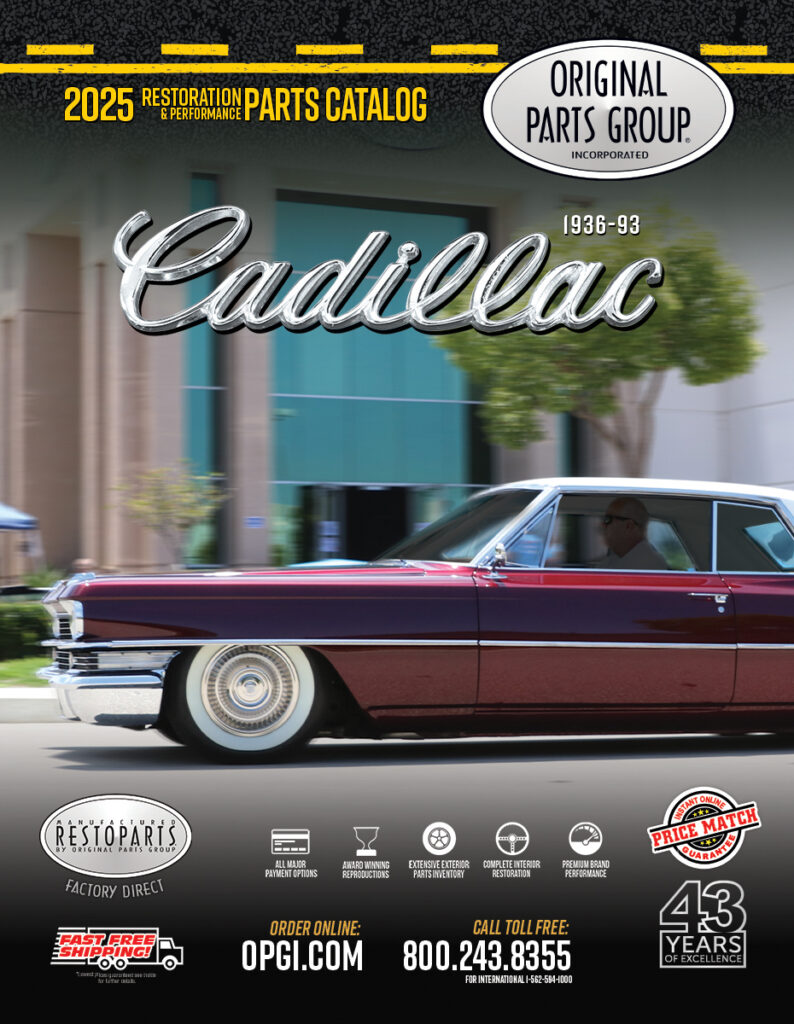
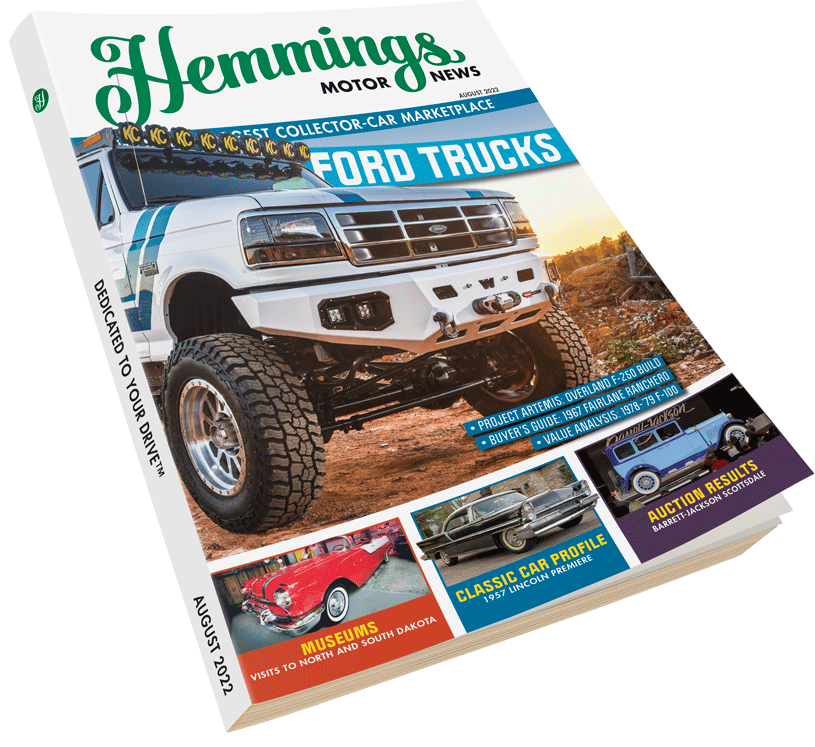
In addition to these huge companies, the aftermarket also includes small companies that produce only specific parts. For example, between the mid-1970’s and early 1990’s, Cadillac used flexible plastic filler panels between the bumper and the fender to allow bumper movement upon impact without causing damage to the fender itself. Over time, these panels discolor, harden, crack, and then just fall out. There is a cottage industry of small companies that make replacements, commonly offered online, through classified ads in Hemmings Motor News (by subscription or single issue at Barnes and Noble), or through specialized retailers that focus on specific vehicle brands and models, such as the Original Parts Group, Old Buick Parts, Kanter, and Clark’s Corvair, or specific part types, such as upholstery kits.
The aftermarket also includes “remanufactured” parts sold under brand and store names. “Remanufactured” parts are parts that have been used, failed, and were traded in as part payment for a replacement remanufactured part. This process is known as a “core charge,” paid when the replacement is purchased and refunded when the failed part is turned in. (Note: “core charges” are sometimes required when purchasing a new vehicle battery. These core charges are merely deposits required to encourage recycling.). A remanufactured part may have been an original equipment part or it may have been an aftermarket part, even one of a different aftermarket brand than the one under which it is now being sold.
Lastly, there is “reboxing.” One aftermarket brand may simply buy another brand’s part and put it in their own part box. This is a common practice in the aftermarket. Aftermarket manufacturers often want to offer a complete product line but do not want to incur the expense of producing low volume parts themselves. They buy someone else’s part and box it as their own. Or a manufacturer simply runs out of supply for a part and buys it from another manufacturer to plug the inventory gap. The part may even have the first brand’s name on it. The customer may regard this as a scam, especially if there is a price difference, but the part is considered the retailing brand’s part and is covered by that brand’s warranty.
The word “remanufactured” can be a bit misleading. Think of it as a failed part that has been repaired using new components to replace those that broke. For some types of parts, remanufactured parts are functionally indistinguishable from new ones. Alternators, for example, are essentially electric motors. Bearings and brushes can wear out while the windings and case remain intact, so replacing worn components literally does create a part that’s “as good as new.” But remanufacturing does not create new components. If a fuel injector’s plastic case is cracked, the part cannot be remanufactured. This means that some parts can never be remanufactured because the failures occur with components that are not replaceable.
As with new parts, whether it is economically worthwhile to remanufacture a part depends on anticipated volume and the price the remanufacturer can expect to charge for the part. So, if the part is an alternator for a Ford F-150 there will be no problem finding a remanufactured part. If it is an Alfa Romeo Guila the part probably won’t be available – a real problem since the dealer probably cannot get it, either. The vehicle is low volume, which means that a) there isn’t much demand for the part and b) there are not many failed parts available as cores to be remanufactured. Remanufactured parts for older vehicles, even some that were high volume production when new, can become impossible to find when the purchasers become fearful of the part’s scarcity and keep the core, rather than turning it in for a core deposit refund. Remanufacturers depend on a flow of cores to maintain inventory.
Aftermarket manufacturers use two different systems to identify parts and the vehicles they fit: “ACES” and “PIES” – “Aftermarket Catalog Exchange Standard” and “Product Information Exchange Standard.” ACES is a database that compiles aftermarket – not OE –part numbers by vehicle application. These are the part numbers the aftermarket brand puts on its part box. PIES is a database that sorts aftermarket parts by type and includes descriptive information, such as color, dimensions, and materials. So, ACES will show that the brake pads of a specific aftermarket brand part number fit a 2000 Chevrolet Impala. PIES will tell you that aftermarket part number is a brake pad made of ceramic material. Aftermarket manufacturers and retailers use the combination of the two to locate a ceramic brake pad for a 2000 Chevrolet Impala, whether in an online catalog, on Amazon, or over the counter at a parts store.
Note that ACES data does not cross-reference to, or include, original equipment part numbers. PIES data may contain an original equipment part number as one of its descriptive data points, but that’s not required and is often omitted. This means aftermarket product application information may be unreliable in any specific instance.
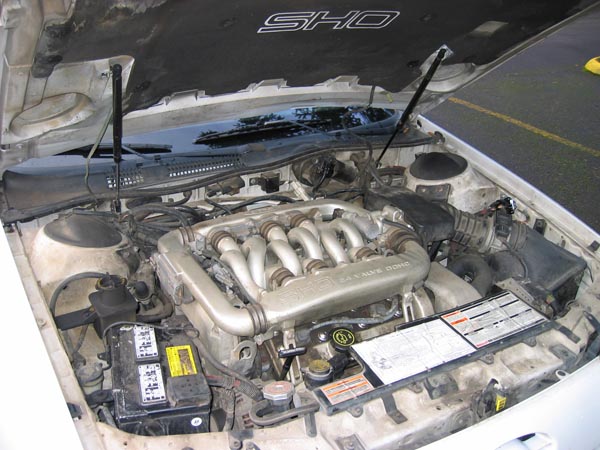
This risk is greatest with unique limited production vehicles, such as the Ford Taurus SHO and Cadillac CTS-V, that do not use the same parts as the base models and are often lumped with those base models in ACES application data. But it also happens with product exclusions, such as emissions standards, on more popular models. These faults all stem from the sloppiness of the aftermarket manufacturer. It may have simply copied the same data for every model of the vehicle without checking whether that assumption is correct. It may have omitted information from the PIES qualifier database or just not have entered anything there. The data may simply be wrong and go uncorrected because nobody at the aftermarket manufacturer is responsible for assuring its accuracy.
This gets us back to that original equipment part number. Because the aftermarket application database (ACES) is not based on original equipment part numbers, verifying that the OE part number you need is the one included in the product description (through the PIES database) can allow you to verify that the part really is the correct one for the vehicle.
There are other ways to avoid an incorrect aftermarket part. Check the listings for the same part from other aftermarket manufacturers. If those descriptions include qualifiers or descriptions that are more limited, then the application data of the part you first located is probably incomplete. If you are looking for a part for a vehicle that you know used parts different than those of other models of the same car, check to see if the part unique to your model is also listed to those other models. If so, the application information is probably wrong.
But what if the original equipment part is no longer available through the dealer and it is not available in the aftermarket?
First, try an online search with just the vehicle manufacturer and the original equipment part number, including any superseded part numbers You will get a few false positives for dealer sites showing the part as out of stock. But you may get lucky. A dealer might not have entered the part in the manufacturer inventory, perhaps because it is a return not in original manufacturer packaging. Or someone not a dealer might have it. That search may also locate an eBay seller offering a part under that part number, though the part itself may be either aftermarket or used. Even though you’ve done the more general online search, it is worthwhile to specifically search eBay, both under OE part number and by part type and vehicle.
Second, look for a used part. You can go to the local salvage yard, but locating used parts is easiest and most efficient online. Search for “used vehicle brand name parts.” What you will find through that search are links to websites of salvage yards that allow you to submit information, often including the original equipment part number, to determine if the part is available. Others will simply display vehicles in the yard and provide a link to contact the yard for more specifics, including fit.
Salvage yards use yet another system to categorize parts and determine applications: the Hollander interchange catalog. This system, once issued as a publication and now an entirely online proprietary database by subscription, recognizes that the same part may fit several different vehicles across several different models and even automobile or truck brands. So, every part is given a Hollander number. Hollander then maps that number to a) every original equipment part number that the part will replace and b) every vehicle application that used one of those part numbers. While this system is not foolproof, it has the major benefit of including original equipment part numbers in the database. This is because the system is designed for salvage yards that want to sell you a used part from a GMC pickup when you call for one for a Chevrolet Silverado when both vehicles used the same part.
Used parts are, of course, used. Where the vehicle from which a used part is to be pulled is listed, you can determine its mileage to get a sense of how used the part will be. Otherwise, you can ask and may want to search multiple sources and compare the information you get about condition. Also, check the used part retailer’s policy for returning the part if it does not work. If the part you need is a component of a larger assembly, you’ll probably have to purchase the entire assembly, so you should search for that assembly.
What if you can’t find it, even in a salvage yard?
You do have the part, of course. It has failed, but it’s the correct part. You can look, again online, for a service that will repair or rebuild the part. These can be remanufacturing companies that could rebuild the part but do not stock cores for it due to low demand. Many times, the rebuilder is an individual who specializes in rebuilding specific parts, such as a person rebuilding only Holley Quadrajet carburetors, or a small company that focuses on only one type of component, such as rebuilding instrument clusters. There are even companies that will use your old part as a guide to manufacture a functionally equivalent new one, such as a catalytic converter, known as “prototyping” services. Apart from online searching, the advertisements in Hemmings Motor News list companies and individuals offering rebuild services. Car club publications may also have listings for such services.
If you think you have a parts availability problem, think of Jay Leno. For him, finding the correct part must be a never-ending quest. So, it pays to heed his advice. He says that whenever he acquires an addition to his collection, he joins the car club for the brand. That ties him into the people who know the brand best and are most likely to know where a part can be found or fixed.
Sage advice.