
It is, if you believe Jim Farley, president of Ford Motor Company. He says the forthcoming all-electric Fathom four door pickup – to be introduced at a starting price with mandatory destination charge totaling $29,945 – is Ford’s new “Model T moment,” a vehicle Ford reportedly believes will sell more than 100,000 vehicles in the first sales year. According to Ford’s e general manager, Kay Hart, the Fathom is a “lifestyle vehicle rather than a work truck.”
The Model T wasn’t a “lifestyle vehicle.”
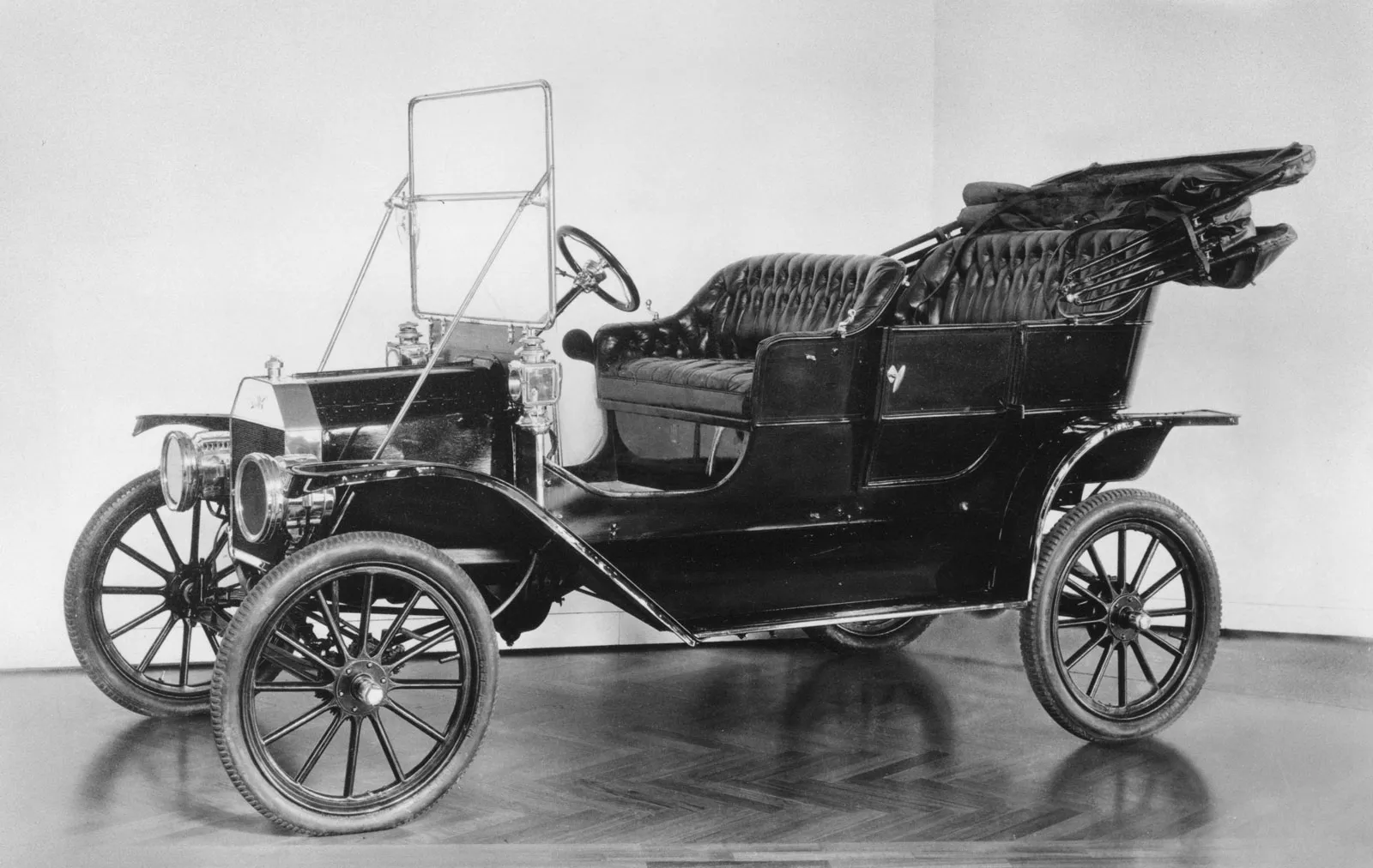
The Ford Model T created a mass market for automobiles where none had existed. Its price put an automobile in the reach of both rural and urban consumers that previously could not have afforded one. Equally important for the present comparison, the Model T served a purpose that other forms of transportation then available could not provide.
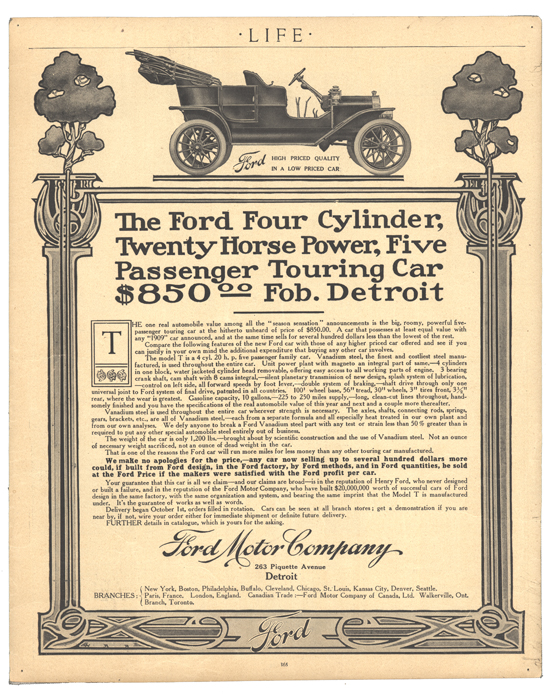
The Model T was introduced in 1908 at a price of $850. Inflation adjusted, that would be approximately $30,800 today. At that price, the Model T had no effective competition. Anything less expensive were rudimentary, single cylinder cars such as Brush or Oldsmobile. Most automobiles available in 1908 were at least four times more expensive than a Model T. By 1925, two years before Model T production ended, the price was down to $260, equivalent today to $4,600. The Model T sold because there was nothing equivalent at anything close to its price. As competitors introduced better automobiles at lower and lower prices, the Model T survived strictly on price.
The Fathom, however, won’t be an incredibly less expensive alternative to more expensive automobiles, nor will its price vastly undercut any others. If it’s a lifestyle vehicle the prospective Fathom customer wants, he or she has a lot of choices – all at under the Fathom’s price and all without the drawbacks of an electric vehicle.
A SUV is a lifestyle vehicle. That is, in fact, the essence of the breed. SUV stands for “sport utility vehicle.” It contrasts with the ordinary sedan. The attraction of an SUV is its flexibility – the ability to serve multiple purposes, thereby serving the individual’s lifestyle and not merely providing transportation. The SUV does this so well that it dominates the passenger vehicle market. There is no dearth of SUV choices at or below the price of a Fathom: Chevrolet Trax, Mazda CX-30, Kia Seltos, Buick Envista, Hyundai Kona, Nissan Kicks, VW Taos, Honda HR-V, Hyundai Venue, and Subaru Crosstrek.
Where the Fathom differs from other “lifestyle vehicles” already offered by competing manufacturers is that it has a smallish pickup bed in back and is battery powered.
Neither is necessarily an advantage, or even desirable.
Grafting a pickup bed onto an SUV has already been tried: the Hyundai Santa Cruz, base price $29,750. Sales of the Santa Cruz in 2025 were about 25,000 vehicles, and reports have Hyundai cancelling the model due to that low sales volume. It was outsold by the Ford Maverick, which sold more than 155,000 in the same period and has a base price of $27,145 for the gasoline powered version, $28,145 for the hybrid. Lest there be any doubt that the Santa Cruz is a “lifestyle vehicle,” Hyundai refers to it as their “one-of-a-kind Sport Adventure Vehicle.”
If Ford is relying on the appeal of an electric vehicle to sell the Fathom, there is reason to doubt that prosepective purchasers willl consider the Fathom being an EV as an advantage. Ford itself seems to recognize that problem. If published reports putting Ford’s prediction for Fathom sales at “over 100,000” are true, Ford is predicting sales volume of the Fathom – a new model – well below that of the Maverick in its fourth model year. That’s not a “Model T Moment.” In its first year, Model T sales were approximately 8% of the total automobile market, on its way to achieving 40% of the market in 1914. Cox Automotive reports total 2025 electric vehicle sales as just below 1.3 million vehicles. According to a separate Cox report, EV sales in the first half of 2026 declined almost 6% from the same period in 2025, likely a consequence of ending the federal EV tax credit. Total 2025 new vehicle sales were 16.38 million, again according to Cox. That does not suggest that most new vehicle buyers consider a vehicle being an EV is an advantage, nor does it suggest the Fathom will have anything akin to the impact of the Model T on the automobile market, or even the EV market alone.
Though Ford has yet to announce maximum range for the Fathom, published reports indicate the base model Fathom is expected to claim a fully charged range of 200 to 225 miles. Ford has confirmed the Fathom will use a liquid iron phosphate (LFP) battery. This type of battery is less expensive and larger in size than other types of EV batteries, but is designed to be routinely fully charged. (Other types of EV batteries are generally charged only to 80% to protect battery life.) Range of an LFP battery, however, still depends on battery size, exterior temperature, and the type of driving.
A range of 200 to 225 miles highlights a deficiency of electric vehicles, not an advantage. There probably is no market today or in the future for a vehicle with such a short range, regardless of price. That, doubtless, is why Ford is expected to offer larger batteries and dual motors as options. Charging extra for more battery capacity and longer range, though, is nothing like the approach Henry Ford took with the Model T. Making the Fathom more expensive is the antithesis of a “Model T Moment.” It makes it less price competitive with gasoline powered competitors.
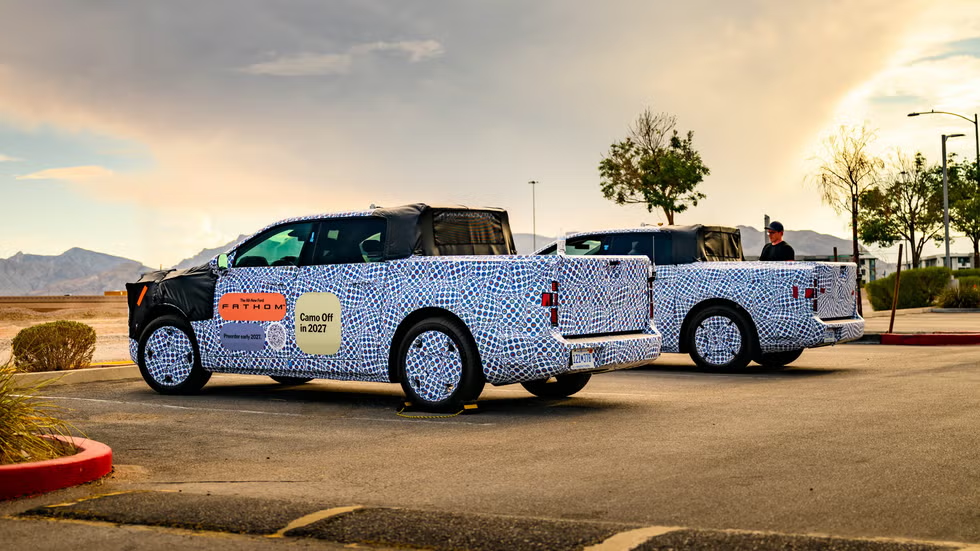
The Fathom is expected to offer a front “frunk,’ a large touchscreen, and Ford’s version of self-driving, BlueCruise. Other brands at competitive prices offer luggage capacity and touchscreens. The attraction of standard BlueCruise is debatable. Ford has been equipping vehicles with Blue Cruise for a 90 day free trial period, after which there is a fee, monthly or annually to continue access to it. But self-driving features, such as BlueCruise, are most useful when driving long distances on Interstate-type divided highways. That’s not an environment to which the Fathom is well-suited. To many prospective purchasers, BlueCruise will merely be a gimmick they’ll never use – not a sales point for Ford. (Ford does not disclose the retention rate upon free trial expiration for BlueCruise.)
An electric vehicle does have advantages over one that is gasoline powered. But those advantages are largely dependent on the owner adapting to the limitations an electric vehicle imposes. If you cannot conveniently function within those limitations, an EV is not a practical choice, especially when there are so many other vehicles that will meet every one of the prospective purchaser’s needs.
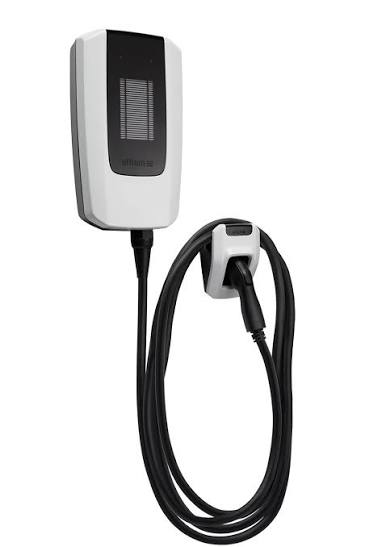
Buying an EV normally means installing a home charger – somewhere around $1,000 once you have paid an electrician to run a dedicated 240 volt line to the garage and purchased the charger. You can then add an app to your cellphone that, among other features, allows you to schedule charging to take advantage of lower nighttime electricity rates. Plugging the charger cable into your EV in your garage is much more convenient than waiting in line at the gas station and then standing next to the car as you fill it, especially in winter.
But . . .
Don’t believe the maximum range the electric vehicle manufacturer claims. You won’t achieve it and often cannot come close to it.
Range is hugely dependent on speed and driving characteristics. If the vehicle is driven around town, especially if regenerative braking or one pedal driving are employed, range will be longer. Range will plummet, though, within 20 miles of driving at highway speeds. EVs don’t have gearboxes, so the electric motor is rotating faster as your speed increases. As your speed increases, the wind resistance increases – and your range drops. At real interstate speeds – that is, the speed above the posted limit that all those drivers in their F-150s, Sierras, and Silverados are travelling – range may drop by 30% to 40%.
Moreover, EV range depends on the outside temperature. This is especially true of LFP batteries, the type to be used in the base Fathom. LFP batteries generally suffer a greater cold-weather performance penalty than NMC lithium-ion batteries. When the outside temperature reaches zero degrees Fahrenheit, maximum range for EVs with NMC lithium-ion batteries (such as the GM Ultium system) can be cut in half. Using an LFP battery can make the range loss even greater.
That means that a base Fathom, with a fully charged maximum range of 200 to 225 miles, has a real range at zero degrees of about 100 miles. A Chicago commute from suburban Barrington and back is 94 miles. This creates “range anxiety.” Range anxiety is not merely concern with the distance an electric vehicle can travel on a charge. It is also the real fear of running out of battery power before being able to find a place to recharge. When that place is your garage, it’s no big deal. When you are on the road, it is a very different story. An app on your phone will give you locations of chargers, as will the electric vehicle itself. You must get to that charger and that charger must be in working order.
Chargers are primarily located in suburban areas where there is room for them. If you think about it for a moment, you’ll realize that a charging station is a much less efficient use of land than a gasoline station. That gasoline station, for the same square footage, can fuel many more vehicles because it takes so much longer to charge an EV than it does to fill a fuel tank. This means that there are few chargers adjacent to or near interstate highways. So, finding a charger when traveling means using remaining range simply getting to the charger. You’ll then expend range again getting back on your route. And that charging detour uses time that isn’t getting you closer to your destination.
Fortune.com, in an article treating range anxiety as an unjustified myth, pointed to an Associated Press report that “[t]raveling on Interstate 80, the longest American interstate, a driver will encounter few stretches that are more than 10 miles (16 kilometers) away from a fast charger, all the way from New York City to Des Moines,” although acknowledging that further west there are even fewer chargers. Fortune.com is missing the point. Even under their rose colored glasses view of interstate travel with an EV, you’re still expending as much as an half hour travellng to the charger and back to the interstate, in addition to the time it takes to charge. Compare that to a quick exit to a Buc-ee’s and back on the interstate in ten minutes with a full gas tank. General Motors has partnered with EVGo to build 2,850 public charging stalls – but only 400 of them fast chargers and only in major metropolitan areas. It plans to put 2000 fast chargers in Flying J travel center locations – but only 130 are currently operational. Does this seem like a lot of new charging stations? Well, the National Association of Convenience Stores counts 122,620 locations that sell gasoline. Additionally, there are over 20,000 retail gasoline dealers that are not convenience stores. Public charging hasn’t even begun to catch up.
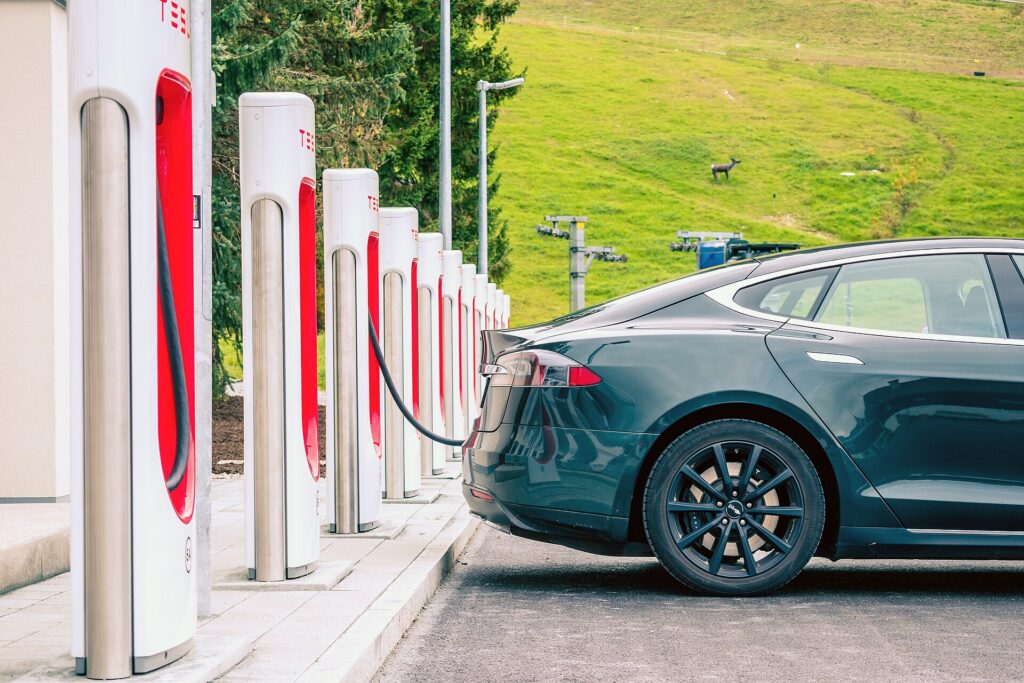
To the charger location and availability problem add charger unreliability. There are two types of public charging networks – Tesla’s and everyone else’s. Tesla’s network works – reliability rates are between 96 and 99 percent. The others – maybe, maybe not. In May of 2026, Kelly Blue Book reported a University of California, Berkley, study found that almost 23% of 657 DC fast chargers in the nation’s biggest EV market were nonfunctional.
Even if the public charger is working, there remains the problem of expended time. Not all public chargers are equal. While some non-Tesla chargers are capable of charging quickly, some only charge at the rate of a typical home charger, known as “Level 2.” At home, you’re charging when the car’s not in use. On the road, charging time is down time. A Level 2 charger will only add 25 to 30 miles of range per hour – not what you need on the road. A Level 3 fast charger can increase charge level much more quickly. But, even if the charger is capable of charging at the most rapid rate, your EV may not be able to accept the highest rate of charge, depending on its battery design. For example, it takes one of Ford’s other EV efforts, the Lightening, between 38 and 44 minutes to charge from 20 percent to 80 percent using a Level 3 fast charger.
So, for the ten minutes spent at the gas station just off the interstate, you can accomplish much the same with an EV in an hour and a half, give or take fifteen minutes.
Incidentally, the cost advantage over buying gasoline can disappear when you use public fast charging. Exact comparision are difficult, since mileage for either gasoline powered or electric vehicles varies with the vehicle and the nature of the driving. However, significant savings in energy cost for an electric vehicle occur only with a home charger. All of this means that if you live in an apartment complex that, like most, does not give you easy access to a dedicated charger at lower than public charging rates, you won’t be saving much over buying gasoline and routine charging at public chargers will be a recurring waste of otherwise productive time.
Where does this leave Mr. Farley and the Fathom EV?
An EV can be a wonderful vehicle, but not a wonderful only vehicle. If the buyer lives in an apartment that has no installed chargers, it won’t offer convenience or economy. If the buyer lives in a Northern climate, the Fathom will be even more severely range limited during the winter than it is at the most optimum warm days of summer. And if that potential customer is cross-shopping the competition, there are many other vehicles that can compete on price and won’t get the back filled with snow or water when the weather turns bad.
There is one other reason Mr. Farley is wrong about the Fathom being a “Model T moment.”
In 1908, if you were purchasing a new vehicle, you were paying cash for it. So price really mattered.
Today, you probably are not paying cash. You may be leasing it. You may be financing it. Either way, new vehicle purchasers have long become accustomed to considering the marginal cost of buying something better – more options, a higher-level model, even a different vehicle. Sure, the price is higher, but what’s even $100 a month more? The Ford dealer is certainly not going to dissuade them from moving up. All of this means the Fathom will not merely compete with vehicles priced at $30,000 and less. The Fathom will offer options, including a longer-range battery (reportedly to a claimed 300-mile range) and a second electric motor. You can bet the Ford salespeople will be counter selling the base model and pushing the larger battery and two motor models.
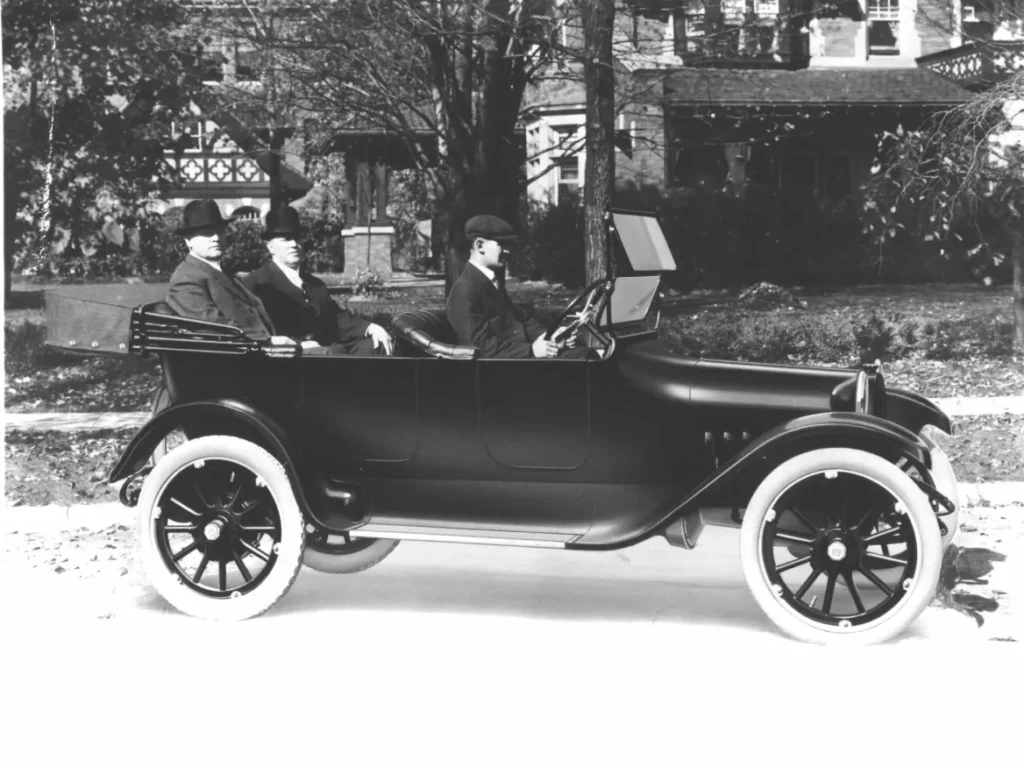
Throughout its years of production, the Ford Model T always sold on price. The Dodge model 30-35 became the second best-selling automobile soon after it was introduced in model year 1915. It cost $790, while the Model T price had dropped to $440. But the Dodge had more power, a better cooling system, superior ignition system, and an integrated stater/generator. Many customers were willing to spend more to get a better equipped automobile. The Model T continued to sell well for almost two decades because it was cheap, selling into a rapidly expanding market, and was a proven and familiar product with an unequalled dealer network that blanketed the entire country.
That is nothing like the market into which the Fathom EV is being introduced. According to a 2026 Delotte Global Automotive Customer Study, only 7 percent of new car buyers specifically shop for an electric vehicle. A larger percentage indicate they might consider an EV – but the sales numbers show that they do not buy one. Edmunds reports EVs were 7.4 percent of the new car sales in 2025, and the number is falling in 2026. That means the people buying EVs are the people that originally set out to do so.
The Fathom has all the disadvantages inherent in electric vehicles. As an EV, the base Fathom promises to be among the worst performing of the type. As a vehicle, it competes with those manufactured by companies whose products have better reputations for quality and reliability, have in years past consistently held resale value better than Ford products, and offer better solutions to customer needs.
Whatever the reception to the Ford Fathom EV once it is offered for sale, its introduction will most definitely not be a “Model T moment.”