
Continued from “BILLY’ DURANT; THE MAN WHO BUILT GENERAL MOTORS, LOST IT, THEN TOOK IT BACK AGAIN – PART TWO.
Defeated over the voting trust, the board was now quickly reorganized, with Pierre S. DuPont as chairman of the board. Though the $50 dividend idea had been the banks’ defense against Durant – a battle now lost – both sides, the banks and Durant, now elected to authorize that dividend, anyway.
From Durant’s perspective, it is easy to see that he had much to gain. Though the banks still had no complete grasp on how many shares he owned or controlled, Durant would be the largest beneficiary of the dividend and would be able to reduce debt with the payout. The banks, however, now also desperately needed that dividend to protect the institutional investors whom they’d encouraged to purchase large blocks of General Motors stock. Word of the $50 dividend had become public. Were it now not issued, the stock price would crumble. Nobody wanted that.
Having stopped the banks, Durant next took steps to obtain control of an absolute majority of General Motors stock. He had Chevrolet offer to trade five shares of Chevrolet stock for every one share of General Motors stock, an offer many General Motors shareholders found irresistible. Chevrolet sales were soaring and General Motors sales were not. And they had already received their $50 dividend.
110,000 General Motors shares – 13% of the total outstanding General Motors stock – were tendered in exchange for Chevrolet stock before the tender offer expired in early 1916. (If you are doing the math, it is likely that many who gave Durant their proxy in 1915 later tendered their shares.)
William C. Durant now controlled 54.5% of General Motors stock, directly or through his allies, and through Chevrolet.
In 1918, Durant moved to formally reorganize Chevrolet and General Motors to make the former a subsidiary of the later. General Motors issued new shares which were then exchanged for all of Chevrolet’s operational assets, i.e., plant, equipment, etc. – everything except the stock in General Motors it already held. Chevrolet, thereby, became essentially a holding company, with that stock and the newly issued stock as its only assets. The stock stock was then distributed pro rata to Chevrolet shareholders, who thereby became General Motors shareholders, and Chevrolet as a corporation was dissolved.
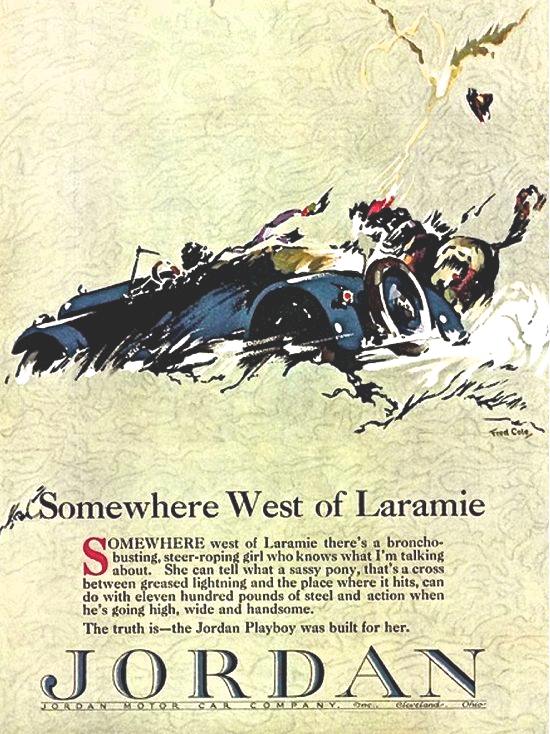
Nash left General Motors on June 1, 1916, even though Durant had asked him to remain as president and offered him a salary of $1,000,000 to stay. With the backing of Storrow, he bought the Thomas B. Jeffery Company of Kenosha in August of 1916, renaming it Nash Motor Company and putting his name on the Rambler automobiles they produced. The background of that company and how the sinking of the Lusitania precipitated the Jeffries family’s decision to sell has been described in our previous post “Somewhere West of Laramie”: Ned Jordan and the Birth of Modern Automobile Advertising. Nash died in retirement in Beverly Hills, California, in 1948, leaving a substantial estate. The company Nash had created from Jeffries would flounder after World War Two, merge with Hudson to become American Motors and be acquired by Chrysler Corporation in 1987.
Robert McLaughlin’s company would continue to manufacture automobiles under the McLaughlin- Buick name until World War Two ended production in 1942. However, the company had been purchased by General Motors in 1919 and then became General Motors of Canada. When the War ended, production resumed without the McLaughlin name. McLaughlin remained a member of the General Motors board of directors until, at age 100, he died in 1972.
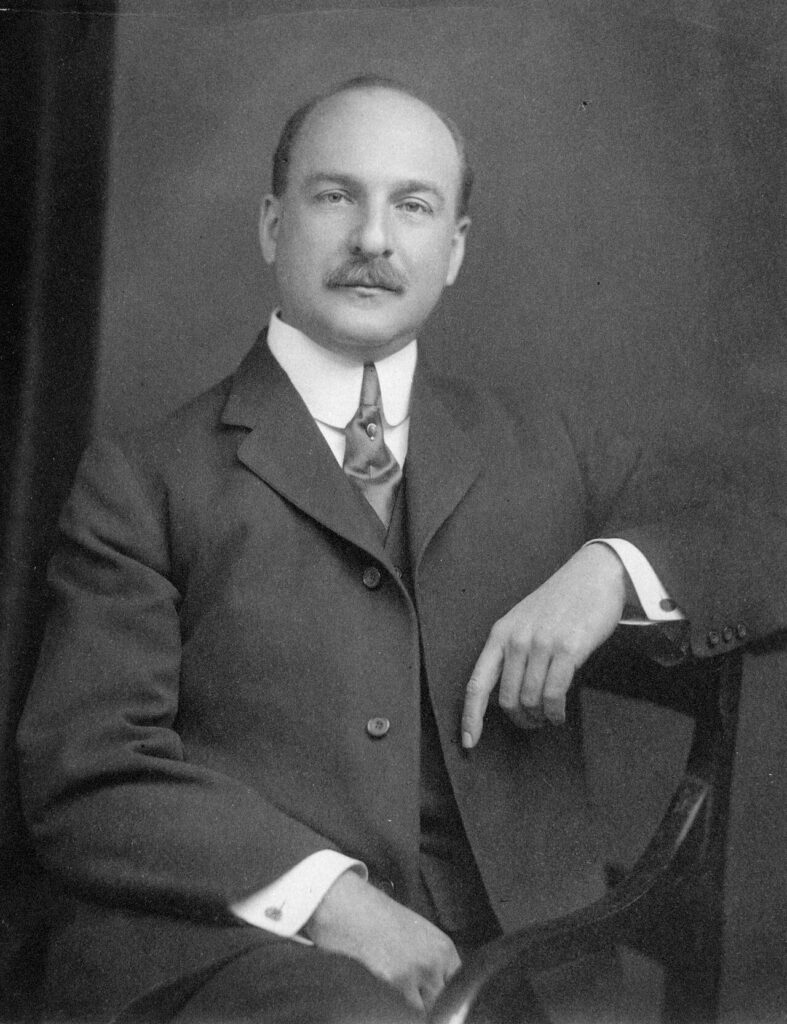
Louis G. Kaufmann would become a celebrity banker with a legendary career. Entertaining Hollywood celebrities at his 26,000 square foot lodge on Lake Superior. Despite his wealth and power, because he was Jewish he was not able to rent on Fifth Avenue in New York. So, he built his own apartment house at 625 Fifth Avenue, occupying its penthouse. He would serve on the General Motors board of directors for twentuy-two years and chair the board’s finance committee. As a banker, he introduced branch banking to the industry. His most visible accomplishment has marked the New York City skyline since 1931: the Empire State Building. Kaufman assembled loan packages that enabled construction of the skyscraper, a project that also involved investment by Pierre DuPont. Kaufmann died in Florida in 1942.
Pierre DuPont would succeed Durant as General Motors president in 1920, after bailing Durant out from personal financial losses resulting from Durant’s stock speculation and an unexpected drop in the stock market. Durant’s financial situation would have forced him to dump his entire shareholding on the open market, which would have an immediate and massive drop in the stock’s price – to the detriment of General Motors shareholders, the company itself, and to the value of DuPont’s corporate holdings, creating a ripple effect on that company’s stock and, potentially, causing a crash of the entire stock market. To avoid this, DuPont agreed to assume Durant’s debts in exchange for his General Motors stock. That raised the DuPont family and corporate holdings to 38% of General Motors outstanding shares.
In 1947, the federal Department of Justice sued the DuPont company claiming that the then 25% of General Motors shares it then owned were an anti-competitive holding lessening competition in the automotive finishes industry by locking in General Motors as a customer. The case reached the United State Supreme Court, which ruled against DuPont. The shares it held in General Motors were ultimately distributed to DuPont company shareholders in proportion to the shares they held.
DuPont served as president of the DuPont company from 1915 to 1919, when he became the chairman of its board of directors. He held that position until 1940, during which the company prospered. He died in Wilmington, Delaware, in 1954.
For William C. Durant, after 1920 the magic was gone.
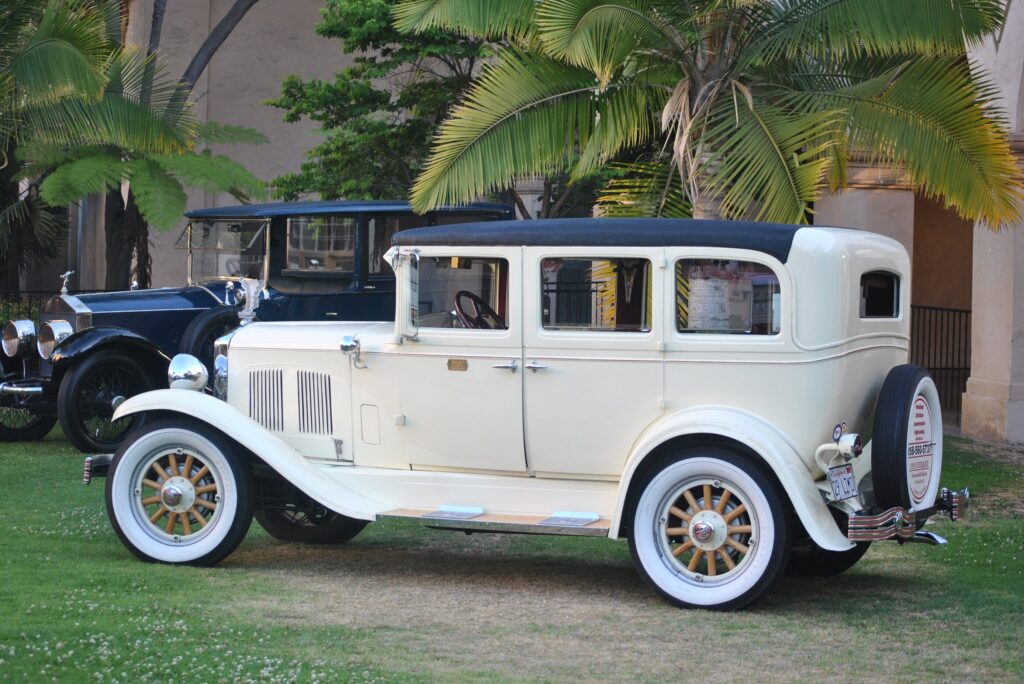
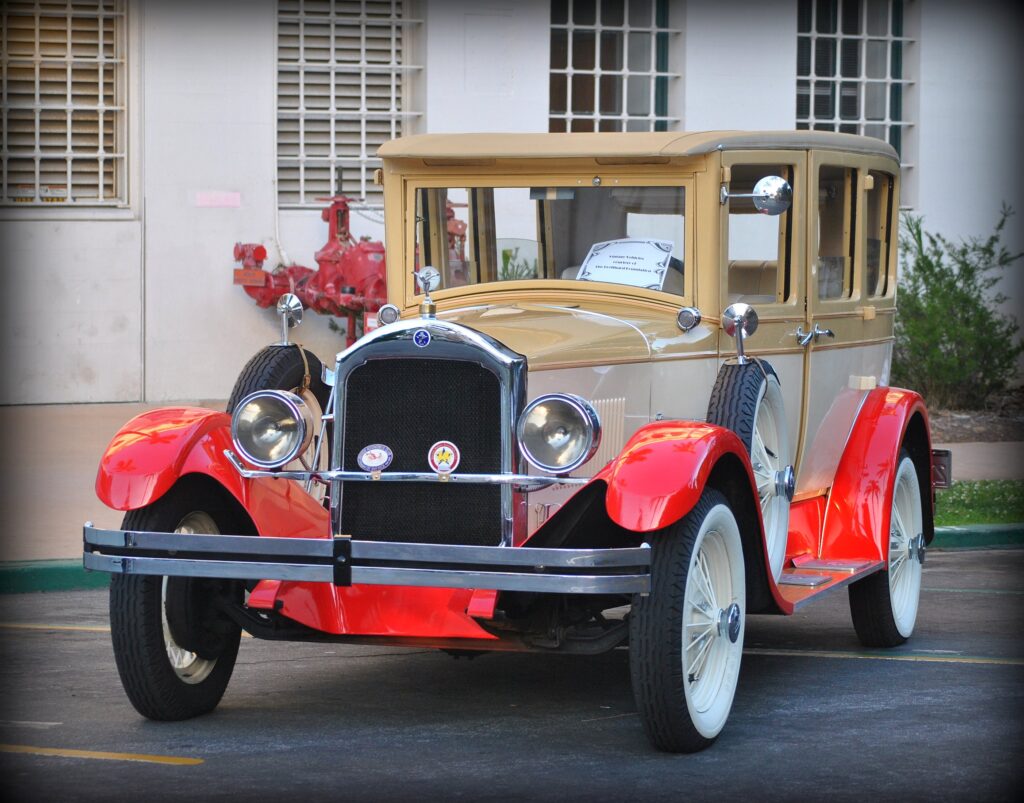
In 1921, he founded Durant Motors. It produced the low-priced Star, mid-priced Durant, and Flint for the upper middle price range. It acquired Locomobile in 1922 to compete in the high price tier. Once again, Durant expanded an undercapitalized company too quickly. The company was in financial trouble as early as 1926, partly because these were “assembled cars,” meaning cars primarily assembled from components manufactured by outside suppliers rather than by the company’s own manufacturing facilities. As explained in our previous posts “The Assembled Car Makes a Comeback” and “Somewhere West of Laramie: Ned Jordan and the Birth of Modern Automobile Advertising,” sourcing components from others raises the production cost of a vehicle over that of a vehicle manufactured from components made by the company itself. Though assembled cars had held 25% of the new car market in 1925, by 1928 almost all companies manufacturing assembled cars were either in financial trouble or already out of business. Durant lasted longer than most. The economic downturn in the 1930’s was the final financial blow. Locomobile had been dropped in 1929 and Durant Motors ended all production in 1932, before formal corporate dissolution the next year.
The demise of Durant Motors also destroyed Durant’s personal finances. When the company ran into financial trouble in the late 1920’s, Durant personally bought blocks of company stock to support the stock price on the market. When the 1929 crash pushed Durant Motors stock ever lower, Durant bought even more in his futile effort to prop up the stock price.
It did not work. In 1936, Durant filed for personal bankruptcy. He listed total assets of $250. Thereafter, Pierre DuPont, Robert McLaughlin, Alfred Sloan, who had succeeded DuPont as General Motors president, and Walter Chrysler, who also had made his start in the industry under Durant with Buick, quietly created a trust to pay Durant $10,000 per year. Though this was truly generous – the equivalent of $230,000 per year now – it also avoided the public embarrassment of General Motors’ founder living in poverty.
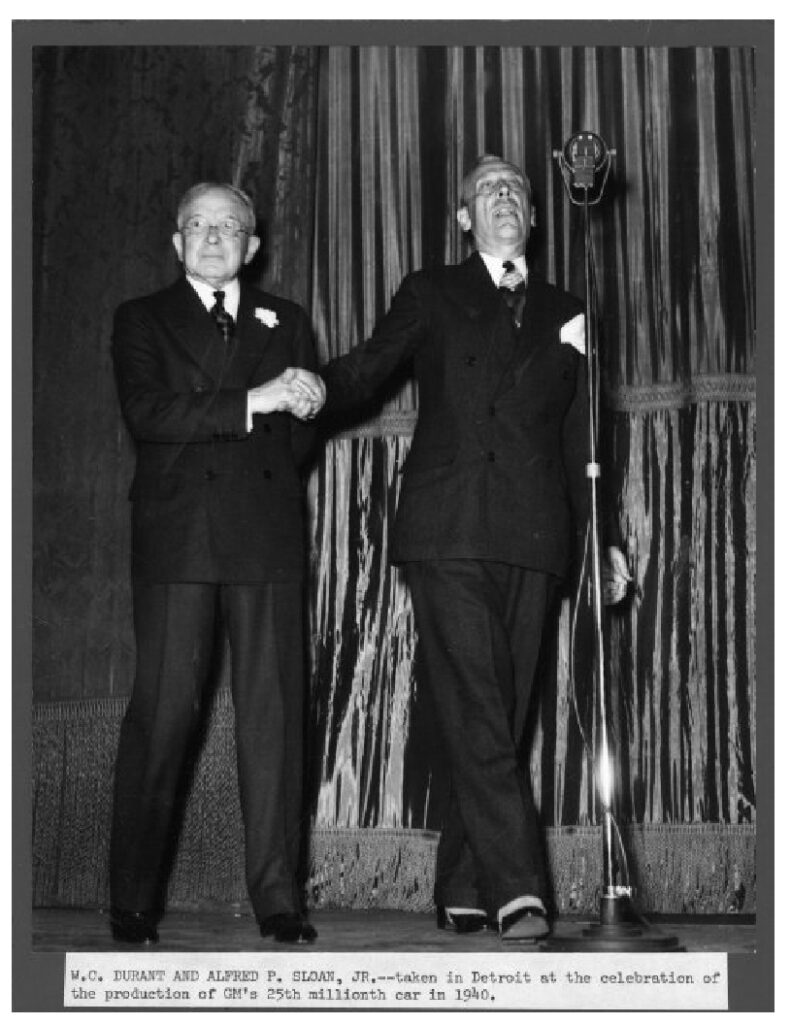
In January of 1940, Durant was invited by Sloan to a massive General Motors event celebrating the production of its 25 millionth automobile. As Durant sat nearby, Sloan delivered a speech to an audience of 5,000 in which he credited the creation of the huge industrial enterprise to the foresight and daring of William C. Durant.
Durant was able to open a bowling alley in Flint later in 1940. Ever true to his character, Durant had plans to use it as the basis for franchising similar operations nationally. Nature had other plans. On October 2, 1940, Durant suffered a stroke that left him partially paralyzed and made speech very difficult. His wife, Catherine, moved him to a New York City apartment on Fifth Avenue that put him closer to medical professionals specializing in stroke and paralysis treatment and where he could also get around-the-clock private nursing care. Thanks to the income from the trust provided by Durant’s former General Motors associates, she could afford the costs of his care.
William C. (“Billy”) Durant died on March 18, 1947, in the apartment on Fifth Avenue.
In 1968, William C. “Billy” Durant was inducted into the Automotive Hall of Fame. The others inducted that year were Edsel Ford, William S. Knutson, Barney Oldfield, and Ransom E. Olds. In 1996, Durant was inducted into the United States Business Hall of Fame. The ceremony featured a voice recording Durant made as a New Year’s greeting in 1931 was played during the ceremony – Durant, naturally, was an investor in the company that made personal messages on a five inch aluminum disc – can be heard today by visiting the Durant Motors Automobile Club website – a club dedicated to the brands Durant manufactured after General Motors.
If you missed the beginning of this series, you can start with Part One and the story of how Billy Durant began as a carriage maker, bought Buick, and then built General Motors to serve the burgeoning automobile market he had predicted, only to be stripped of control by bankers who lacked his vision.
If you haven’t already, please subscribe to be automatically notified of future posts at Automobile Chronicles.