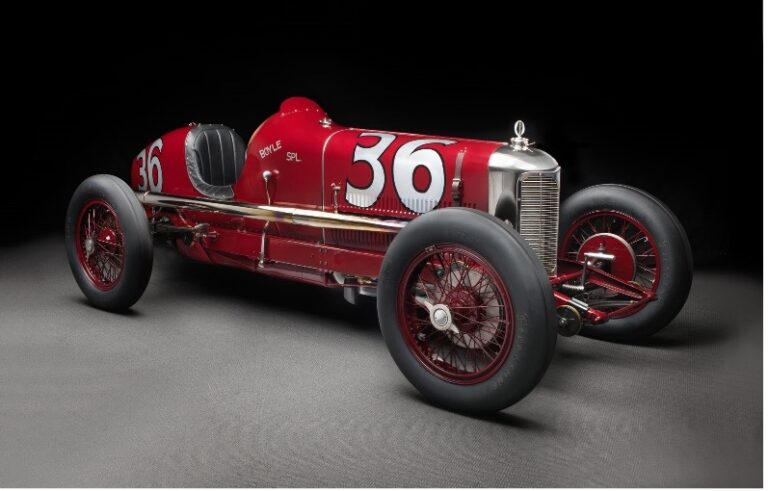

In 1916, Chevrolet bought General Motors. That’s right: Chevrolet bought General Motors, not General Motors bought Chevrolet.
This is how that happened.
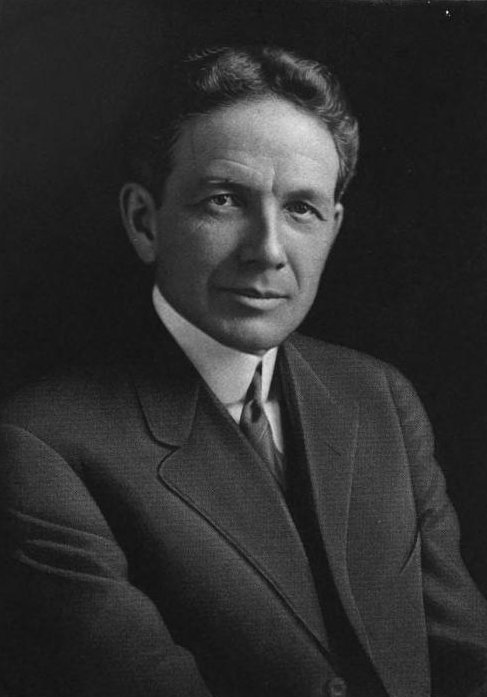
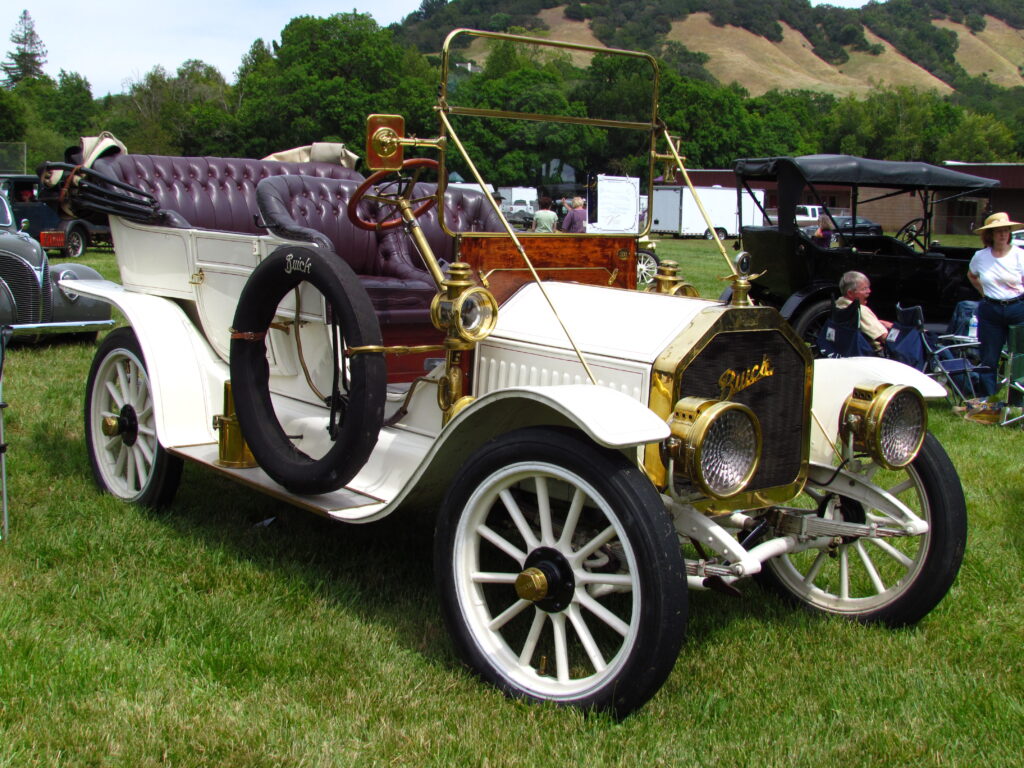
William C. (“Billy”) Durant founded General Motors. Durant was originally in business as the Durant-Dort Carriage Company manufacturing carriages. He was a forward thinker with imagination and early saw the potential of automobile manufacturing. In 1904, he acquired Buick. He then proceeded incorporate General Motors in 1908 and then acquired Oldsmobile, Oakland, and Cadillac, to add to Buick as corporate subsidiaries.
Charles W. Nash was hired by Durant in 1890 to stuff upholstery at Durant-Dort. Within a year, Nash was promoted to plant superintendent. When Durant acquired Buick, he brought Nash over as its general manager.
Durant continued buying manufacturers and suppliers to fold into General Motors. By 1910, twenty- five different companies manufacturing automobiles or parts were subsidiaries. Some of Durant’s moves, such as luring Albert Champion to General Motors to form the A. C. Spark Plug Company subsidiary, were inspired. Others were not and lost money. Durant had recognized the automobile industry was poised for exponential expansion. He had brilliantly purchased the companies that would ultimately make General Motors the dominant manufacturer of automobiles in the United States. He had not yet had time to organize these companies into an efficient corporate structure.
Then the national economy hiccupped.
Two factors were working against Durant.
The first was the attitude of established banks. Automobile manufacturers were chronically undercapitalized, with a grim record of attrition. Even when sales were high, an automobile manufacturer could fail in a brief slump because its need for investment in plant and equipment to support those rising sales would leave it strapped for cash at even the slightest downturn.
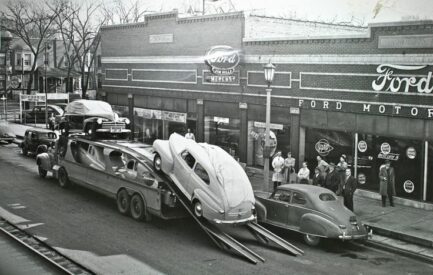
In 1909, with the Model T in production and having lost the Selden patent case in the trial court, Henry Ford agreed to sell the Ford Motor Company to General Motors for $8 million in cash. (Ford later won the case on appeal.) He would not accept a stock swap – it was cash only. When Durant tried to negotiate a loan of $2 million toward meeting that price, the banks turned him down cold. When Durant told George Perkins, a banker with J. P. Morgan, that “[t]he time will come when 500,000 automobiles will be manufactured and sold in this country every year,” Perkins dismissed the prediction. He told others that “If [Durant] has any sense, he’ll keep those notions to himself if he ever tries to borrow money.”
Perkins attitude was typical of bankers of the day: unimaginative, able to see the future only in a rear-view mirror – and wrong. United State automobile sales would exceed 500,000 in 1914. By 1916, sales of the Ford Model T alone would exceed 500,000 annually. That, however, did not help Durant. He was unable to raise the cash necessary to purchase Ford.
Part of the problem, however, was Durant himself.
Durant manipulated stock certificates as Rembrandt manipulated the brush. Durant paid $33 million to pull together the various companies now forming General Motors, but he’d paid only a fifth of that in cash. The rest had been paid by issuing and transferring stock. Bankers didn’t understand the corporate structure, or who owned what. It is difficult to nail down collateral for a loan if you can’t figure out who owns that collateral.
It wasn’t enough.
So, when the economy suddenly swooned in April of 1910, a mere month after General Motors had floated a $1 million stock offering to build a new Buick engine plant, banks cut off the line of credit upon which the company had relied to pay suppliers and employees. Durant initially faced down that crisis with the help of loans from two local Detroit banks and with loans arranged by local dealers from their local banks all over the country.
By September of 1910, General Motors was out of cash. This was not like twentieth century General Motors financial crises. The company was not failing. The problem was that it was succeeding – all too well. The increasing sales created a voracious need for fresh capital. Companies that produce products must make major capital expenditure for plant and equipment before the profits from the products that investment produces begin to be received. If, as was the case with General Motors, the company is expanding very rapidly, the cost of these capital investments can quickly exceed cash on hand, and the company must either borrow or raise additional capital. That was General Motor’s s situation in April of 1910. It had run out of cash.
Banks in the financial centers of the time, New York and Boston, came up with a bail-out $15 million loan, due in five years at 6% interest.
The loan had conditions. The primary condition was a “voting trust” for General Motors shares. A secondary condition was removing Durant from control of General Motors, demoted to a figurehead as a vice-president
You can imagine how Durant must have felt. He had created and built General Motors. It was succeeding and was on the cusp of realizing the benefits of what he had built. Without his imagination and risk-taking, there would be no General Motors. Yet, he was being forced out of the management of a company that none of those taking over could have imagined, much less built. Now they were going to rest on his laurels.
The “voting trust” is central to what happened next. It is a legal “trust,” i.e., an entity holding property of another. As a condition of making the loan, the banks required all General Motors shareholders to physically surrender their certificates of General Motors stock to the trustee whom they had selected and who would then have the power to vote those shares in corporate elections. Shareholders had no real choice – regardless of its future prospects, if the company did not get the cash now it would have to liquidate and the shareholders would get nothing. So, they acceded to the terms. In return, each shareholder each received a “Voting Trust Certificate” (VTC) that represented the shares surrendered.
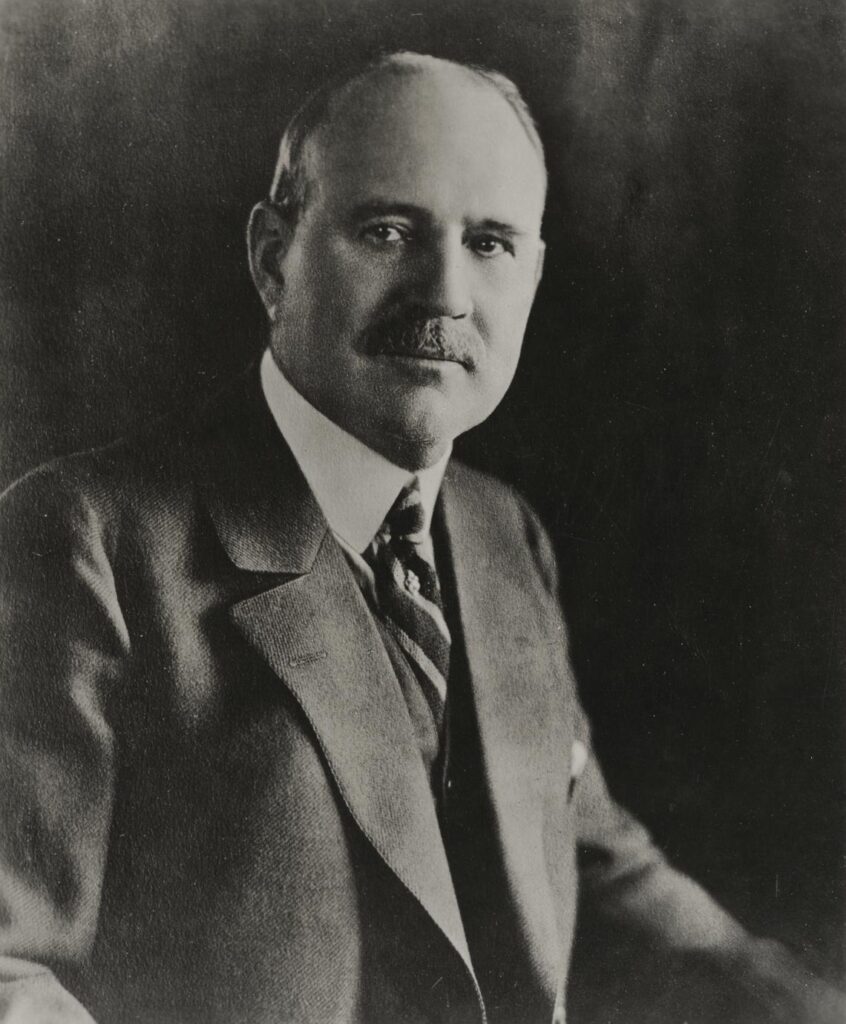
The voting trust gave the banks control of General Motors, ostensibly to afford them security against the risk of loan default. However, under prevailing common law, the trust could last only as long as the term of the loan because it’s primary purpose was protecting the loan.
That meant the trust would automatically expire in five years: on October 1, 1915. At that point, the holders of Voting Trust Certificates would again be the unencumbered owners of their shares of General Motor stock.
With General Motors now controlled by the banks through the voting trust, the board of directors, selected by the banks, elected James Storrow president. Storrow had no background in the automobile business. He was the lead banker of the bank syndicate that made the loan. Storrow made Nash general manager of Buick. In this, he followed Durant’s recommendation – even though Storrow and the other bankers had just stripped Durant of control. Viewing General Motors as financially stabilized, Storrow resigned as General Motors president in 1912.
To succeed Storrow, the board elected Nash as president of General Motors.
Durant, however, had been correct about General Motors’ future. Despite what had turned out to be a relatively brief national economic downturn, 1910 had been a banner year for General Motors in sales and in profits.
Forced out of control at General Motors, Durant had not been idle. In 1911, he formed three new companies: Little, producing an inexpensive automobile, Mason producing engines, and Chevrolet producing more expensive models. To do so, he used loans secured by the Voting Trust Certificates from his original block of General Motors stock issued when he founded the company. Ironically, that the company was now in the control of the banks made the Certificates good collateral.
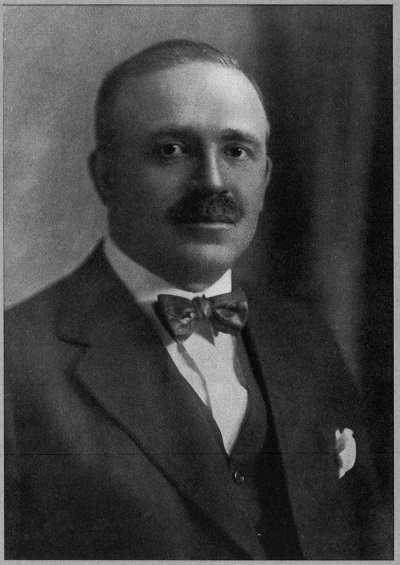
He also had capital investment from Robert McLaughlin of Canada. McLaughlin had been in the wagon business in Canada when he traveled to Michigan to buy an automobile. In the process, he met Durant who was then manufacturing only Buick. Durant attempted to persuade McLaughlin to become the Buick distributor in Canada, but Laughlin resisted. He purchased a new Buick and returned home.
Laughlin, however, was impressed by his new Buick. He had decided to manufacture an automobile in Canada under his own company’s name. After a failed attempt at designing the engine for it, he contracted with Durant to purchase Buick engines for his McLaughlin automobile. From that original business arrangement, he would become an early investor in General Motors.
By 1913, Durant had abandoned the initial plan to produce an automobile for low, medium, and higher priced market segments. Instead, he folded the three companies into one – Chevrolet – and focused on the low-priced market.
Durant’s new companies, particularly Little, had been profitable. But, after combining the three into Chevrolet and focusing that brand on the low-priced market, sales and profits skyrocketed. In 1915, Chevrolet introduced the Model 490. The model number was its price: $490. It was aimed directly at the same market as the Model T, but with features buyers could not get from Ford – including an electric self-starter and three-speed transmission. Chevrolet sales in 1915 would reach 13,605 automobiles and profit would exceed $6 million.
To be continued in “BILLY” DURANT: THE MAN WHO BUILT GENERAL MOTORS, LOST IT, THEN TOOK IT BACK AGAIN – PART TWO. If you haven’t already, please subscribe to be automatically notified when we post the story of how “Billy” Durant plotted his return to reclaim control of General Motors.